


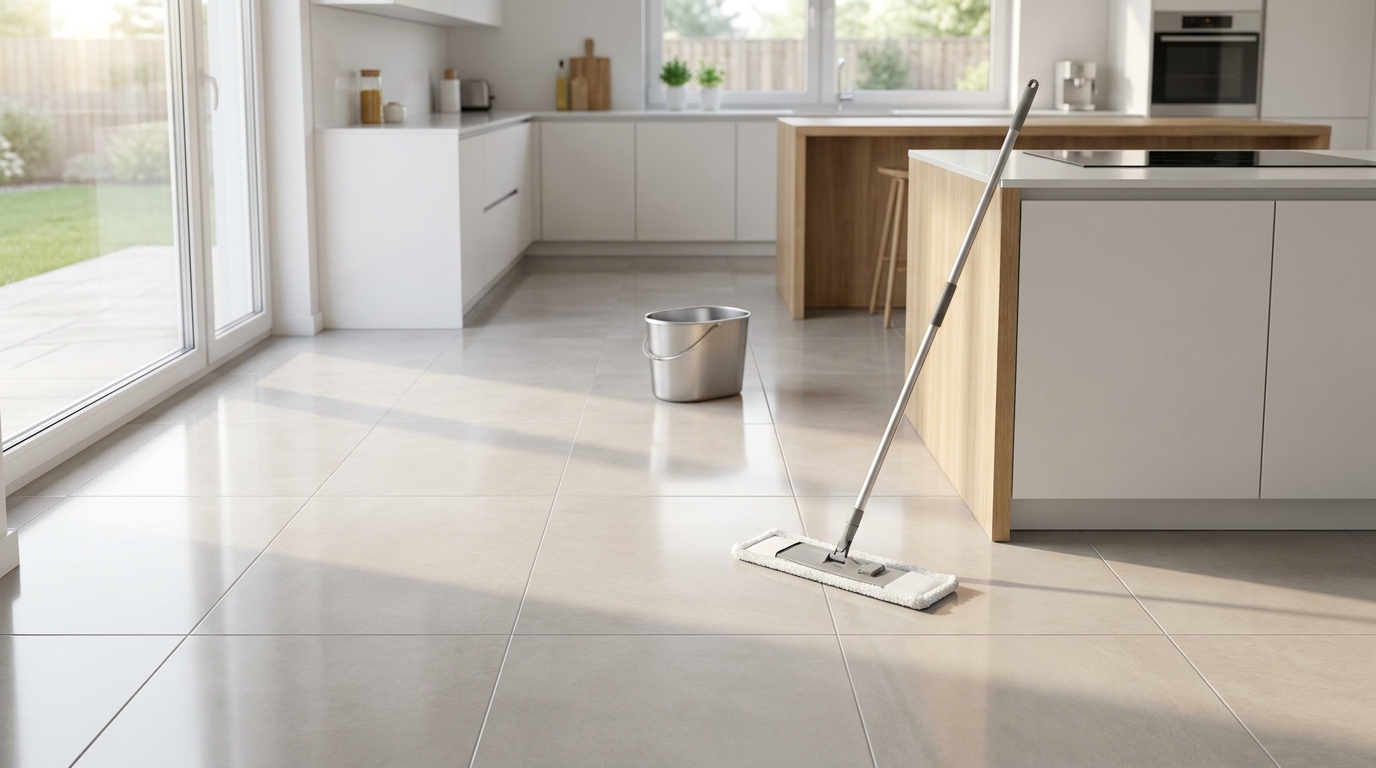
The best way to clean tile floors is to match the cleaner and the method to the tile and grout you actually have, then rinse and dry the floor so no film or moisture is left behind. A glazed porcelain kitchen floor, a terra cotta patio, and a marble bathroom all count as “tile,” yet they react very differently to vinegar, bleach, steam, and scrubbing. This guide explains how to identify your tile, which products are safe, how to mop and clean grout step by step, and which popular tips can quietly damage a floor over time.
Quick facts at a glance
| Situation | Safest approach |
|---|---|
| Everyday cleaning on glazed ceramic or porcelain | Sweep or vacuum, then damp mop with warm water and a pH-neutral cleaner |
| Natural stone such as marble, travertine, or limestone | Use only a stone-safe, pH-neutral cleaner |
| Grout lines | Start with a neutral cleaner and a soft brush before trying anything stronger |
| Steam mop | Generally fine on sealed ceramic and porcelain, risky on unsealed stone and grout |
| Mixing chemicals | Never combine bleach with ammonia or vinegar |
| Last step | Rinse if needed, then dry with a microfiber mop or cloth |
Why advice about cleaning tile floors varies so much
A quick search for the best way to clean tile floors returns many generic pages that repeat the same phrase and the same vinegar-and-water recipe without naming a source, and several of them appear to be auto-generated or republished across unrelated websites. Those pages usually skip the details that matter most, such as whether the tile is glazed, whether the grout is sealed, and whether the stone reacts to acid. Manufacturer and industry guidance is more dependable, although it is not perfectly consistent. Mapei, a tile and grout manufacturer, says occasional vinegar on porcelain or ceramic tile with cement-based grout should not cause damage, but regular use can discolor and weaken the grout. An installation specification quoted in Stone World magazine, on the other hand, states that acid cleaners should not be used on glazed tile at all.
Because of these differences, this guide leans on tile, grout, and stone-industry sources and points out where a recommendation depends on the brand. If your tile came with care instructions, those instructions should always outrank any general article, including this one.
Identify your tile before choosing a cleaner

Most home floors fall into a few groups, and knowing which one you have prevents most cleaning accidents. Glazed ceramic and porcelain have a glass-like surface layer, which is why Mapei describes them as having almost no porosity and being highly resistant to staining. Flooring retailers such as Happy Floors note that porcelain generally needs only clean water or a neutral pH cleaner for routine care. If you are unsure whether your tile is glazed, check the packaging or the manufacturer’s website, or test a hidden corner before using anything new.
Unglazed tile, terra cotta, Saltillo, brick, and cement-based grout are porous, so they absorb liquids more readily. Mapei recommends sealing these materials, and a sealer is also described as beneficial for unglazed, polished porcelain. Cleaners that contain dye can be absorbed by unglazed tile and white grout, which is why a guide distributed with Florida Tile products advises against colored cleaning agents on those surfaces. Natural stone behaves differently again and gets its own section below. Vinyl and linoleum tiles are not ceramic at all, so they follow their own manufacturer rules and are usually treated more gently than ceramic.
What you need before you start
A soft broom or a vacuum set for hard floors, a flat microfiber mop, two buckets, and a soft nylon brush or white nylon scrub pad are enough for most floors. Using two buckets, one for the cleaning solution and one for rinsing the mop, is a practical habit that keeps dirty water off the floor, although it is a common cleaning tip rather than an official requirement.
For the cleaner itself, tile-industry sources agree on a simple order of preference. TEC, a tile installation products brand owned by H.B. Fuller, recommends a pH-neutral cleaner such as liquid dishwashing soap for everyday cleaning, an alkaline cleaner for grease and soap scum, and an acidic product only for hard water deposits and other mineral stains. Homemade mixtures work well for light dirt on glazed tile, while commercial neutral cleaners are easier to dose correctly and are often formulated to rinse away without residue. Whichever you choose, a small amount is better than a strong one, since extra soap is a common cause of dull, sticky floors.
The best way to clean tile floors step by step
This routine suits glazed ceramic and porcelain, and it can be adapted for other tile types by swapping in the right cleaner.
- Clear and dry-clean the surface. Remove rugs, shoes, and furniture, then sweep or vacuum thoroughly. Grit left on the floor drags under the mop and can dull or scratch the tile, so this step protects the surface as much as it removes dirt.
- Mix a mild solution. Add a small amount of pH-neutral cleaner or a little liquid dish soap to warm water, following the label if you use a commercial product. Stronger is not better, because concentrated solutions are harder to rinse and tend to leave streaks.
- Mop in sections. Wring the mop until it is damp rather than dripping, then work across the floor in small areas, rinsing the mop often so you are not spreading dirty water. Textured or matte tile can hold dirt in its surface, so go over those areas with a soft nylon brush or pad before mopping.
- Do not let dirty water dry in the grout. TEC points out that damp mopping can deposit dirt in grout joints and recommends removing mop water from the grout surface as well as the tile before it dries.
- Rinse when needed. If the floor feels tacky or looks cloudy, go over it once more with plain warm water and a clean mop.
- Dry the floor. A dry microfiber mop or cloth helps prevent water spots, streaks, and slippery patches, which matters most on glazed tile where water sits on top of the surface.
How to clean grout lines
Grout is usually the first part of a tile floor to look dirty, since cement-based grout is porous and holds onto grime even when the tile itself stays clean. The gentlest approach is to scrub the joints with a neutral cleaner and a soft brush, then rinse. For stubborn stains on ceramic or porcelain installations, TEC suggests dampening the grout and scrubbing with a household powdered cleanser, but it warns that this is not recommended on unsealed or unglazed tile and many types of stone, and it advises trying a small hidden area first.
Acid is the part of grout care where people most often go too far. Occasional use of diluted vinegar on cement grout is considered tolerable by Mapei, but the same company says frequent use can weaken it, and a Stone World article on the topic reports that routine acid cleaning can cause grout to deteriorate. The same article notes that hydrochloric (muriatic) acid is not recommended, and that rinsing with water alone does not remove acid residue from tile, so acids need to be neutralized and flushed. Epoxy grout is formulated differently from cement grout, and the right cleaner can depend on whether the grout is sanded, unsanded, or epoxy, so the grout manufacturer’s instructions are the final word. Sealing porous grout makes future cleaning easier because stains sit on the surface rather than soaking in, which is why even the best way to clean tile floors works less well on grout that was never sealed.
Can you use a steam mop on tile?
Steam works well on the right floors and causes problems on the wrong ones. Consumer testing organization Choice and several flooring publishers agree that sealed ceramic and porcelain tile generally handle steam well, provided the manufacturer does not say otherwise. The weak point is the grout, because steam and moisture can worsen damage in unsealed, cracked, or crumbling joints, and a floor with those problems should be repaired or sealed before steaming. Keeping the mop moving and drying the floor afterward reduces the chance of leaving excess moisture behind.
Steam is a poor choice for unsealed natural stone, which can absorb moisture and develop mineral deposits or discoloration, and for vinyl, laminate, and peel-and-stick tiles, which can lift or warp. Claims that steam fully sanitizes a floor vary between product makers, and no single standard figure for germ reduction applies to every steam mop, so treat that as marketing unless a specific product publishes test results.
Cleaning natural stone tile safely
Marble, travertine, and limestone are made largely of calcium carbonate, which dissolves when it meets acid. The Natural Stone Institute, formerly the Marble Institute of America, advises against vinegar, lemon juice, and other acidic cleaners on marble, and the resulting dull spots, called etch marks, are not removed by wiping. Stone-care companies also caution against ammonia and bleach on stone, since harsh alkaline products can break down sealers and discolor some minerals.
For these floors, choose a neutral cleaner labeled for natural stone, which stone-care sources generally put in the pH 7 to 8 range, and use plenty of clean water for rinsing. Sweeping or dust mopping often matters even more than on ceramic, because grit scratches polished stone. Sealing is recommended for most natural stone, and the right resealing schedule depends on the stone and the sealer, so follow the product label instead of a fixed calendar interval.
Common mistakes that damage tile floors
Mixing cleaning products is the most serious mistake. Combining bleach with ammonia or with vinegar can release toxic gases, which is a widely published safety warning from health and poison-control agencies, so use one product at a time and rinse the floor well between different cleaners. Home Depot’s tile guidance also advises avoiding bleach and ammonia on porcelain floors, mainly because they can discolor grout and are unnecessary for ordinary dirt.
Other frequent problems are quieter. Oil-based detergents and wax cleaners leave a film that attracts dirt, as flooring retailers such as Happy Floors point out, and abrasive pads or metal brushes can scratch polished or glazed surfaces. Using too much cleaner, using a soaking-wet mop, and skipping the dry-down all lead to the cloudy, streaky look many people blame on the tile itself. Hazy floors in hard-water areas may have a mineral film rather than soap residue, and in that case a mild acidic cleaner may help on tile that allows it, which should be confirmed with the manufacturer first.
How often should you clean tile floors?
No official schedule applies to every home, and most sources describe habits rather than rules. A common pattern is to sweep or vacuum frequently, mop weekly, and deep clean the grout when it starts to look dull. High-traffic kitchens and entryways need attention more often than a guest bathroom, and a stone retailer such as Artistic Tile suggests sweeping marble floors daily and mopping them weekly. Some cleaning companies suggest resealing grout about every six months, but that figure comes from individual service providers and is not a confirmed industry standard, so base the timing on your sealer’s label and the condition of the grout.
Frequently asked questions
What is the best way to clean tile floors every day?
For daily upkeep, a dry sweep or vacuum with a hard-floor setting is usually enough, followed by a damp microfiber mop only where spills or footprints show. Save the cleaner for weekly mopping so it does not build up.
Why do my tiles look hazy or feel slippery after mopping?
The usual causes are too much cleaner, dirty rinse water, or leftover wax or oily products. Rinse once with clean warm water and dry the floor, and switch to a more diluted neutral cleaner next time.
Can I use bleach to whiten grout?
It is not generally recommended as a routine method, since bleach can discolor some grout and must never be mixed with other cleaners. Try a neutral cleaner and a soft brush first, and follow the grout maker’s advice for stains that remain.
Is baking soda safe for scrubbing tile?
It is a mild abrasive that many people use on grout lines of glazed ceramic or porcelain, but it can dull polished or delicate surfaces, and it is not appropriate for natural stone. Test it on a hidden spot before using it on the whole floor.
How do I clean textured or matte tile?
Dirt settles into the surface texture, so a soft nylon brush or white nylon pad works better than a mop alone. Work in small areas, then rinse and dry so loosened dirt does not settle back into the pattern.
Do glazed tiles need to be sealed?
According to Mapei, glazed ceramic and porcelain tiles are nearly non-porous and do not require sealing, but their grout, and any unglazed or natural stone tile, usually benefits from it.
Conclusion
The best way to clean tile floors comes down to a few habits: know your tile type, remove grit before mopping, use a gentle neutral cleaner in small amounts, and dry the surface when you finish. Treat acids, steam, and strong chemicals as occasional tools that only suit certain tile and grout, and check the manufacturer’s care instructions whenever you are unsure. With that routine, most tile floors stay clean and attractive for many years without harsh products.
Disclaimer: This article is for general information only. Tile, grout, sealer, and stone products differ by brand, so follow the manufacturer’s care instructions and test any cleaner on a small hidden area first. Cleaning chemicals can be hazardous, so use good ventilation, keep products away from children and pets, and never mix them. For valuable natural stone, damaged grout, or persistent stains, consult a qualified flooring or stone-care professional.
Explore More
Home Wall and Ceiling Painting Farmington: Costs, Safety Checks, and Hiring Tips

I’m Muhammad Ubaid, founder of YBR Magazine. I research and write detailed guides on America’s National Parks — covering entry fees, permits, best times to visit, and planning tips — using official NPS sources and up-to-date information.

