

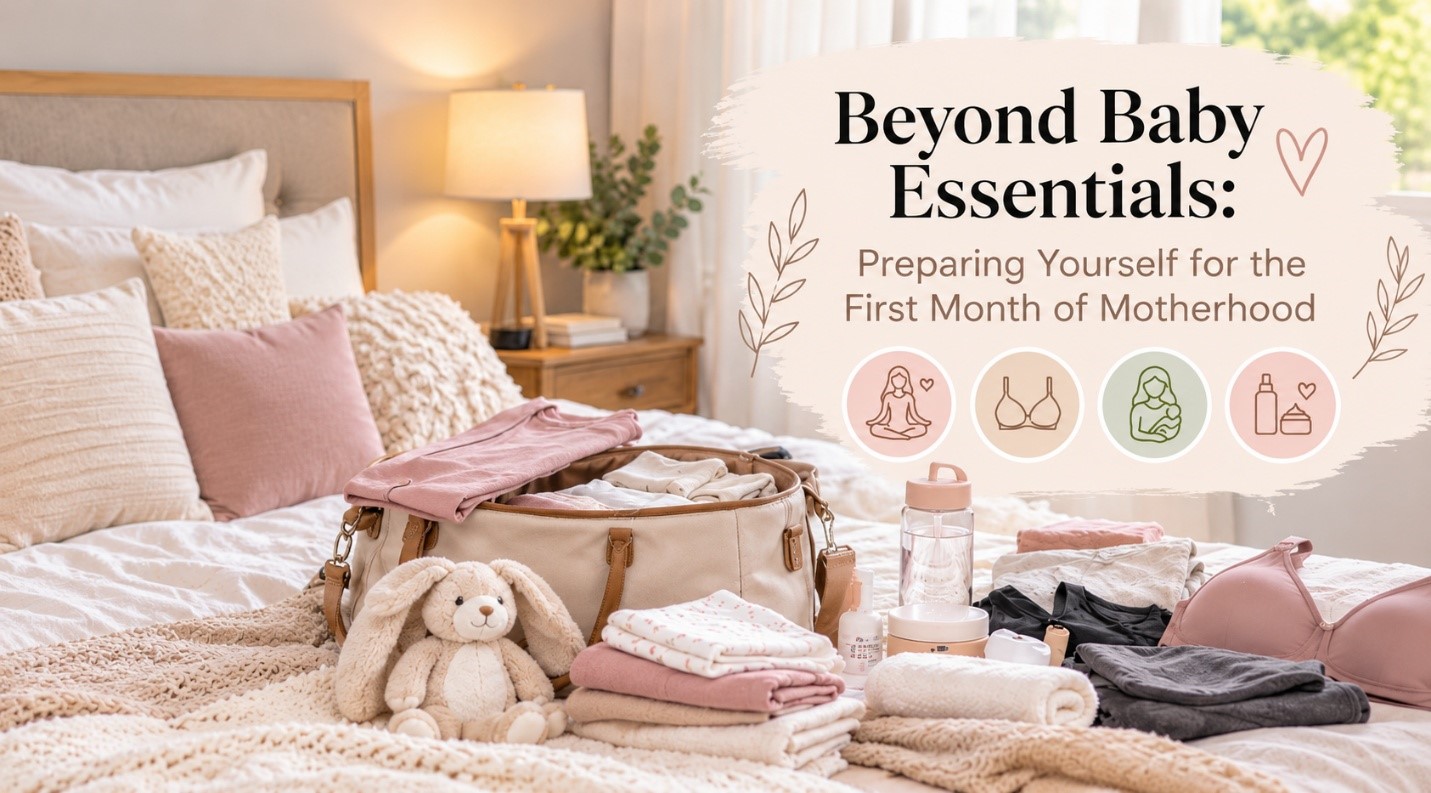
When you are getting ready for your baby’s arrival, it is easy to spend most of your time thinking about what your little one will need. You may have already packed the baby clothes, bought nappies and prepared a place for your baby to sleep. But have you thought about what you will need during those first few weeks?
The first month after delivery can feel very different from what you imagined. You will be getting used to your new routine, learning your baby’s feeding patterns and finding time to rest whenever you can. Even getting dressed or taking a shower may require a little more planning than before.
Preparing a few things for yourself can make this period easier to manage. Comfortable postpartum clothing, suitable nursing bras, easy-to-use feeding essentials and a little help at home can all make a difference.
You do not need to prepare for every possible situation. Start with the things that will help you feel more comfortable while you recover and get to know your baby.
What Should You Prepare for Yourself Before Your Baby Arrives?
Baby essentials usually get plenty of attention, but your own needs deserve a place on the list too. Think about the things you will use every day rather than buying everything that looks useful.
Comfortable clothes are a good starting point. You may spend more time at home, resting, feeding your baby or moving between the bedroom and living room. Clothes that are easy to put on and do not press against your body can be especially useful.
It is also worth keeping your personal care items, feeding supplies and a few everyday essentials in one place. You will not want to search through different drawers every time you need something.
Before your due date, try putting together a small basket with items you use regularly. You could keep your water bottle, lip balm, phone charger, tissues and other personal essentials nearby. It is a simple step, but it can save you from getting up repeatedly when you are tired.
What Clothes Should You Wear During the First Month After Delivery?
Your body needs time to recover after childbirth, and your clothing choices may change during this period. You might find that your usual jeans or fitted tops do not feel comfortable yet. There is no need to rush back into your pre-pregnancy wardrobe.
Choose Loose and Comfortable Postpartum Clothing
Start with clothes that give your body room. Soft T-shirts, loose nightdresses, relaxed trousers and comfortable lounge sets can be practical choices for the first few weeks.
You may also want to keep a few outfits aside specifically for after delivery. This means you will not have to think too much about what to wear when you are tired or getting ready for a check-up.
If you have had a caesarean birth, clothing that does not rub against your incision may be more comfortable. Follow your healthcare professional’s advice about recovery and wound care, and choose garments that do not put pressure on the area.
There is no fixed timeline for returning to your regular clothes. Wear what feels right for your body at that stage.
Keep Nursing-Friendly Tops Within Reach
If you plan to breastfeed, getting dressed may involve another consideration: feeding access. Tops with buttons, wrap fronts or nursing openings can make it easier to feed your baby without removing your entire top.
You do not need a separate outfit for every part of the day. A few nursing-friendly tops that work with your regular trousers or lounge bottoms may be enough to start with.
Lovemère offers maternity and nursing wear for mothers looking for clothing options during pregnancy and breastfeeding. Exploring nursing-friendly styles before your baby arrives can help you decide which pieces suit your routine.
How Do You Choose the Right Nursing Bra After Delivery?
Your breasts may feel different after childbirth, particularly when your milk supply changes. A bra that fitted comfortably during pregnancy might not feel the same a few days after delivery.
This is why it helps to choose a nursing bra based on your current fit rather than relying only on your previous size.
Look for a bra that feels comfortable around your ribs and gives your breasts enough room. The band should not dig into your skin, and the cups should not feel tight or press against your breasts. You should also be able to open and close the nursing clips without struggling.
Some mothers prefer a soft nursing bralette for relaxing at home, while others want more support during the day. Your choice may depend on your activities, personal preference and how your body feels.
Lovemère has a collection of maternity and nursing bras with different styles to explore. You can compare the available options and look for a design that suits your needs. If your size changes after delivery, reassess the fit instead of continuing to wear a bra that feels uncomfortable.
One important thing to remember is that tighter does not mean more supportive. A bra should feel secure without creating painful pressure. If you notice persistent breast pain, redness or other concerning symptoms, seek advice from a healthcare professional.
Which Breastfeeding Essentials Should You Keep Ready?
Breastfeeding can take up a large part of your day during the early weeks. Having a few useful items nearby can save time, especially when your baby wants to feed just as you have settled down to rest.
You might find the following items helpful:
- Nursing bras: Keep a couple of comfortable options ready so you have another to wear while one is being washed.
- Nursing pads: These may be useful if you experience milk leakage.
- Burp cloths: Keep a few within easy reach during and after feeds.
- Water bottle: Having water nearby can help you remember to drink regularly throughout the day.
- Muslin cloths: These can be useful for wiping small spills and keeping your clothes clean.
- Breast pump and storage supplies: If you plan to express milk, prepare the equipment and storage items you expect to use.
You do not necessarily need every item on this list. Your feeding routine will develop over time, and you can add things when you understand what is useful for you.
If you are using a breast pump, a suitable pumping bra may also be worth considering. Lovemère offers the Skye Pump Bra for mothers who want a hands-free pumping option. Check the product details to make sure it suits your pump and personal requirements.
How Can You Make Recovery More Comfortable at Home?
The first month can involve a lot of sitting, resting, feeding and getting up again. It helps to make your home work for you instead of expecting yourself to manage everything as usual.
Choose one comfortable place where you can feed your baby and keep your everyday essentials nearby. A small table or basket can hold your water bottle, phone, burp cloths and other things you reach for regularly.
Keep a few changes of comfortable clothing within easy reach, too. You may need to change after a feed, a spill or simply because you want something fresh. Having clean clothes ready can make the day feel less complicated.
Postpartum recovery products may also be useful, depending on your needs. Lovemère offers a Postpartum Tummy Wrap Binder for mothers considering additional support around the abdomen after delivery. However, a binder is not essential for everyone and should not replace medical care. Ask your healthcare professional whether it is appropriate for you, particularly after a caesarean birth, and follow their guidance on when and how to use it.
Most importantly, give yourself permission to rest. Household tasks can wait, and you do not need to entertain visitors if you are not ready. Accepting help with meals, laundry or shopping can leave you with more time to recover and care for your baby.
What Should You Plan for Beyond Clothing and Feeding?
Preparing for motherhood is not only about shopping. A little planning around your daily routine can be just as valuable.
Arrange help where possible. Talk to your partner, family or friends before delivery about the kind of support you may need. Even help with meals or groceries can take some pressure off.
Keep important contacts handy. Save your healthcare provider’s number and know whom to contact if you have questions about your recovery or your baby’s care.
Make space for rest. You may not follow a regular sleep schedule during the early weeks. Rest whenever you can, and ask someone you trust to help when you need a break.
Keep expectations realistic. Some days will go smoothly, while others may feel tiring. You are learning about your baby at the same time as your baby is getting used to life outside the womb.
If you feel persistently overwhelmed, very low or unusually anxious, speak with your healthcare professional. You deserve support during this transition, just as your baby does.
Preparing for Motherhood with Lovemère
The first month after delivery is a time of adjustment. You may be learning how to breastfeed, figuring out which clothes feel comfortable and getting used to a new daily routine. You do not need to have everything perfectly organised before your baby arrives.
Start with the basics: comfortable postpartum clothing, a nursing bra that fits well, a few feeding essentials and a practical space where you can rest with your baby.
Lovemère offers maternity and nursing wear, pumping options and selected postpartum products that mothers can explore while preparing for this stage. Choose the items that fit your needs rather than feeling that you have to buy an entire collection.
It is easy to put all your attention on your newborn, especially when you are preparing for the first time. But looking after yourself matters too. Having comfortable clothes, useful supplies and people you can ask for help will not make every day predictable, but it can make the first month feel a little more manageable.
Frequently Asked Questions
1. What should I pack for myself before giving birth?
Prepare comfortable clothes, nursing bras if you plan to breastfeed, personal care items, maternity pads and any essentials recommended by your healthcare provider or hospital. Keep your phone charger, water bottle and going-home outfit ready as well.
2. What type of bra is best during the first month after delivery?
A comfortable nursing bra with easy feeding access may be useful if you are breastfeeding. Choose a style that fits your current body without digging into your skin or creating pressure. Your size may change after delivery, so check the fit regularly.
3. How many postpartum outfits and nursing bras do I need?
There is no exact number. Start with a few comfortable outfits that you can wash and wear regularly, along with two or three nursing bras if you plan to breastfeed. You can add more once you know what works for your routine.
4. Do I need a postpartum tummy binder after delivery?
No. A postpartum binder is a personal choice, not a requirement for recovery. Ask your healthcare professional whether it is suitable for you, especially after a caesarean birth, and follow their advice before using one.
READ ALSO: How to Buy Car Tyres Online | Practical Tips and Tricks