


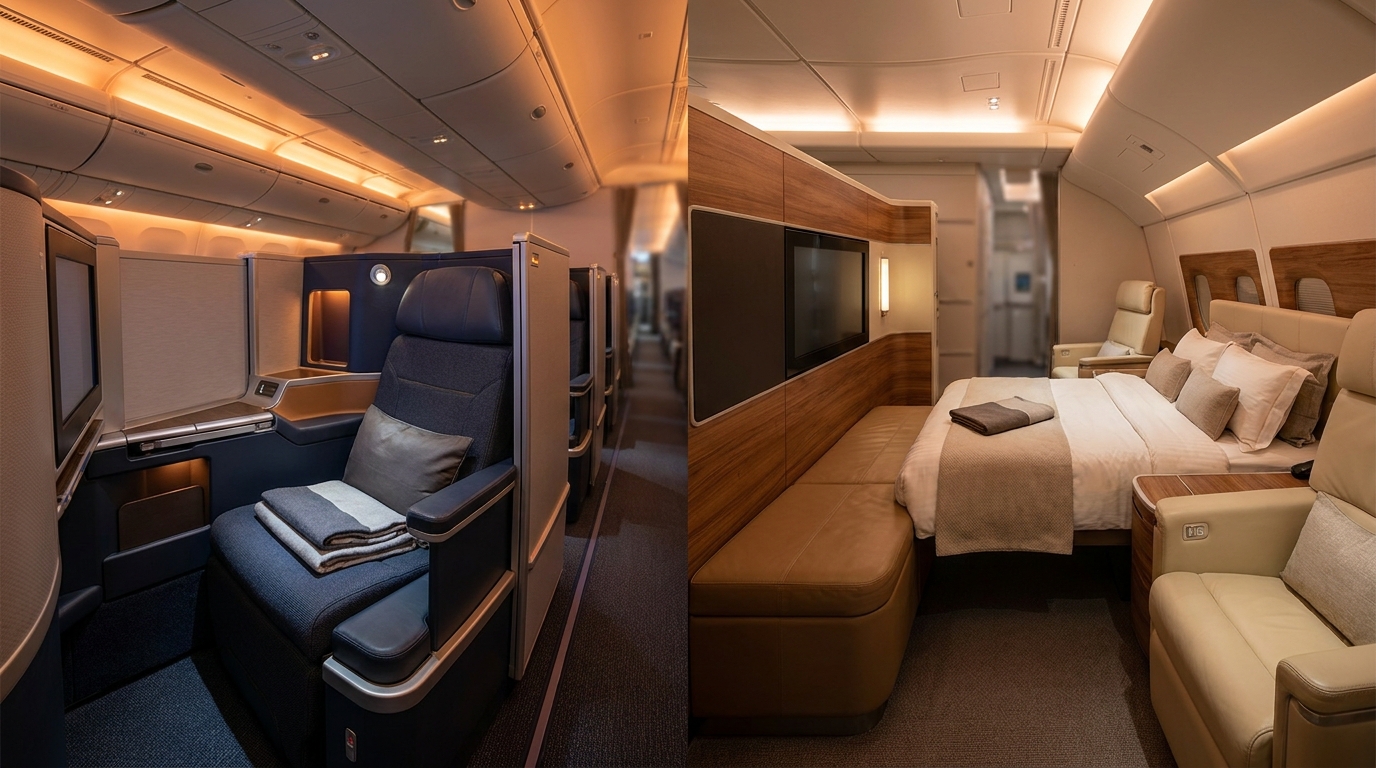
Many travelers assume first class is simply a bigger, fancier version of business class, but the real picture is more complicated. The difference between business class and first class depends on the airline, the aircraft, and the route, and in 2026 a growing number of carriers have removed first class altogether. This guide compares the two cabins on seats, service, lounges, and price, explains where the names can mislead you, and helps you decide which one deserves your money.
Difference Between Business Class and First Class at a Glance
The table below describes the typical long-haul situation, where an aircraft carries both cabins and first class is a true step above business. Every airline sets its own standards, so treat these rows as general patterns rather than guarantees.
| Feature | Business class | First class |
|---|---|---|
| Where you find it | Most long-haul flights, plus some regional and domestic routes | A shrinking group of airlines, mostly on long-haul flights that also have a business cabin |
| Seat | Reclining or lie-flat, increasingly with a sliding door | Larger private suite, with a separate bed in the very top products |
| Cabin size | Dozens of seats on a wide-body jet | Often fewer than a dozen |
| Service | Attentive, but shared among many passengers | Closer to personal service with a higher crew ratio |
| Food and drink | Multi-course meals and good wines | Dining on demand and the airline’s best champagne and wine |
| Lounge | Dedicated business lounge | Sometimes a separate, more upscale lounge or area |
| Typical price | Premium fare, often thousands of dollars | Often a multiple of the business fare |
| Availability | Widely sold and still expanding | Shrinking in 2026 |
Why the Names Cause So Much Confusion
On some long-haul international flights, airlines sell four cabins: economy, premium economy, business, and first. On many other flights there is only economy plus a single premium cabin, which the airline may label either business or first. According to Capital One’s travel guide, many domestic flights have no business class at all, and many international flights are replacing first class with business class, which makes a direct comparison tricky.
Domestic flights add another layer. NerdWallet points out, for example, that JetBlue’s Mint business class offers a suite with a lie-flat bed, while Alaska Airlines’ first class is a roomier seat that does not lie flat. A few travel sites claim that domestic first class matches international business class, but those examples show why any blanket statement deserves caution. The travel site One Mile at a Time has noted that much of the confusion simply comes down to marketing, so the label on your ticket tells you less than the specific aircraft and seat do.
Seats, Space, and Privacy
A business class seat on a modern long-haul jet usually folds into a flat bed, and newer layouts give every passenger direct aisle access. Many airlines now add sliding doors, which is a feature once associated only with first class. The footwell in business class is often narrower, which some frequent flyers notice when they try to sleep on their side or stretch out.
First class generally gives you more floor space, a wider seat, and a fully enclosed suite, and the very best versions add a separate bed or even multiple rooms. Etihad’s The Residence, a private apartment-style space, earned an honorable mention in a 2026 first class ranking reported by InsideFlyer from One Mile at a Time. On paper the difference between business class and first class in seating is smaller than ever, because a well-designed business suite with a door can rival an older first class seat for privacy.
Service, Dining, and Onboard Extras
The biggest gap often shows up in how many crew members serve you. One Mile at a Time estimates that first class typically has roughly one flight attendant for every few passengers, while business class may have one for about ten or more. That ratio explains why first class feels more personal, with your name used, your preferences remembered, and requests handled before you make them.
Both cabins serve multi-course meals with quality wines, and some airlines even use chefs from well-known restaurants for both. First class tends to add flexibility and indulgence on top. NerdWallet notes that Emirates offers first class passengers dining on demand, caviar, and Dom Pérignon, none of which appear in its business cabin. Presentation also differs, with some airlines serving first class meals on fine china. Amenity kits are similar in both cabins, though first class kits are more likely to include extras such as premium pajamas.
A few extras exist only at the top. The onboard shower on the Emirates A380 is available to first class passengers only, and it remains one of the rare examples of an airline offering a shower in the air.
Airport Lounges and Ground Service

Priority check-in, fast-track security where available, and lounge access come with both tickets on most international airlines. The main difference is the quality of the space. Some airlines run a separate first class lounge with à la carte dining, quiet rooms, or spa services, and The Motley Fool notes that a few even offer a dedicated first class terminal.
At some airports the two cabins share a single premium lounge, so the ground experience can be identical. When a separate lounge exists, it can be a real highlight. NerdWallet reports that Emirates first class passengers flying through Dubai can enjoy a complimentary massage in the lounge, and some airlines also provide chauffeur transfers in both cabins, with a more upscale car sometimes reserved for first class.
How Much More Does First Class Cost?
Fares move constantly, so no single figure is reliable, and the numbers below are examples rather than standards. Capital One’s guide cites a sample American Airlines flight from Newark to London that cost about $3,000 in business class and about $13,000 in first class as of July 2024. Booking.com’s business travel blog says a UK to US round trip in business class can run anywhere from $2,500 to $6,500 depending on airline, route, and season.
A rule of thumb from corporate travel firm Itilite says first class usually costs two to four times as much as business class, but the Capital One example sits above that range, so the rule is only rough. One Mile at a Time says that top-end international first class tickets can often exceed $10,000. There are exceptions too, since a first class ticket bought far in advance can occasionally cost about the same as a business ticket bought at the last minute. Paying with miles can soften the blow, although Australian Frequent Flyer reports that Emirates raised its first class award prices from 31 March 2026, and seats are scarce.
How the Difference Between Business Class and First Class Is Shrinking
Airlines have been dropping first class for years, and 2026 has brought more examples. Fortune has reported that Oman Air, Air New Zealand, and Turkish Airlines all moved away from it, and that Malaysia Airlines is replacing its Business Studio cabin with new business suites. According to View from the Wing, American Airlines puts its first retrofitted Boeing 777-300ER into service with 70 Flagship Suite business seats and no first class, with first class sales ending on those aircraft for travel from November 19, 2026. Reports about the rest of American’s timeline differ, with one aggregator saying first class tickets remain on sale through 2027, so check the airline’s current schedule. Thai Airways has also said, according to a report in Travel Extra, that it plans to eliminate first class within two to three years in favor of upgraded business suites.
Some airlines still invest heavily in true first class. A 2026 ranking reported by InsideFlyer lists Air France, Emirates, Japan Airlines, Singapore Airlines, Etihad, ANA, Cathay Pacific, SWISS, Lufthansa, and Qatar Airways, and says Garuda and Oman Air dropped the cabin entirely. The exact number of airlines still selling first class is not officially confirmed, as different sites cite figures from nine to roughly twelve, so treat any count as approximate. Meanwhile, some carriers are blurring the line from below, such as Air France, which Fortune says has added larger suites in rows one and ten of its new business cabins.
Which Cabin Is Right for You?
For most travelers, business class makes more sense, according to The Motley Fool, and first class only pays off if you want the most extravagant experience and are comfortable splurging. Understanding the difference between business class and first class matters less than understanding the specific product you are booking. One airline’s best business suite can beat another airline’s first class, and One Mile at a Time stresses that quality varies a great deal within both cabins.
Before you book, look up the exact aircraft and seat on your flight, because airlines often fly several versions on the same route. Check whether the suite has a door and direct aisle access, whether a separate lounge is included, and how the fare compares with the points price. If you mainly want a good night’s sleep on an overnight flight, a modern business suite will usually deliver most of what first class offers for a fraction of the cost.
Frequently Asked Questions
Is first class always better than business class?
No. Quality depends on the airline and the aircraft, and some older first class cabins have been criticized for offering only a modest improvement over business class. Aviation news site Aviation A2Z described American’s older first class seat in exactly those terms before the airline began replacing it with Flagship Suites.
Can I upgrade from business class to first class?
It depends on the airline and the fare. Some carriers allow paid or mileage upgrades, but first class cabins are small and upgrade space is limited, so there is no universal rule. Ask the airline directly, especially on routes where first class is being retired.
Why are airlines removing first class?
Reports point to a mix of stronger business class products and the chance to use the freed space more flexibly. In American’s retrofit, the net additions are all in business class and premium economy, according to View from the Wing. Thai Airways’ stated goal is a consistent product across its fleet.
Do first class passengers always board and leave the plane first?
Usually, but not always. On some flights the airline calls first and business class to board together, and the order of exit depends on how the aircraft’s doors and cabins are arranged.
Does business class always have a lie-flat bed?
No. Long-haul business cabins usually do, but some regional and domestic business cabins have reclining seats instead. Check the seat type for your specific flight before you book.
Is first class worth it on a short flight?
Rarely. The features that justify the price, such as a closed suite, a flat bed, and extended dining, matter most on long overnight journeys, and genuine first class is mainly found on long-haul routes.
Conclusion
The difference between business class and first class is real, but it is narrower than the labels suggest and shrinking each year as airlines build better business suites and retire first class cabins. If you want the very best and can afford it, a true first class cabin on an airline that still sells one is worth considering, while most travelers will get excellent comfort from a well-chosen business class seat.
Disclaimer: This article is for general information only and is based on publicly available reports as of October 2026. Airline products, schedules, and fares change often and are not guaranteed, so confirm details with the airline or your travel agent before booking. Nothing here is financial or travel advice.
Explore More
Can You Bring Toothpaste on a Plane? Rules for Carry-On, Checked Bags, and Abroad

I’m Muhammad Ubaid, founder of YBR Magazine. I research and write detailed guides on America’s National Parks — covering entry fees, permits, best times to visit, and planning tips — using official NPS sources and up-to-date information.

