

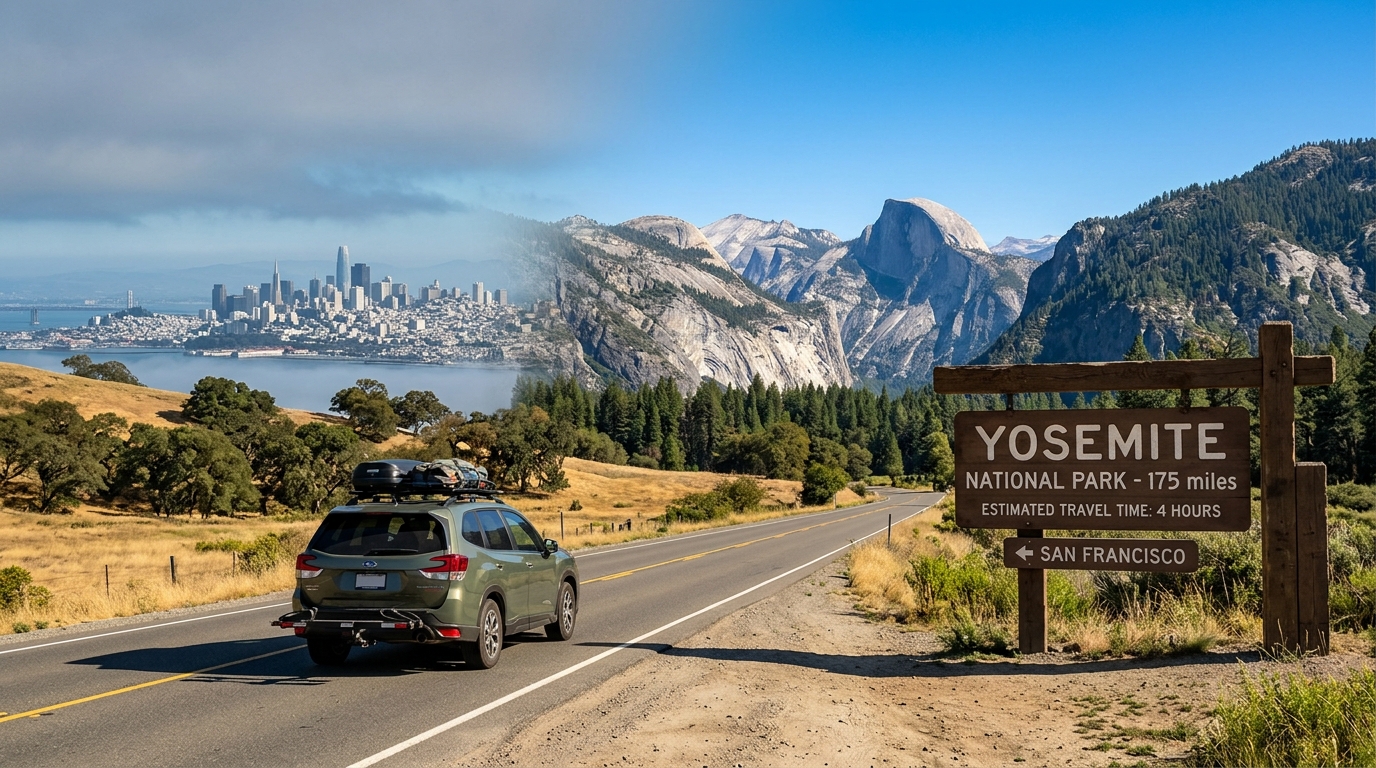
Planning a trip from a bustling coastal city to a famous mountain reserve involves more than just looking at a map. Many travelers wonder how far Yosemite National Park is from San Francisco, California, before they pack their bags for a weekend getaway. Transitioning from sea level in the Bay Area into the high elevations of the Sierra Nevada requires understanding distances, driving times, and changing weather conditions. Knowing the exact miles and expected hours on the road helps travelers make the most of their vacation without feeling rushed. San Francisco serves as one of the most popular jumping-off points for visitors arriving by air or utilizing rental cars, making the route heavily traveled year-round.
Distance From San Francisco to Yosemite National Park
The direct driving distance from San Francisco to Yosemite National Park ranges from about 170 to 200 miles depending on your exact starting point and your destination within the park.
San Francisco drivers typically need around 3.5 to 4.5 hours of driving time under normal traffic and weather conditions. This baseline estimate changes based on which highway you take and how heavy the traffic is as you leave the Bay Area and cross California’s Central Valley. Drivers should also account for potential stops along the way for fuel, food, and rest, which can stretch the total travel window even further.
Driving Routes and Expected Travel Times
Drivers leaving San Francisco usually take Interstate 580 east toward Tracy before connecting to State Route 120 or State Route 140.
Route 120 through Oakdale provides a very direct path to the Big Oak Flat Entrance of Yosemite National Park. Route 140 through Merced and Mariposa offers a slightly lower elevation approach that tends to stay clear of heavy winter snow longer than northern routes. Travelers should always check local road conditions because construction or accidents in the Central Valley can add significant delays to the journey. Choosing the right highway often depends on current weather forecasts and whether drivers prefer scenic winding mountain passes or broader, faster valley stretches.
Entering Yosemite National Park From the West
West-side park entrances serve as the primary gateways for travelers arriving from San Francisco.
The Big Oak Flat Entrance and the Arch Rock Entrance on Route 140 bring visitors directly into the western portion of Yosemite National Park near Yosemite Valley. Choosing the right gate depends on which lodging or sights you plan to visit first. Each entrance station sits past the park boundary, meaning drivers still have a short drive on park roads before reaching the main valley floor. Arriving early in the morning helps drivers avoid long lines at these busy entry kiosks during peak summer months.
Public Transportation Options Without a Car
Visitors who prefer not to drive can still reach Yosemite National Park using a combination of trains and regional buses.
Amtrak and regional transit services connect San Francisco to hubs like Merced or Fresno, where travelers can catch the Yosemite Area Regional Transportation System buses. For travelers looking to organize their schedule in advance, learning about planning Yosemite National Park in two days can help structure a short itinerary once you arrive. Bus connections run regularly during peak seasons, making car-free travel a reliable alternative for international visitors and city residents who prefer a relaxed journey.
Seasonal Travel Considerations
Weather plays a massive role in how long the trip takes and which mountain passes remain open throughout the year.
While western entrance roads stay open year-round, high mountain passes like Tioga Pass close during winter and spring due to heavy snow accumulation. Winter travelers driving from San Francisco may be required by California law to carry tire chains in their vehicles even if the main highways look clear when starting out. Checking weather forecasts before departure ensures a safe and smooth journey into the mountains while keeping passengers prepared for sudden shifts in temperature and visibility.
Frequently Asked Questions
How long is the drive from San Francisco to Yosemite National Park?
The drive usually takes between 3.5 and 4.5 hours depending on traffic and your specific destination within the park.
What is the closest park entrance to San Francisco?
The Big Oak Flat Entrance on Highway 120 and the Arch Rock Entrance on Highway 140 are the closest western entry points for travelers coming from the Bay Area.
Can I take a train all the way to Yosemite National Park?
Trains do not enter the park directly, but you can take a train to a connecting regional bus that carries passengers straight inside.
Do I need tire chains when driving to Yosemite in winter?
California law frequently requires drivers to carry tire chains in mountain zones during winter storms, regardless of whether you end up needing to use them.
Is traffic heavy when leaving San Francisco for the park?
Morning commute traffic leaving San Francisco and crossing Bay Area bridges can add extra time to your trip, so starting early is recommended.
Are reservations required to drive into Yosemite National Park?
Park reservation policies change depending on the season and year, so visitors should check the official National Park Service website for current rules before visiting.
What is the distance in miles from San Francisco to Yosemite?
The total distance ranges between 170 and 200 miles depending on your exact departure neighborhood in San Francisco and your destination within the park.
Disclaimer: Travel times, road rules, and park entrance requirements can change frequently due to weather and policy updates. Always verify current conditions and official guidelines from official sources before starting your trip.

I’m Muhammad Ubaid, founder of YBR Magazine. I research and write detailed guides on America’s National Parks — covering entry fees, permits, best times to visit, and planning tips — using official NPS sources and up-to-date information.