


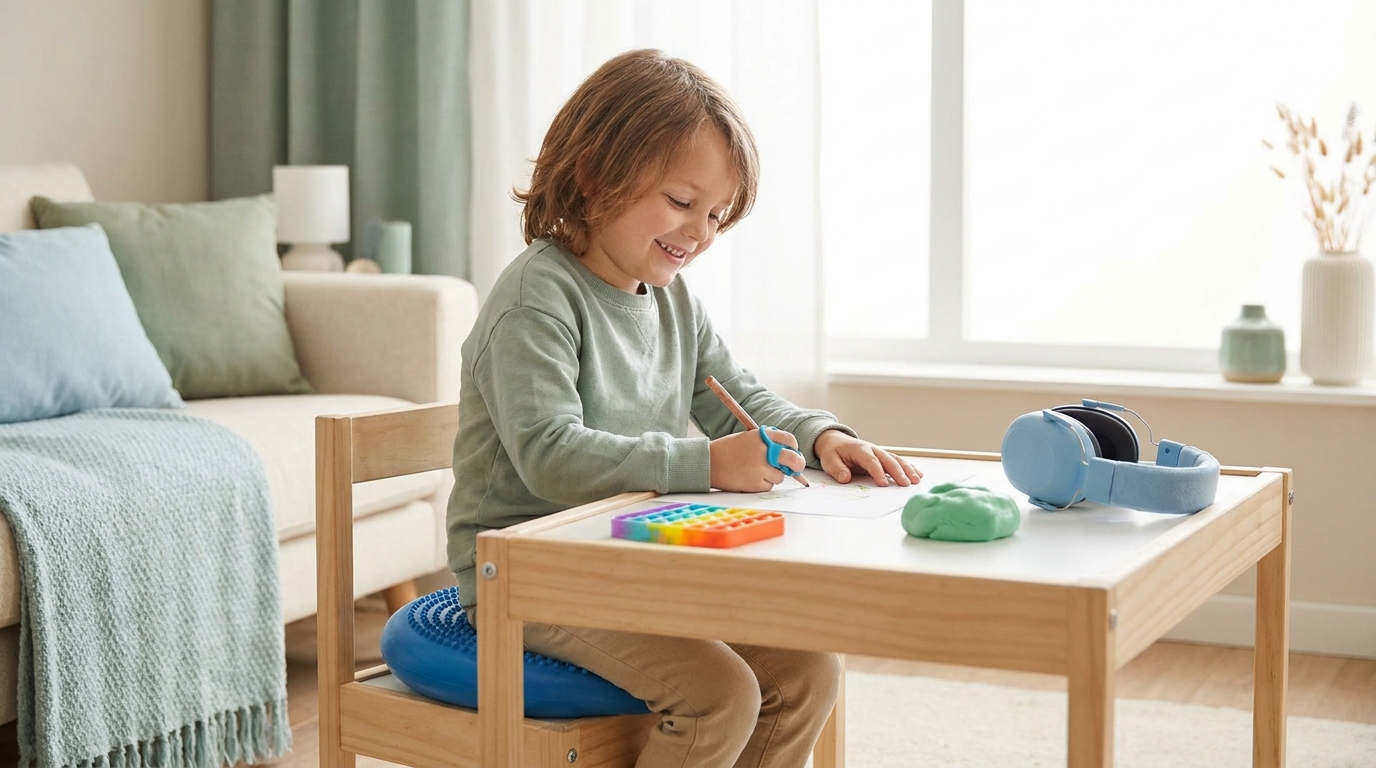
Some children find everyday sounds, textures, or busy spaces hard to handle. Others seem to need constant movement to stay focused. These differences can make homework, mealtimes, and bedtime more stressful for the whole family.
Sensory tools can help. The right products can calm busy minds, support focus, and make daily routines smoother. Here’s how to choose sensory tools that suit your child and how families can use NDIS funding to buy them.
Understanding Your Child’s Sensory Needs
Every child processes sensory information in their own way. Some are oversensitive and may cover their ears or avoid certain clothes. Others are undersensitive and seek out loud noises, strong flavours, or lots of movement.
According to Raising Children Network, sensory processing difficulties affect up to 1 in 6 children. They’re more common in autistic children and those with other developmental conditions.
Before buying tools, watch for patterns. Notice when your child seems calm and when they struggle. An occupational therapist (OT) can also assess your child’s needs and suggest tools that fit.
Fine Motor Aids for Daily Routines
Fine motor skills help children write, cut, button clothes, and use cutlery. When these tasks are hard, everyday routines can become frustrating.
Fine motor aids can make a real difference. Pencil grips help with handwriting. Therapy putty builds hand strength. Adapted scissors and cutlery make tasks easier for small or weaker hands.
These tools work well at home and at school. Using the same aids in both places helps children build skills and confidence. Many families find that options such as an ndis consumables shop online make it simple to compare products and order what they need.
Tools That Support Focus and Calm
Sensory tools come in many forms. The best choice depends on whether your child needs to calm down, stay alert, or block out distractions.
Popular options include:
- Fidget toys for busy hands
- Noise-reducing headphones
- Weighted lap pads or blankets
- Chewable necklaces for oral input
- Wobble cushions for seated focus
Weighted products can feel calming for many children. Choose the right weight with help from an OT, and always follow safety guidelines. Weighted blankets and sleeping bags are not safe for babies and should never be used for infant sleep.
Try one or two tools at a time. This makes it easier to see what works and what doesn’t.
How NDIS-Approved Orders Work
If your child is an NDIS participant, you may be able to use plan funding for sensory and fine motor tools. The NDIS explains that low-cost assistive technology, which costs under $1,500, is usually bought with the consumables budget.
Here’s how the process often works. First, check your plan to see what’s included. Next, get advice from your OT or support team on the best items. Then order from a supplier that accepts NDIS orders and can send invoices to your plan manager.
Schools can also order sensory tools for classrooms. A shared set of fidgets, headphones, and wobble cushions can help many students stay calm and focused.
Conclusion: Build Calmer, More Focused Days
The right sensory tools can turn stressful moments into calmer, more manageable ones. By understanding your child’s needs, choosing the right products, and using NDIS funding where possible, you can support focus and calm at home and at school.
Ready to find the right tools? Browse our sensory and fine motor range today and place your NDIS order with ease.

I’m Muhammad Ubaid, founder of YBR Magazine. I research and write detailed guides on America’s National Parks — covering entry fees, permits, best times to visit, and planning tips — using official NPS sources and up-to-date information.

