

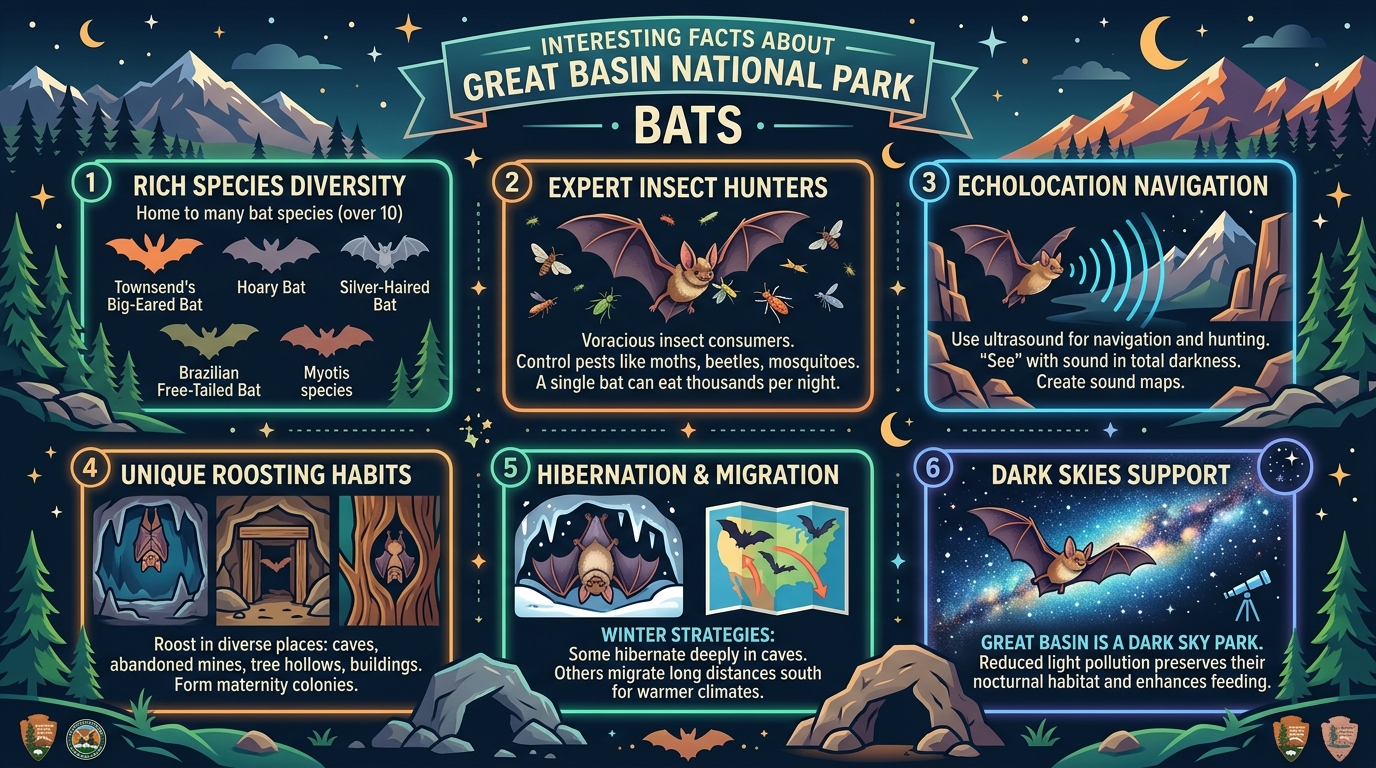
When travelers picture Nevada’s high mountain ranges and dry desert basins, flying mammals are rarely the first creatures that come to mind. Yet, Great Basin National Park hosts a surprisingly rich variety of nocturnal winged species that thrive across drastic shifts in elevation. Uncovering interesting facts about Great Basin National Park bats reveals how these animals manage freezing mountain nights, sparse water sources, and isolated alpine valleys long after visitors leave the trails.
Elevation Zones That Shape High-Altitude Nevada Bat Habitats
Great Basin National Park supports diverse bat populations because its landscape climbs rapidly from sagebrush flats up to rocky alpine peaks.
Great Basin National Park stretches from low desert scrublands at around five thousand feet all the way up to the thirteen-thousand-foot summit of Wheeler Peak. This immense vertical change creates several distinct microclimates within a short distance, giving local bat species access to pinyon-juniper woodlands, dense conifer forests, and rocky cliffs. Water is scarce in this high-altitude desert, meaning natural creeks, restored springs, and visitor-accessible surface pools act as critical gathering spots. These water sources attract dense swarms of insects after dark, which draws dozens of hungry bats out to feed. Visitors planning a mountain trip can learn more about seasonal access and weather conditions by reading this guide on the best time to visit Great Basin National Park for safe exploration.
Freezing Winters and Arid Mountain Summer Adaptations
Desert-dwelling bats in high-elevation parks rely on specialized behavioral and physical adaptations to endure extreme seasonal weather shifts.
Unlike tropical species that enjoy warm weather year-round, bats living in this region must cope with freezing winter temperatures and deep snowpacks. Some species migrate to lower elevations or warmer southern states when autumn arrives, while others choose to stay put and hibernate. Subterranean limestone caves, such as Lehman Caves, provide stable underground temperatures that protect hibernating bats from brutal surface storms. During the dry summer months, these flying mammals get most of their required moisture directly from the body fluids of the moths, beetles, and mosquitoes they catch in mid-air.
Nighttime Insect Control Across Remote Desert Canyons
Bats serve as frontline predators in the park’s ecosystem by consuming vast quantities of flying insects every single night.
A single insect-eating bat can capture hundreds of mosquitoes and agricultural pests in just one hour of active foraging. This steady predation keeps insect populations balanced throughout the park’s forested canyons and sagebrush valleys, preventing outbreaks that could harm native plants. Because bats fly across wide expanses during their nightly hunts, they also help cycle nutrients back into the soil when they return to their daytime roosts. This natural pest control happens quietly overhead while visitors rest at park campgrounds and backcountry sites.
White-Nose Syndrome and Human Disturbance Threats
Despite their strong flight abilities and natural resilience, local bat populations face serious biological and environmental pressures.
One of the most dangerous threats to bats across North America is white-nose syndrome, a destructive fungal disease that attacks animals while they hibernate. Park biologists and wildlife managers monitor underground caves closely because the fungus spreads easily among colonies that cluster together in tight spaces. Human intrusion also causes major problems when curious visitors enter unauthorized caves or abandoned mine shafts where bats are trying to rest. Disturbing a sleeping bat forces the animal to burn vital winter fat reserves too early, which frequently leads to starvation before spring arrives.

Official National Park Service Rules for Roosting Wildlife
Visitors can take direct actions to safeguard local wildlife while exploring the park’s trails, caves, and historical structures.
According to the National Park Service, visitors must strictly follow all cave closures and gear decontamination rules designed to stop the spread of fungal spores. Anyone entering permitted underground areas should never touch resting bats or shine bright flashlights directly into their sensitive eyes. Campers and hikers must also secure their food waste properly and avoid using chemical pesticides that could poison the local insect food supply. Responsible outdoor habits ensure that these fragile flying mammals continue to inhabit their high-desert home safely.
Common Questions About Great Basin National Park Bats
How many bat species live in Great Basin National Park?
Researchers have documented more than ten distinct bat species living within or migrating through the park’s diverse habitats.
Do bats live inside Lehman Caves?
Yes, several species use Lehman Caves and other nearby rock crevices for roosting, winter hibernation, or daytime shelter.
Can visitors see bats during the daytime?
Daytime sightings are rare because these animals are strictly nocturnal, though you might occasionally spot one resting under a dark rock overhang.
Are the bats in Great Basin National Park dangerous?
Like all wild animals, bats can carry rabies if sick, but they generally avoid humans and only bite if handled or cornered.
What do desert bats eat if there are no plants?
Desert bats are strict carnivores that feed exclusively on flying insects like beetles, moths, mosquitoes, and flying ants.
How does the park protect its bat populations?
According to the National Park Service, protection efforts include cave closures, white-nose syndrome monitoring, and public education campaigns.
Disclaimer: Wildlife habits, park access rules, and conservation guidelines can change over time. Always verify current park regulations and safety tips directly through official sources like the National Park Service before your trip.

I’m Muhammad Ubaid, founder of YBR Magazine. I research and write detailed guides on America’s National Parks — covering entry fees, permits, best times to visit, and planning tips — using official NPS sources and up-to-date information.