


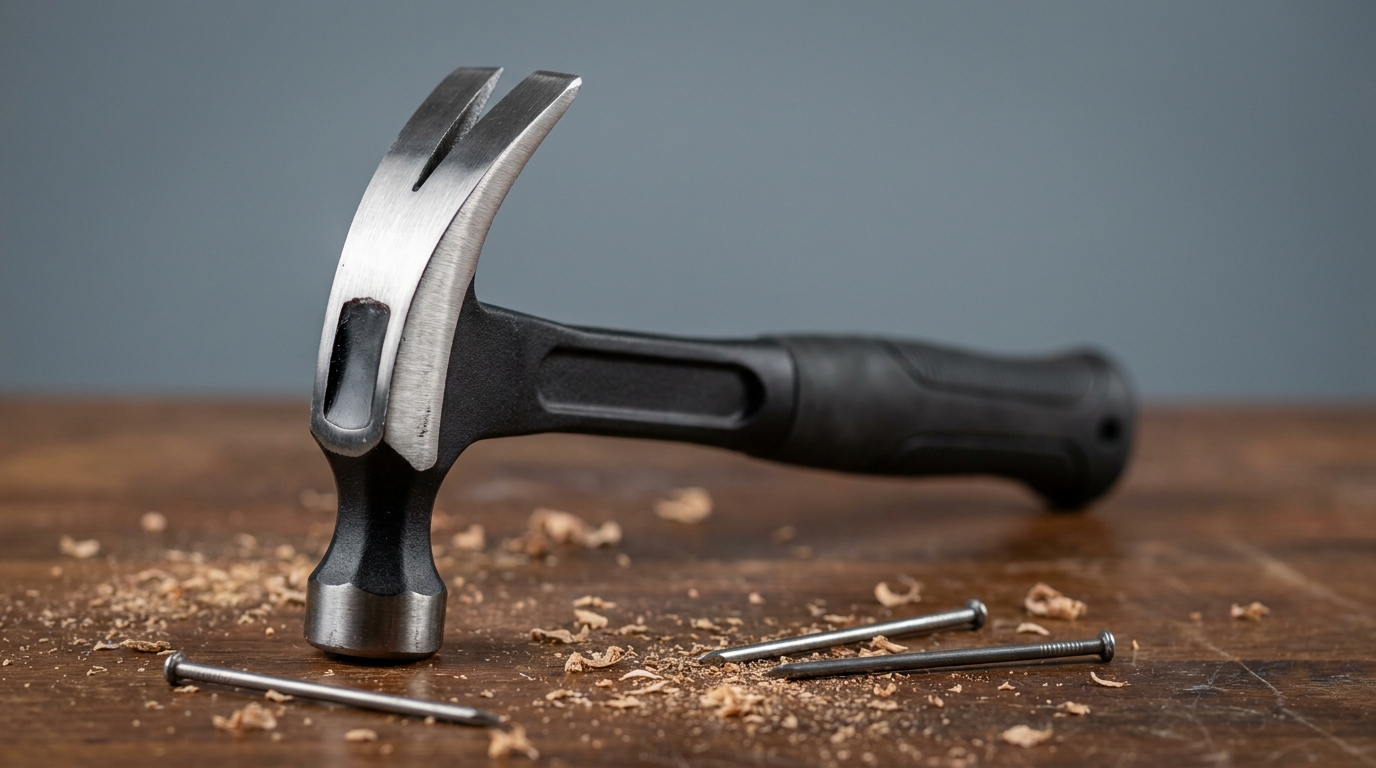
The Picard Full-Steel Rip Hammer is a one-piece forged steel hammer from the German tool brand Picard, built around a straight claw for framing, prying and pulling nails. Searching for it mostly returns retailer pages that repeat the same manufacturer text, which makes it hard to see how the 595 differs from the 795, or whether the numbers on different listings agree. This guide gathers the published specifications, explains the practical differences between versions, and points out where the information online is inconsistent or simply missing.
Quick Facts
The table below compares the three closely related models that most listings mention. All figures come from retailer and distributor product pages that copy or summarize Picard’s own descriptions, so treat them as listed values rather than lab measurements.
| Feature | No. 595 Rip Hammer | No. 795 Rip Hammer | No. 596 Framing Hammer |
|---|---|---|---|
| Head finish | Black powder-coated, corrosion-resistant | Bright finish with transparent coating, corrosion-resistant | Black powder-coated, corrosion-resistant |
| Grip | Two-component, ergonomic, low vibration | Leather, twist-resistant | Two-component, ergonomic, low vibration |
| Handle | Forged full steel | Forged full steel | Forged full steel, extra long |
| Length | 347 mm | 347 mm | 435 mm |
| Listed weight | 1.02 kg (1,025 g per a distributor) | 0.99 kg (about 1,000 g per a German seller) | 1,153 g per a distributor |
| Face options | Plain or checked (roughened) | Plain or checked (roughened) | Plain or checked (roughened) |
| Nail holder | Magnetic | Magnetic | Magnetic |
| Head diameter | 22 mm per a distributor | Not stated in listings reviewed | 22 mm per a distributor |
What the Picard Full-Steel Rip Hammer Is
At its core, this tool is a framing-style hammer where the head and handle are forged as a single steel piece, so there is no wooden or fiberglass shaft that can loosen or break at the eye. According to the product descriptions on several retailer sites, the head is made from alloyed Picard special steel that is hardened and tempered, and it carries a strong double claw plus a magnetic nail holder for starting nails one-handed. A German marketplace listing explains that the newer head shape is forged in two versions, a long-handled framing hammer and a shorter, lighter rip hammer, each paired with either a leather or a two-component grip.
The listings describe the head as “American pattern,” but none of them define the term. It generally points to the US-style framing hammer shape, and it is used in contrast with the Rhineland pattern that appears on Picard’s tilers’ hammers. Some stores also call the 595 a “solid steel” rip hammer, which is the same tool under a slightly different name, so it helps to search by article number as well. One retailer’s brand description says Picard was founded in 1857, though that date comes from the seller’s text rather than an independent history.
Differences Between the 595 and the 795

Grip and feel
The 595 uses what listings call an ergonomic two-component grip, which the manufacturer says keeps vibration low, although the exact materials are not spelled out. The 795 swaps that for a leather grip that listings describe as twist-resistant, a choice that mainly comes down to personal preference for a firmer, more traditional hold. Neither grip has been tested in any independent review I could find, so comfort claims remain the manufacturer’s own.
Finish and price
The 595 has a black powder-coated head, while the 795 has a bright metal finish with a transparent coating. Both are described as corrosion-resistant, but no listing gives a coating thickness or a salt-spray rating. The leather-grip 795 sits noticeably higher in price in every store I checked, though the listings do not say whether the difference comes from the grip, the finish or something else.
Weight labels that do not quite match
Some 795 listings carry “35 oz” in the product title, which converts to roughly 990 g and lines up with the 0.99 kg weight on the same page. The 595 is listed at about 1,025 g, which is a little over 36 oz, so the two models are close in weight but not identical. It is also unclear whether the ounce figure refers to the whole tool or only the head, since Picard does not publish a separate head weight in the material I found.
Where It Sits in the Picard Range
The 596 is the long-handled framing version of the same design, giving more reach and leverage at the cost of extra weight and a longer handle to carry on a belt or in a tool bag. A leather-grip 796 also exists alongside the 795, according to a New Zealand distributor that sells the pair together. Picard also sells full-steel roofing and carpenter’s hammers numbered 590 and 790, and one retailer lists a 590 variant described as weight-reduced, so anyone who finds the 595 too heavy has a lighter alternative within the same brand.
What the Rip Claw Does Well and Where It Falls Short

A rip claw is a nearly straight claw that works as a small pry bar, which is why it is popular for splitting boards apart, opening up framing and lifting sheathing during demolition. Hardware suppliers such as McMaster-Carr note that straight-claw hammers are another name for framing hammers and that they remove nails less efficiently than curved-claw hammers. The practical takeaway is that a rip claw is the better tool for rough work and prying, while a curved-claw hammer is easier on nails that need to be pulled cleanly in finish carpentry.
For nail pulling with a straight claw, one workshop forum describes a technique of setting the claw low on the nail and pulling in small steps, switching sides as needed. With this method the handle stays closer to vertical than it would with a curved claw, which is why a long, solid steel handle can feel stable during extraction.
Full-Steel Handles: Strength and Trade-Offs
The main appeal of a forged one-piece hammer is durability, because there is no joint where a handle can work loose. McMaster-Carr states that steel handles are stronger than wooden handles but resist vibration less well, and a framing hammer buying guide on the site Wearify makes the same point, noting that steel can transmit more shock than hickory when hitting dense lumber. This is the reason the Picard Full-Steel Rip Hammer comes with a cushioned or leather grip, and it is also why the grip choice matters more here than on a wooden-handled hammer.
Another consequence of the solid build is weight. A one-piece steel hammer feels heavier than its head weight alone would suggest, so people who swing all day or work overhead may find it tiring compared with a lighter fiberglass or hickory model. Those who mostly pry, demolish or work in rough carpentry are likely to see the strength as a fair trade.
Using It Safely and Effectively
A few habits get the most out of a hammer of this type. Start nails with the magnetic holder, then let go and drive them with a relaxed grip near the end of the handle so the weight of the head does most of the work. When prying, place the claw as close to the nail or joint as possible, and avoid using extreme force or adding a pipe extension, because Picard does not publish a maximum prying load for these models.
As a general rule, hardened steel faces should not be struck against other hardened steel, such as chisels, punches or other hammers, since chips can fly off and cause injury. Safety glasses are a sensible precaution whenever you hammer or pry, and keeping the grip clean and dry helps prevent slips, especially on the leather version.
Price and Availability
Prices vary widely by country and seller, and the numbers below are snapshots from listings I reviewed rather than fixed prices. A US retailer lists the checked-face 595 at about 78 US dollars, while a German marketplace shows the same model between roughly 75 and 78 euros depending on the face. The 795 is more expensive, with one US store listing the checked version at about 112 dollars and another listing the plain version near 129 dollars. A New Zealand distributor lists a price range of 92.96 to 144.80 for the 595 and 596 combined, though the currency symbol in the text was not specific.
These gaps show that shopping around is worthwhile, and that a very low price on a listing should be checked against the article number and face type before buying.
What Is Not Publicly Confirmed
Independent reviews are scarce. The pages that rank for this hammer are almost entirely shop listings, and many reuse the same manufacturer paragraph word for word, so they confirm each other without adding real-world testing. The only rating I found was a single five-star score on one German listing, which is too little to draw conclusions from.
Several details that buyers often ask about are not stated in the sources I reviewed: the hardness of the face, the head-only weight, the warranty terms, any formal standard the hammers are tested to, and whether replacement grips are sold. Country of origin is shown as Germany on the 795 listings, but several 595 pages do not list it. Until Picard or an authorized dealer provides these points, they should be treated as unconfirmed.
Is the Picard Full-Steel Rip Hammer Right for You?
This hammer suits carpenters, framers, roofers and renovators who want a rugged tool that can drive nails, pry boards and take abuse without the risk of a broken handle. The 595 is the more budget-friendly choice with a modern cushioned grip, the 795 appeals to those who like leather, and the 596 makes sense for people who want extra reach on larger framing.
It is a less natural fit for finish carpenters who need delicate nail pulling, for anyone sensitive to vibration who prefers a wooden or fiberglass handle, and for buyers who want a light tool for all-day overhead work. In those cases a curved-claw or lighter hammer will likely be more comfortable.
Frequently Asked Questions
Is the Picard Full-Steel Rip Hammer made in Germany?
Picard is a German brand, and the 795 listings I reviewed show Germany as the country of origin. Several 595 pages do not state an origin, so check the seller’s page or packaging if this matters to you.
Should I choose a plain face or a checked face?
A checked, or roughened, face grips the nail head and reduces glancing blows, which suits rough framing. A plain face is gentler on surfaces and leaves fewer marks, so it is usually better where appearance matters.
Does the magnetic nail holder work with every nail?
It holds ordinary steel nails well, but non-magnetic types such as aluminum nails and many stainless steel nails may not stay in place. Keep a few of your usual nails handy to test before a big job.
Can the handle be replaced if it wears out?
A forged one-piece steel hammer has no separate wooden handle to swap. Whether Picard or its dealers sell replacement grips is not confirmed in the listings I found, so ask the seller before buying if this matters.
Is it heavier than a typical framing hammer?
Compared by head weight alone it may not be, because common framing hammers are often sold by head weight, such as 22 oz. Picard’s figures describe the whole tool, and the solid steel handle makes the total heavier than many wood or fiberglass hammers with a similar head.
Can I use it as a demolition pry bar?
The straight claw is designed for prying and ripping boards apart, which is a normal use for this style of hammer. Picard does not publish a load limit, so avoid heavy leverage tricks and stop if you see bending or cracking.
Conclusion
The Picard Full-Steel Rip Hammer is a solid choice for rough carpentry, prying and demolition, with the 595 offering a cushioned grip at a lower price and the 795 offering leather for those who prefer it. Buyers should keep in mind that much of the available information comes from shop descriptions, that independent testing is hard to find, and that a few key details remain unconfirmed. Comparing the article number, face type and grip before purchase will help you get the version that matches your work.
Disclaimer
This article is for general information only. Specifications, prices and availability come from retailer and distributor listings and may change or contain errors, so confirm details with Picard or an authorized seller before buying. Hammers and prying tools can cause injury if used incorrectly, so wear suitable eye protection and follow the manufacturer’s instructions.
Explore More
Bosch 18V-2100 LED Spotlight: Specs, Runtime, Uses and Buying Advice

I’m Muhammad Ubaid, founder of YBR Magazine. I research and write detailed guides on America’s National Parks — covering entry fees, permits, best times to visit, and planning tips — using official NPS sources and up-to-date information.

