

If you are trying to work out what to do in Honolulu, the good news is that the city fits beaches, crater hikes, royal history, World War II sites, and a lively food scene into a small area. The harder part is timing, because several of the best-known places now rely on reservations, closed days, or timed entry, and a surprising number of travel pages still print old rules. This guide pulls together current information from official park, city, and museum pages, and it points out where popular websites disagree so you can plan with fewer surprises.
Honolulu is the capital of Hawaii and the main city on the island of Oahu. Pearl Harbor carries a Honolulu mailing address, and Hanauma Bay is managed by the City and County of Honolulu, so both belong on any local list even though they sit outside the Waikiki area. Each attraction below was checked against the managing agency’s own page where one was available, and anything that could not be confirmed is marked as such. Prices and hours were checked in late October 2026 and can change without notice, so confirm them before you book.
Quick Planning Snapshot
The table gathers the numbers most visitors ask about first. Fees are for adult non-residents unless noted, and anything that needs more explanation is covered in the sections that follow.
| Attraction | Cost | Booking | Days and hours |
|---|---|---|---|
| Diamond Head State Monument | $5 per person, plus $10 per vehicle if you park inside; children 3 and under free | Required for non-residents, up to 30 days ahead on the official state parks site | Daily 6 a.m. to 6 p.m.; closed Dec. 25 and Jan. 1 |
| Hanauma Bay Nature Preserve | $25 plus a 2.35% online fee; parking $3 in cash; children 12 and under free | Recommended; admission-only slots open two days ahead at 7 a.m. Hawaii time | Wednesday to Sunday; entry 6:45 a.m. to 1:30 p.m.; everyone out by 4 p.m.; closed Mon., Tue., Dec. 25 and Jan. 1 |
| USS Arizona Memorial program | Free, with a $1 booking fee per ticket; the visitor center and museums are free and need no ticket | Required, through Recreation.gov; tickets release at 3 p.m. Hawaii time, eight weeks ahead and 24 hours ahead | Boats leave every 15 minutes, 8 a.m. to noon and 1 p.m. to 3:30 p.m. |
| Iolani Palace | Docent-led tour: adults $32.95 (kamaʻāina $19.95); ages 0 to 4 free | Timed tours; booking ahead is the safest plan | Tuesday to Saturday, 9 a.m. to 4 p.m.; closed Sunday and Monday |
| Honolulu Museum of Art | $25 adults; $15 kamaʻāina; ages 18 and under free | Online admission booking offered; Shangri La tours must be reserved | Wed., Thu., Sat., Sun. 10 a.m. to 6 p.m.; Fri. 10 a.m. to 9 p.m.; closed Mon. and Tue. |
| Bishop Museum | Changing prices (see the museum section); planetarium costs extra | Online tickets available | Daily 9 a.m. to 5 p.m.; closed Thanksgiving and Christmas |
| Manoa Falls Trail | Free to hike; the trailhead lot charges a fee | None reported | Daylight hours |
| Waikiki Aquarium | $12 adults; lower rates for children | Not needed | Daily 9 a.m. to 4:30 p.m.; closed Dec. 25 and Honolulu Marathon day |
Why Many Honolulu Guides Disagree With Each Other
Search results for this topic are full of near-identical lists, and many were written years ago and lightly refreshed. The mismatches become obvious once you compare them with official pages. Diamond Head is the clearest example: articles written around the 2022 launch of its reservation system say bookings open 14 days ahead, while the state parks site now says reservations may be made up to 30 days in advance. A few guides also suggest that a rideshare drop-off can use a walk-in slot, yet the official page states that people without a reservation will be turned away.
The USS Arizona Memorial has a similar problem. Some pages say tickets are released 60 days ahead, but the National Park Service describes two release windows at 3 p.m. Hawaii time, one eight weeks out and one the day before. Where numbers conflict, this guide leans on the managing agency and says so when a question could not be settled, which is also a good reason to decide what to do in Honolulu a few weeks before you travel rather than the night before.
Start With the Three Big Landmarks
Diamond Head (Leahi) Crater Hike
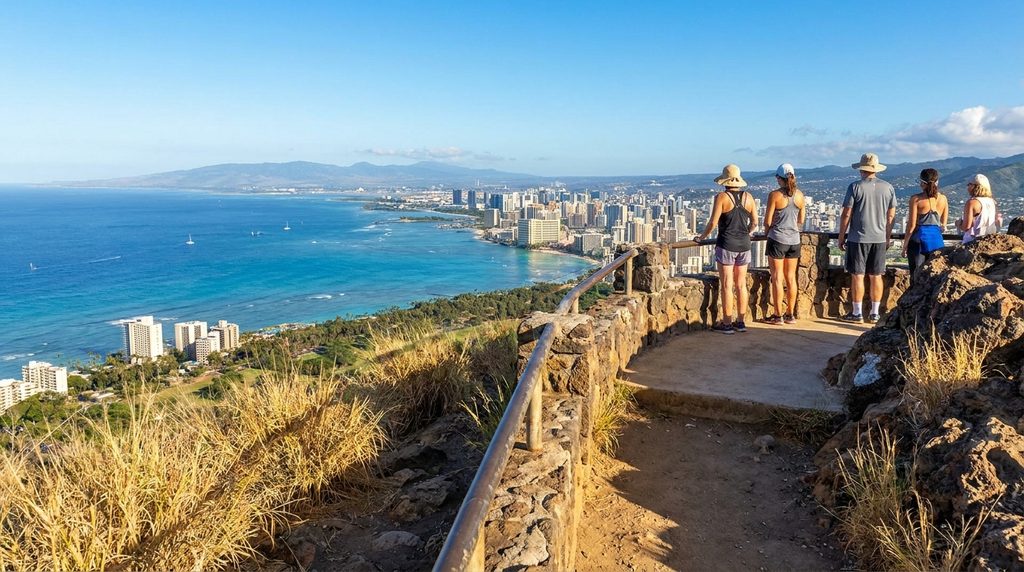
Diamond Head sits just east of Waikiki and is the most recognizable landmark in the city. The state parks division says the monument covers more than 475 acres and is known for its historic trail, coastal views, and military history. The summit is roughly 760 feet above sea level, and trip-planning sites that publish route details describe a climb of about 560 feet with almost no shade, so the heat matters more than the distance.
Getting in takes more planning than the walk itself. The official reservation page asks you to arrive within the first 30 minutes of your slot and warns that late arrivals may be denied entry or parking. Anyone who buys parking must also leave by the end of the reserved window, because the lot inside the crater is small. People arriving on foot, by bus, or by trolley only need an entry reservation, according to one trip-planning site. Early slots fill first, and an early start also gets you to the top before the sun is high. A shave ice and smoothie truck operates at the monument during opening hours, which makes a handy reward at the bottom.
Pearl Harbor National Memorial

Pearl Harbor National Memorial lies next to Joint Base Pearl Harbor-Hickam, and most visitors come to see the USS Arizona Memorial. The battleship still rests on the harbor floor beneath a small memorial building that can only be reached by boat. The grounds also honor the USS Utah and USS Oklahoma, according to Pacific Historic Parks, the partner organization that supports the site.
The boat program is timed, and the departure time on your ticket is when the boat leaves the dock. The National Park Service says the program includes a safety orientation, the boat ride, time on the memorial, and the return trip, and that each boat holds 145 people. There are no restrooms on the boats or the memorial, so use the facilities beforehand. The park service recommends arriving at least an hour early and checking in at the ticket validation desk about ten minutes before your time. Bag rules are strict, so read the current policy before you pack.
The visitor center and its two museums can be visited without a ticket, which makes the stop worthwhile even if the boat program is full. Nearby sites such as the Battleship Missouri, the Pearl Harbor Aviation Museum, and the USS Bowfin submarine charge their own admission, and a Passport to Pearl Harbor that covers those paid sites does not include the Arizona boat ticket. One visitor guide puts the drive from Waikiki at about 25 minutes. As at any memorial, quiet voices and modest clothing are appropriate.
Hanauma Bay Nature Preserve
Hanauma Bay became the state’s first Marine Life Conservation District in 1967, according to the city. Attendance once peaked at an estimated 10,000 people a day in the 1970s and 1980s, which led to visitor limits, an education program, and a ban on feeding fish. The city says daily attendance today is roughly half of the pre-pandemic level, which is part of why the reef looks healthier than many visitors expect.
Every visitor must watch a short educational video on each visit, and the beach is reached by tram or a steep walk down from the entrance. The preserve has lifeguards, showers, restrooms, snorkel rentals, and food stands, though the shop, the stands, and the rental counter accept cards only. Getting there takes thought. The city discontinued bus service into the bay, although a stop on Kalanianaole Highway at the top of the hill is served by Route 22. Online reservations do not include a parking space, so a full lot can mean a wait or a walk from legal street parking.
A concession called Roberts Hawaii now sells packages that include round-trip transport from the Ala Moana and Waikiki area and can be booked a month ahead, which helps if you have no car. About a quarter of access is held for people without internet, with walk-in tickets handed out from 6:45 a.m., but every person in your group must be present to receive them.
Palaces, Museums and Cultural Stops
Iolani Palace
Iolani Palace was built under King Kalakaua in the early 1880s and is described by several visitor guides as the only official royal palace on United States soil. It became a museum in 1978 after a long restoration and is a National Historic Landmark. The palace offers a docent-led tour and a self-led audio tour, and both include the first and second floors followed by the basement galleries, with 60 to 90 minutes suggested. Specialty tours, including a Kalakaua legacy tour and a tour about Hawaii’s royal connection to Japan, run on selected days.
Large bags, backpacks, and luggage are not allowed inside, according to the palace. Once a month the palace offers complimentary tickets to kamaʻāina guests, which is worth knowing if you are traveling with a local friend. Because tour types vary by day, check the palace’s hours page for the day you plan to go.
Bishop Museum
Bishop Museum in the Kalihi area calls itself the State of Hawaii Museum of Natural and Cultural History. Its campus includes Hawaiian Hall, the Science Adventure Center, and the J. Watumull Planetarium, and one local guide says it opened in 1889 as a memorial to Princess Bernice Pauahi Bishop. The museum also hosts evening events under the name Museum After Hours, and an attractions pass provider lists a Hawaii Walls exhibition opening on November 21, 2026, so check the museum’s own calendar for the current lineup.
Prices are where online pages disagree most. Adult admission is quoted anywhere from about $29 to $39 depending on the page, and the museum uses changing prices, so only the ticket page on the day you buy can be trusted. A few sites also claim the museum closes on Tuesdays, but the museum’s own site lists daily opening, with closures only on Thanksgiving and Christmas.
Honolulu Museum of Art and Shangri La
The Honolulu Museum of Art holds Asian, Pacific, and Western collections, and it stays open late on Fridays, when it hosts a program called HoMA Nights with music and food. Doris Duke’s Islamic art estate, Shangri La, on the slopes of Diamond Head, can only be visited on a tour reserved through the museum. According to the museum’s visitor guide, tour tickets include same-day admission to the museum, and the Star-Advertiser has reported that groups are limited to ten and that tours have sold out weeks ahead.
If you want a free art stop, Capitol Modern, formerly the Hawaii State Art Museum, offers free admission and focuses on artists with ties to the islands. Its published days differ from page to page, so call or check the state website before you go.
Beaches, Parks and Ocean Safety
Waikiki is the most famous stretch of coast on Oahu, and it is also where many visitors take a first surfing lesson. Beaches managed by the city have no entry fee, so a day at Waikiki or Ala Moana Beach Park costs nothing beyond what you buy there. Kapiolani Park, which the city lists among its regional parks, sits beside the aquarium and the zoo and gives you shade and open grass when the sand gets crowded.
The city’s Ocean Safety lifeguards staff many beaches, and it is wise to swim near a tower, read the posted signs, and ask a guard about conditions before you enter the water. Surf and currents change quickly around Oahu, and conditions that look calm from the sand can shift within an hour.
Hikes and Green Escapes
Manoa Falls is a 1.6-mile round trip through rainforest to a waterfall of about 150 feet, and most guides put the walk at one to two hours. No permit or reservation is reported, and the trail itself is free. The lot at the trailhead charges a fee that older pages list as $5 and newer pages list as about $7, while several trail guides mention free street parking lower on Manoa Road that adds roughly 0.4 miles each way on foot. The path is often muddy, so shoes with grip matter more than hiking experience.
Visitors should stay out of the pool at the base. A Hawaii trail guide warns against swimming because of the risk of leptospirosis, a bacterial infection that can spread through freshwater, and because slips on wet rock are common. Next door, Lyon Arboretum lists free entry with a suggested donation, and the same guide says online reservations are required for parking there. For a gentler garden stroll closer to town, the city runs Foster Botanical Garden as part of its Honolulu Botanical Gardens.
Family Stops Near Waikiki
The Waikiki Aquarium opened in 1904 and is described in one local guidebook as the second-oldest public aquarium in the United States. It is small, which is part of the appeal, and a visit often takes about an hour. Visitors can see Hawaiian monk seals and reef exhibits, and the building sits at the Diamond Head end of Waikiki beside Kapiolani Park.
The Honolulu Zoo is a short walk away on Kapahulu Avenue. Details differ here as well: one 2026 page lists adult admission at $21 and hours from 10 a.m. to 3 p.m., another lists $19, and older pages show longer hours, so check the zoo’s own website before leaving. A Moon travel guide has reported free parking in the Waikiki Shell lots across Monsarrat Avenue, though lot rules can change.
Evenings: What to Do in Honolulu After Dark
Hilton Hawaiian Village has presented a free fireworks show on Friday nights since 1988, according to Hawaii Magazine. The show lasts about ten minutes and starts at 7:45 p.m. from September to April and at 8 p.m. from May to August. It can be seen from the beach between the resort and Fort DeRussy, but one longtime local blog cautions that the curve of the shoreline hides it from some spots.
Free hula performances are held at the Kuhio Beach Hula Mound near the Duke Kahanamoku statue, usually in the early evening and cancelled in bad weather. Guides disagree about the days, with some listing Tuesday and Saturday and others adding Thursday, so confirm the schedule before you walk down. A May 2026 events calendar from the Waikiki Trolley also lists a daily hula show at Ala Moana Center at 5 p.m.
For something less touristy, Chinatown hosts a First Friday art walk each month, when galleries, bars, and studios stay open late, and the Hawaii State Art Museum has long kept its doors open on those nights as well. Kakaako is the place for murals, many of them painted during the annual POW! WOW! festival each February and concentrated around Lana Lane. As the neighborhood continues to redevelop, individual walls are sometimes painted over or removed, so a mural you saw in a photo may no longer be there.
What to Do in Honolulu When It Rains
Showers on Oahu usually pass quickly unless a tropical storm is nearby, but a wet day is the right moment for indoor stops. The Honolulu Museum of Art, the Bishop Museum with its planetarium, Iolani Palace, and the Waikiki Aquarium all keep you dry without feeling like a consolation prize. Ala Moana Center, one of the island’s largest shopping centers, is another easy choice for a few hours.
Trails are a different story. Muddy paths and swollen streams make Manoa Falls slippery, and heavy rain can raise stream levels quickly, so save the outdoor plans for a clearer morning and keep a flexible day open in your schedule.
Getting Around Without a Car
TheBus and the Skyline rail line both use a tap card called the HOLO card, and published fare information lists an adult ride at $3. Skyline is the first fully driverless urban rail system in the United States, and it has 13 stations, including one at the airport that opened in October 2025. The line does not yet reach Waikiki, Ala Moana, or downtown, though the city’s rail authority says the extension to Kakaako is scheduled for March 2031. Visitors planning what to do in Honolulu without a rental car should therefore treat Skyline as an airport and West Oahu connector for now, and rely on TheBus, the paid Waikiki Trolley, rideshares, and walking for the main sights.
Pearl Harbor and Hanauma Bay are the two stops where a car or an organized transfer saves the most time. Diamond Head, the aquarium, the zoo, and the downtown cultural sites are all manageable by bus or trolley from Waikiki.
Best Time to Visit
Honolulu’s weather is mild all year. Most guides describe a drier season from late spring through early fall and a wetter season from about November to March, although the exact months vary from source to source. Travel sites often point to mid-April through early June and September through mid-December as shoulder seasons with fewer crowds and lower prices. Hawaii’s hurricane season runs from June through November, and direct hits are rare.
Peak periods change what to do in Honolulu in practical ways. The National Park Service says USS Arizona standby seating may not be offered during spring break, summer, Thanksgiving, and winter break, so those travelers should book tickets as early as the system allows.
Easy Ways to Combine Stops
Grouping attractions by location keeps the days relaxed. The Diamond Head end of Waikiki suits a morning crater hike followed by the aquarium and the zoo, since they share the Kapiolani Park area. A downtown day can link Iolani Palace, Capitol Modern, and Chinatown, with the Honolulu Museum of Art a short ride away, and it pairs well with a Friday evening when the museum stays open late. Pearl Harbor works best as its own half-day trip, while Hanauma Bay needs an early start on one of its open days. Kakaako murals and Ala Moana Beach Park are good choices for a sunset walk after a busy morning.
Frequently Asked Questions
Is Hanauma Bay open again after the 2026 closure?
Yes. City and local news reports say the preserve closed on August 3, 2026 for sewer work, had its closure extended by a week, and reopened on August 19. KITV reported that another closure is expected in early 2027, but no dates had been announced, so check the city’s Hanauma Bay page before you book.
What can I do if USS Arizona Memorial tickets are sold out?
The National Park Service runs a Standby Callback system. You enter your name and phone number on a tablet in front of the audio tour booth, receive a text with a place in line, and get a second text when your group is called. Waits can last several hours on busy days, and a spot is not guaranteed in peak seasons, but you can tour the museum galleries while you wait.
Can I bring my own sunscreen to Honolulu?
Yes. A state law that took effect on January 1, 2021 bans the sale and distribution of sunscreens containing oxybenzone or octinoxate without a prescription, and the Associated Press reported when it passed that it does not stop tourists from bringing their own. The phrase “reef safe” is not regulated, so many advocates recommend mineral products with zinc oxide or titanium dioxide. Bills to ban more ingredients have been introduced, but no source reviewed confirmed that they have become law.
Is the Hawaii green fee an extra charge at attractions?
No. It is an increase in the state’s hotel tax rather than a park entry fee. Since January 1, 2026 the statewide transient accommodations tax has risen from 10.25% to 11%, and counties may add up to 3% on top of that. Afar magazine put the combined lodging tax at about 18.7% once the general excise tax is included.
Do visitors traveling with Hawaii residents get free entry?
Not at Diamond Head or Hanauma Bay. Both official pages state that visitors accompanying residents must still pay and book as non-residents. Hanauma Bay accepts a Hawaii driver’s license, a Hawaii state ID, or a Hawaii school student ID as proof of residency.
How many days do I need in Honolulu?
Three days can cover the main landmarks if you reserve the timed ones early, and a fourth day gives breathing room around those bookings. A longer stay makes it easier to add beach time, Chinatown evenings, and a slower pace at museums.
Conclusion
The best answer to what to do in Honolulu is rarely a single list of famous names. It is a mix of one or two reserved landmarks, a museum or palace visit, and enough open time to enjoy the beach, the food, and an evening show without rushing. Book the timed places first, confirm hours with the managing agency, and leave the rest of the schedule loose, because that flexibility is what makes the city feel like a holiday rather than a checklist.
Disclaimer
This article is for general information only and is not affiliated with any attraction, agency, or business mentioned. Prices, hours, reservation rules, and closures change often, so confirm details with the official source before you book or travel. Ocean, trail, and weather conditions in Hawaii can be dangerous, so follow posted warnings and lifeguard instructions. Nothing here is legal, medical, or financial advice.
Explore More
Fun Things to Do in Nashville: A Practical Guide for 2026

I’m Muhammad Ubaid, founder of YBR Magazine. I research and write detailed guides on America’s National Parks — covering entry fees, permits, best times to visit, and planning tips — using official NPS sources and up-to-date information.