

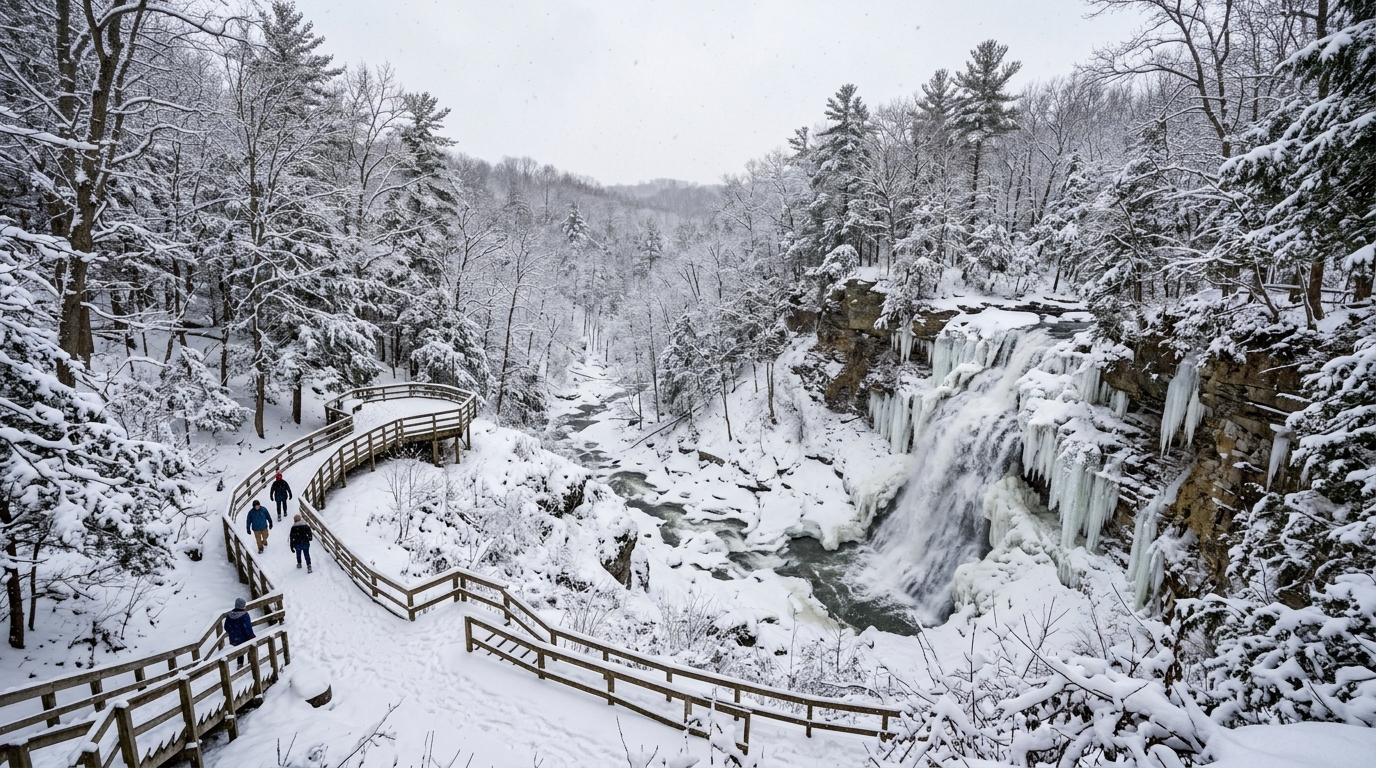
Visiting Cuyahoga Valley National Park in winter brings a quiet shift to the forested ravines and open river bottoms nestled between Cleveland and Akron. Unlike high-altitude western parks that keep a steady blanket of deep powder for months, Cuyahoga Valley National Park in winter deals with unpredictable midwestern swings in temperature. Lake-effect snowstorms can drop several inches overnight, only for a sudden mid-winter warm spell to melt the white cover into slush and mud within hours. Local residents and regional travelers must watch daily forecasts closely, adapting their outdoor plans to match whatever the local climate delivers each morning.
The Reality of Lake-Effect Snow and Freeze-Thaw Cycles
The reality of lake-effect snow and freeze-thaw cycles means that trail conditions across the park change rapidly from one day to the next. Freezing temperatures turn wet clay soils into solid, bumpy paths, while afternoon sun quickly thaws the top layer into slick mud. Visitors who head out without proper footwear often find themselves sliding down gentle inclines or struggling through sticky ruts. Understanding this shifting weather pattern helps prevent ruined footwear and unexpected slips on unpaved dirt routes.
Navigating Icy Boardwalks and Gorge Overlooks
Navigating icy boardwalks and gorge overlooks requires extra caution because shaded wooden platforms and stone staircases hold onto hidden ice long after the sun comes out. Popular spots like Brandywine Falls feature wet spray from the cascading water that freezes into thick, slippery sheets across nearby viewing decks. According to the National Park Service, visitors must stay on designated paths and watch their step near steep drop-offs where winter mist creates hazardous footing. Carrying small traction cleats for walking shoes makes a noticeable difference when exploring frozen rocky stairways and overlooks.
Choosing Paved Multi-Use Corridors When Dirt Trails Turn Muddy
Choosing paved multi-use corridors when dirt trails turn muddy provides a reliable alternative for getting outside during messy winter thaws. The historic Ohio & Erie Canal Towpath Trail is a crushed-limestone path that handles cold weather better than narrow dirt routes, offering a wide and relatively flat surface for brisk walks. Walkers and runners use this central artery all season long for steady exercise without sinking into deep valley mud. While maintenance crews work to clear snow and manage ice on main sections, visitors should still expect occasional refrozen patches after melting snow drains across the path.
Preparing for Shorter Daylight Hours and Parking Lot Closures
Preparing for shorter daylight hours and parking lot closures ensures that visitors return safely to their vehicles before dusk settles over the valley. Winter afternoons grow dark quickly, catching unprepared hikers far out on remote trails unless they start their outings early in the day. According to the National Park Service, certain parking gates or auxiliary lots may also close temporarily when severe ice storms or heavy snowdrifts make access roads unsafe for standard vehicles. For travelers hoping to stay overnight close to the trails, looking into nearby historic accommodations can provide a warm refuge after a cold day outside; for more details, see our guide on Stanford House Cuyahoga Valley National Park.
Frequently Asked Questions
Is Cuyahoga Valley National Park open during winter storms?
Yes, the park remains open daily year-round, though extreme weather may prompt temporary closures of specific parking areas or secondary park roads.
Are dogs allowed on winter trails?
Leashed dogs are welcome on most trails and the Towpath Trail throughout the winter months, but they are not permitted on boardwalks or certain fragile winter protection zones.
Do I need snowshoes to explore the park?
Snowshoes are only useful when fresh snowfall is deep and continuous, which happens occasionally, but standard hiking boots with traction cleats are usually more practical.
Are visitor centers open in the winter?
Main visitor facilities generally maintain regular winter operating hours, though schedules can shift around major holidays and severe weather events.
Is there an admission fee during winter?
There is no entrance fee to enter or explore Cuyahoga Valley National Park, as admission remains free for all visitors according to the National Park Service.
Where can I find up-to-date trail warnings?
Current trail closures, weather advisories, and parking restrictions are posted directly on the official National Park Service website for Cuyahoga Valley National Park.

I’m Muhammad Ubaid, founder of YBR Magazine. I research and write detailed guides on America’s National Parks — covering entry fees, permits, best times to visit, and planning tips — using official NPS sources and up-to-date information.