

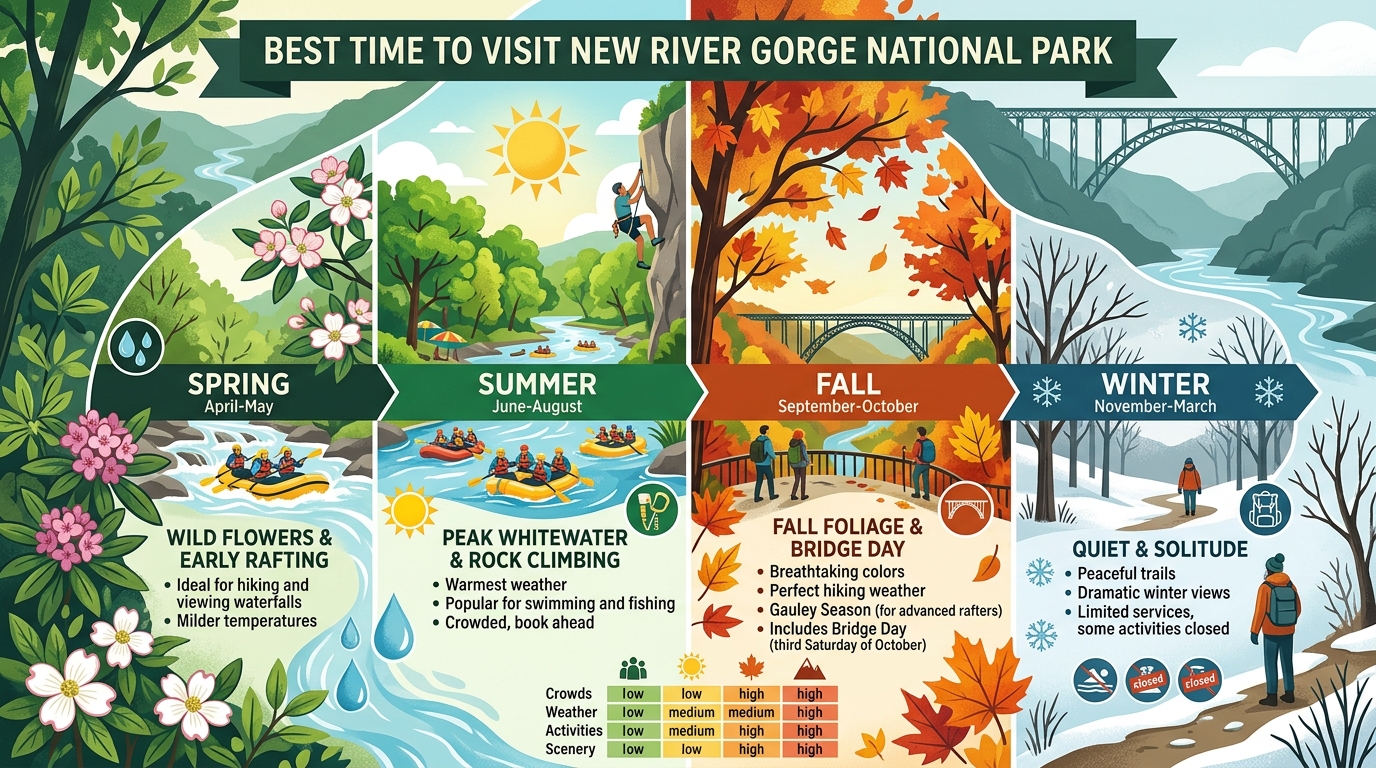
Planning a trip to West Virginia requires careful timing because the national park offers two completely different peak visitor seasons for opposite activities. Knowing the best time to visit New River Gorge National Park depends entirely on whether travelers want to see bright autumn leaves or brave the wild summer rapids on the river. Because New River Gorge National Park is a linear river park spanning a deep gorge rather than a compact mountain loop, weather and foliage change depending on elevation and the specific side of the canyon. Visitors who understand these seasonal shifts can better plan their daily itineraries, choose the right gear for variable mountain weather, and avoid unexpected travel headaches.
Weighing Autumn Foliage Against Summer River Adventure
Deciding when to travel to the park comes down to choosing between the vibrant autumn leaf displays of October and the high-energy water sports of the summer months. Autumn brings massive crowds and heavy traffic delays to the canyon rim, especially during the annual Bridge Day festival when base jumpers gather on the famous steel span. Summer shifts the focus entirely to the water, where guided whitewater rafting trips draw adventure seekers down the New River Gorge. Both seasons offer distinct experiences, but travelers must prepare for crowded overlooks, fully booked local hotels, and intense weekend congestion during these peak periods.
Navigating Spring Rains and Winter Cold Spells
Spring and winter offer total solitude and quiet trails, but visitors must accept significant weather limitations and seasonal closures across the canyon. Spring brings frequent heavy rainfall, making hiking trails muddy, slick, and occasionally impassable for casual walkers. Winter brings freezing temperatures, snow, and ice, which leads to limited visitor center hours and closed seasonal access roads. For travelers exploring nearby destinations and regional basecamps during these quiet months, checking out local options like those outlined in our guide on West Virginia gateway communities helps find open amenities and warm places to stay.
Understanding Elevation and Canyon Microclimates
The unique geography of the deep West Virginia river canyon creates dramatic microclimates that shift quickly from the high plateau to the riverbanks below. Temperatures near the water can feel much warmer or more humid than the windswept overlooks high above the gorge. Hikers descending steep trails like Endless Wall or Long Point must pack layers to handle sudden shifts in shade, sun, and wind exposure. Recognizing how sunlight and moisture interact within the steep rock walls prevents outdoor enthusiasts from getting caught unprepared by sudden weather changes.
Managing Park Logistics and Official Safety Guidelines
Checking official resources before departure ensures a safe and smooth vacation in the rugged West Virginia mountains. According to the National Park Service, visitors should regularly check official park alerts for sudden trail maintenance, weather warnings, and changing facility hours before setting out. Packing layers is essential because temperatures inside the deep canyon can feel much cooler than the surrounding plateaus. Visitors should also keep emergency contact numbers handy, bring offline trail maps due to spotty cell service in the gorge, and respect all wildlife and park safety guidelines.
Frequently Asked Questions
When is the absolute peak for fall foliage in New River Gorge National Park?
The peak color usually arrives around mid-to-late October, though exact timing shifts slightly each year based on autumn temperatures.
Is New River Gorge National Park crowded during the summer?
Summer is moderately busy, especially on weekends when whitewater rafting companies run high volumes of guided river trips.
Are there any entrance fees for New River Gorge National Park?
According to the National Park Service, there is no entrance fee to enter or park at New River Gorge National Park.
Can I visit New River Gorge National Park in the winter?
Yes, the park stays open year-round, but winter brings cold weather, snow, and occasional closures of specific secondary roads.
When is the best time for whitewater rafting?
Summer offers warm water and steady rapids, while spring features higher, more aggressive water levels reserved for experienced rafters.
What should I pack for a spring trip?
Spring travelers should pack waterproof boots, sturdy rain gear, and extra layers to handle sudden rain showers and muddy trails.
Disclaimer: Weather patterns, seasonal facility hours, and local event dates can change. Always verify current conditions and safety rules from official sources before starting your trip.

I’m Muhammad Ubaid, founder of YBR Magazine. I research and write detailed guides on America’s National Parks — covering entry fees, permits, best times to visit, and planning tips — using official NPS sources and up-to-date information.