

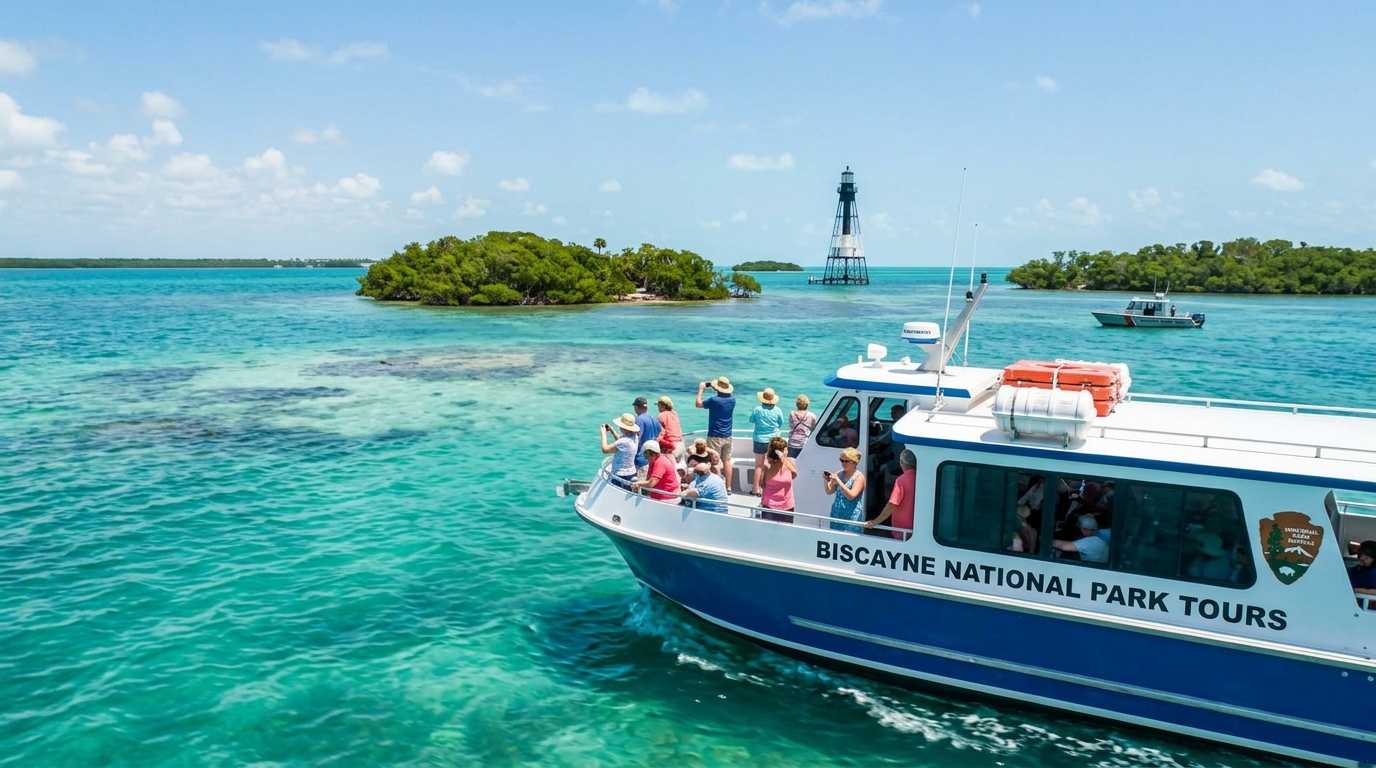
Visiting Biscayne National Park requires careful planning because ninety-five percent of the protected area sits completely underwater. Because of this unique marine geography, arranging a boat to Biscayne National Park is an absolute necessity rather than a simple sightseeing choice. Travelers cannot drive up to the primary islands and coral reefs, meaning everyone must understand how marine transportation works before arriving in South Florida.
Planning Your Boat Trip to Biscayne National Park
Planning your boat trip to Biscayne National Park starts with deciding whether you will trailer your own watercraft or book an authorized tour.
The Dante Fascell Visitor Center at Convoy Point serves as the main mainland hub for travelers looking to get out on the water. Visitors must recognize that the visitor center does not rent boats to the general public, meaning independent explorers need their own vessel or a reservation with an official concessionaire. Parking lots for vehicles with boat trailers fill up very early in the morning, especially during calm weekend weather when local anglers head out. Unpredictable ocean conditions can also alter travel plans quickly, so checking marine forecasts is vital before departure. For tips on scheduling your outing around seasonal weather shifts, read our guide on coral reef and island access timing.
Taking Your Own Private Boat to Biscayne National Park
Taking your own private boat to Biscayne National Park gives you total freedom to explore remote keys at your own pace.
Boat owners can launch private vessels from several public ramps located throughout Miami-Dade County before heading east into the bay waters. Navigating these shallow areas demands constant attention because hidden coral heads, seagrass flats, and shifting sandbars can easily damage propellers and boat hulls. According to the National Park Service, captains must strictly obey all designated speed zones and marker buoys designed to protect manatees and fragile marine habitats. Cell phone service can also become unreliable once you travel far from the mainland, making traditional nautical charts and a marine radio essential safety tools on board.
Joining Authorized Tours and Commercial Boats
Joining authorized tours and commercial boats provides a reliable option for visitors who do not own a watercraft or prefer a guided experience.
Official concessionaire boats depart directly from the Dante Fascell Visitor Center area to transport passengers out to iconic destinations like Boca Chita Key and Elliott Key. These commercial captains handle all the complex navigation, gear rentals, and park logistics, allowing travelers to focus entirely on snorkeling and sightseeing. Because these guided trips are popular, seats frequently sell out weeks ahead of time during peak winter and spring travel seasons. Visitors interested in how remote park concessionaires operate can also review our overview on Lake Clark National Park tour options and planning advice to compare wilderness logistics.

Navigating Park Rules, Marine Safety, and Practical Limits
Navigating park rules, marine safety, and practical limits protects the delicate underwater ecosystem while keeping passengers safe from sudden weather shifts.
Federal regulations strictly govern where boaters can drop anchor because throwing an anchor onto living coral causes damage that takes decades to repair. According to the National Park Service, visitors must use designated mooring buoys or anchor only over sandy ocean bottoms where no coral or seagrass will be disturbed. Subtropical sun and biting insects create tough conditions on the remote islands, so bringing plenty of drinking water, sunscreen, and bug spray is necessary for any shore excursion. Sudden afternoon squalls and rough seas can also cancel boat trips without much warning, making flexibility an important part of your itinerary.
Frequently Asked Questions
Can I rent a boat at the Dante Fascell Visitor Center?
No, the visitor center does not rent boats to the public, so you must bring your own vessel or book an authorized commercial tour.
Do I need a special entry permit for my private boat?
You do not need a special entry permit to bring a private boat into Biscayne National Park, but you must follow all federal marine and resource protection regulations.
Where are the public boat ramps located near the park?
You can launch your boat from various public ramps throughout Miami-Dade County, with Convoy Point offering limited trailer parking for visitors arriving by vehicle.
What are the primary hazards when boating in the park?
The main hazards include shallow coral reefs, shifting sandbars, sudden weather changes, and strong tidal currents that require careful navigation.
Are pets allowed on boats in Biscayne National Park?
Pets are restricted in many park areas and facilities, so you should check current National Park Service regulations before bringing animals on a boat trip.
How can I avoid damaging coral reefs with my boat?
You can protect the reefs by avoiding shallow water shortcuts, watching your depth finder, and never dropping your anchor onto living coral formations.
Disclaimer: Park rules, tour schedules, and weather conditions can change at any time. Always verify current operating details and safety alerts directly from official sources like the National Park Service before your visit.

I’m Muhammad Ubaid, founder of YBR Magazine. I research and write detailed guides on America’s National Parks — covering entry fees, permits, best times to visit, and planning tips — using official NPS sources and up-to-date information.