

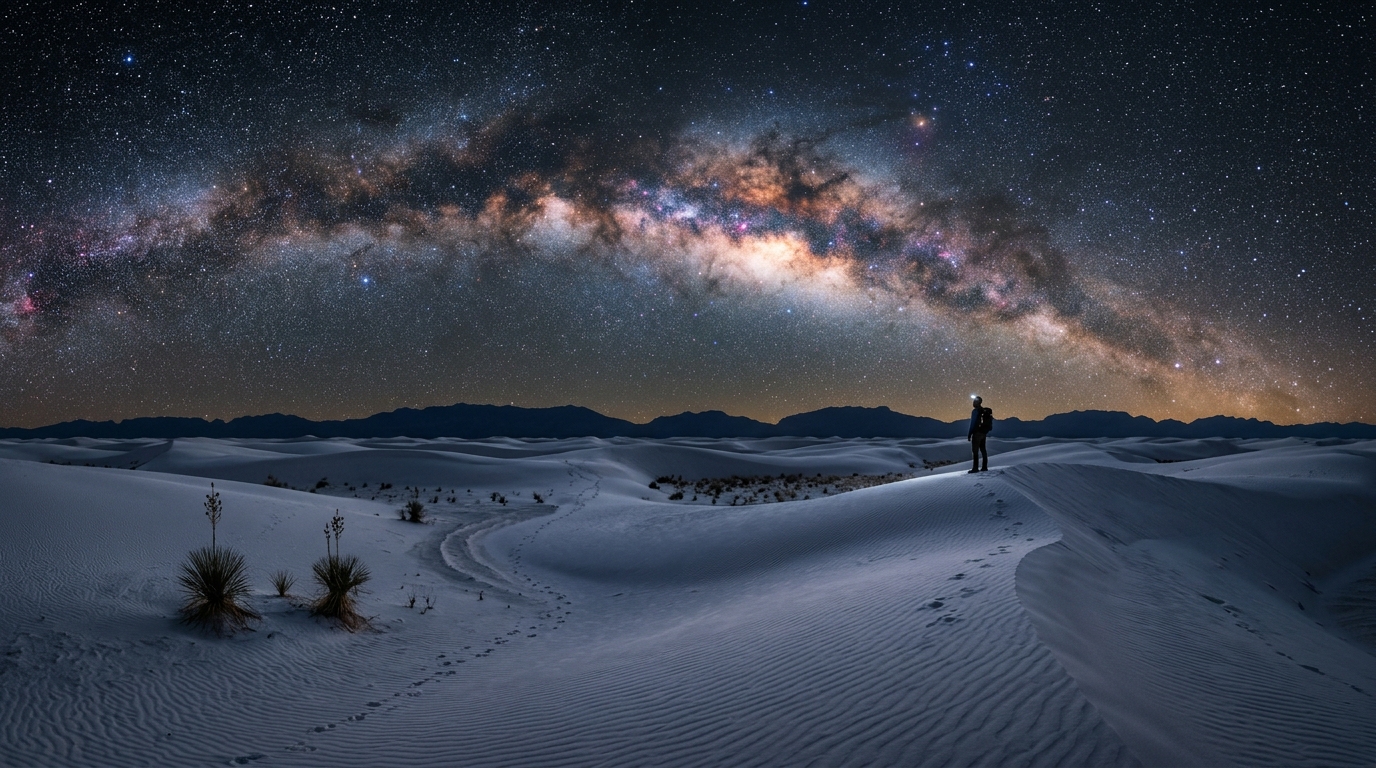
Starlit Gypsum: The Unique Nocturnal Landscape
Viewing the night sky over bright gypsum dunes creates a visual contrast that differs entirely from standard forest or mountain dark-sky locations. When visitors look up at the Milky Way, White Sands National Park provides a brilliant white sand that reflects starlight in a way that illuminates the landscape without needing artificial light. This unique feature makes White Sands National Park a popular destination for night photography enthusiasts who want to capture starry skies above rolling desert dunes. However, planning a nocturnal trip here requires careful preparation because the environment changes dramatically after sunset.
Most travelers know the park for daytime activities like sledding down gypsum hills or hiking the sun-baked trails. Transitioning to a nighttime visit introduces an entirely different atmosphere where the desert falls silent and the temperature drops quickly after dark. Visitors must understand that standard daytime habits will not apply once the sun goes down and total darkness settles across the basin.
Navigating Gate Closures and Special Night Access
According to the National Park Service, White Sands National Park has established closing times that mean visitors cannot simply drive in during the middle of the night without authorization. Planning a trip to see the Milky Way at White Sands National Park requires checking the official park calendar for special full moon nights, sunset tours, or extended evening hours. The park gates usually lock shortly after posted sunset times, so unauthorized vehicles left inside after hours face strict penalties or towing.
Visitors who want to stay late must monitor seasonal schedule updates published by the National Park Service. During certain times of the year, the park offers full moon hikes or extended evening access permits that allow photographers and stargazers to remain past normal closing times. Always review current rules directly on official websites before heading out, because park hours can shift due to special events, weather conditions, or nearby missile range testing activities.
Balancing Starlight and Bright Foreground Exposure
Capturing clear images of the night sky over bright gypsum sand requires balancing an extremely bright foreground with a dark starry backdrop. Photographers visiting for Milky Way photography adventures at White Sands National Park often struggle with overexposed sand because the white gypsum reflects even minimal ambient starlight. Using a sturdy tripod, a wide-angle lens with a wide aperture, and manual camera settings will help achieve proper exposure without washing out the desert floor.
To protect valuable camera equipment from the fine, abrasive gypsum dust that blows across the basin, consider using weather-sealed camera covers or simple protective wraps. Furthermore, practicing nighttime camera settings at home before the trip ensures that adjustments happen quickly in the freezing desert dark. For more detailed planning advice on capturing desert landscapes, see our guide on essential tips for planning a White Sands National Park photoshoot.

Hidden Dangers: Navigation and Desert Wildlife After Dark
Navigating the gypsum dunes at night presents serious safety hazards because the white landscape looks identical in every direction once natural light fades. Visitors experiencing the Milky Way at White Sands National Park can easily lose their bearings if they wander too far from the marked trail posts or the main parking areas. Carrying a reliable GPS device, a physical compass, and a headlamp with a red-light mode is essential for protecting night vision and finding the way back safely.
Weather shifts also present a real downside, as sudden windstorms can whip up fine gypsum dust that ruins visibility and coats equipment in minutes. Additionally, nocturnal desert wildlife like rattlesnakes and scorpions becomes active after dark, meaning visitors should always watch where they step and avoid walking barefoot on the dunes. Packing extra layers of warm clothing is also critical, because desert temperatures plummet rapidly as soon as the sun disappears.
Frequently Asked Questions About Night Visits
Can I camp overnight to watch the Milky Way at White Sands National Park?
Backcountry camping is permitted on the dunes when designated sites are open, but permits must be reserved in advance through the official National Park Service booking system.
What is the best time of year to see the Milky Way core?
The Milky Way core is typically visible from late spring through early autumn, with summer months offering the clearest and longest viewing windows across the southern horizon.
Do I need a special permit for night photography?
Standard night photography is allowed during regular park hours or designated late-night events, but commercial shoots or extended stays require specific permits according to the National Park Service.
Are white lights allowed on the dunes at night?
Red lights are strongly encouraged instead of white flashlights to preserve your natural night vision and avoid disturbing other stargazers and local wildlife.
How far can I walk onto the dunes at night?
Visitors should stay close to marked trail markers or GPS tracks because walking too far into the vast, featureless dunes in total darkness increases the risk of getting lost.
Is there any cell service inside the park at night?
Cell phone reception can be very spotty or completely unavailable throughout parts of the basin, so downloading offline maps beforehand is always recommended.
I’m Muhammad Ubaid, founder of YBR Magazine. I research and write detailed guides on America’s National Parks — covering entry fees, permits, best times to visit, and planning tips — using official NPS sources and up-to-date information.