

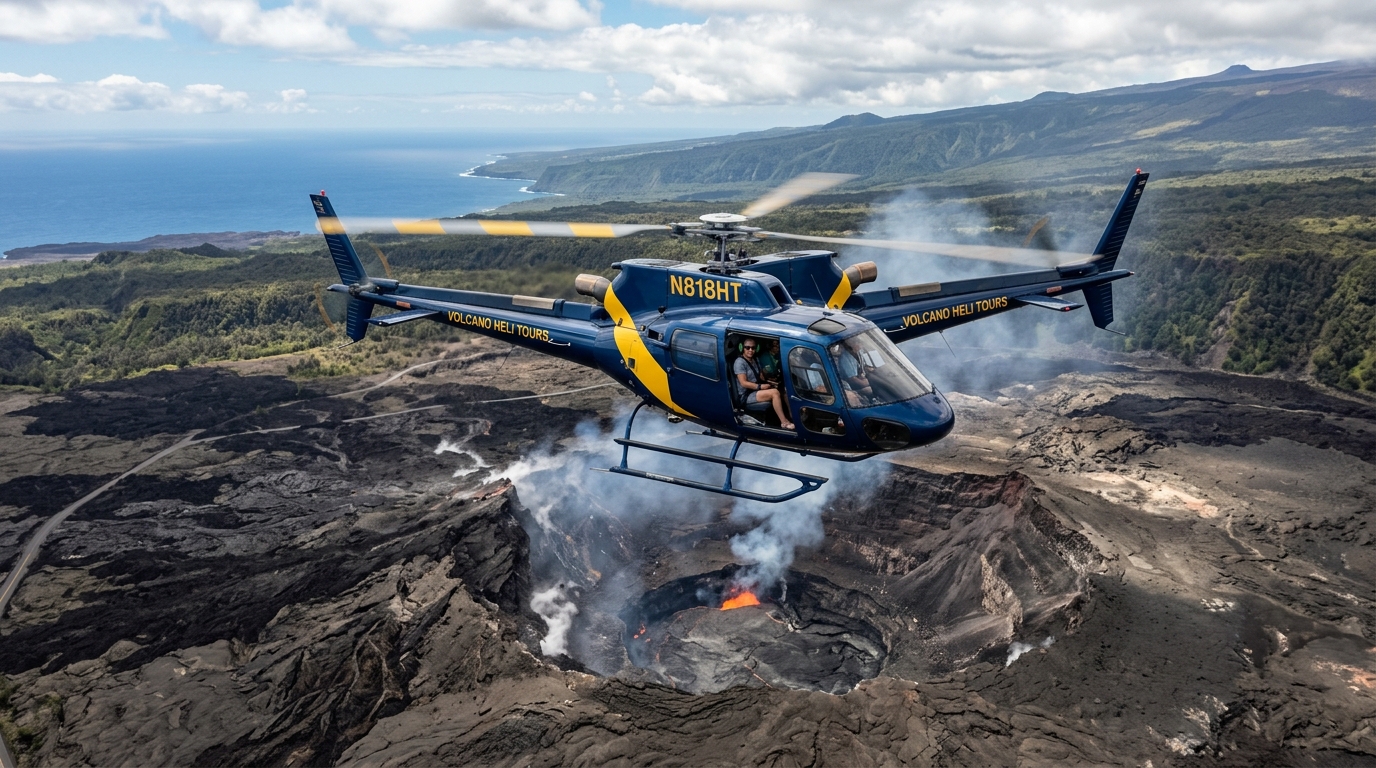
Hawaii Volcanoes National Park features vast landscapes, rugged terrain, and remote volcanic vents that cars and hiking trails simply cannot reach. For visitors wanting to see these hidden calderas from above, booking a volcano national park helicopter tour offers a unique vantage point of the island’s raw geology. However, taking to the skies requires careful planning regarding weather, operational costs, and departure logistics that change depending on where you stay.
Many travelers forget that seeing active magma from the air depends entirely on current volcanic activity and shifting weather conditions. Understanding these practical details helps travelers set realistic expectations before booking any aerial excursion over the island, ensuring you get the most out of your time and financial investment.
Selecting Island Departure Hubs Between Hilo and Western Bases
Choosing where your flight originates changes the travel time, total cost, and overall schedule of your volcano national park helicopter tour.
Flights departing from Hilo sit much closer to Hawaii Volcanoes National Park, meaning travelers spend far less time in transit before reaching the active volcanic zones. Travelers staying on the western side of the island often look into a volcano national park tour from kona, but flying from Kona usually involves longer flight times and higher overall package costs because the aircraft must cover a greater geographical distance across the entire island. The physical distance between the two regions means that driving across the saddle area takes significant time if you choose to drive instead of fly. For more details on managing that cross-island travel time, see our guide on planning a scenic volcanic park drive.
When selecting your departure hub, you must also consider rental car mileage limits, early morning wake-up calls, and whether you prefer spending your vacation hours driving through tropical rain or relaxing on sandy beaches. Hilo provides a much shorter air route, while Kona serves as a major resort hub that requires a longer commute just to reach the helipad.
Interpreting Active Calderas and Shifting Magma Visibility
Aerial visibility over the park shifts constantly based on weather patterns, cloud cover, and whether Kilauea or Mauna Loa is actively erupting.
Passengers aboard a volcano national park helicopter tour often view the massive summit caldera of Kilauea, deep steam vents, and older hardened lava flows stretching toward the ocean. When surface eruptions are paused, visitors will not see glowing rivers of lava, even though marketing brochures sometimes show older eruptive phases. Pilots point out geological features like ancient craters, rainforest pockets, and coastal cliffs, providing a clear view of how volcanic forces shaped the Big Island over thousands of years.

To give you a better idea of what different viewing methods offer, here is a quick look at how aerial tours compare to ground exploration:
| Feature | Helicopter Tour | Ground Exploration |
|---|---|---|
| Remote Access | Reaches deep backcountry vents and inaccessible coastal zones | Restricted to established roads and designated hiking trails |
| Weather Impact | High risk of sudden flight cancellations due to clouds and wind | Moderate impact; trails remain open during most light weather |
| Physical Effort | Low effort; passengers sit comfortably with minimal walking | High effort; requires long walks on uneven volcanic rock |
Managing Federal Flight Restrictions and Cabin Weight Limits
Helicopter flights over active volcanic zones come with several practical limitations, strict safety guidelines, and potential drawbacks.
Weather cancellations happen frequently because sudden cloud cover, heavy rain, and high wind gusts can make flying unsafe around the summit. According to Federal Aviation Administration guidelines and individual operator policies, passengers must follow strict weight limits, and individuals prone to motion sickness should prepare for turbulence caused by warm rising air currents over the craters. Furthermore, companies do not offer refunds or guarantees for seeing active magma, meaning passengers pay for the scenic flight regardless of what the volcano is doing that day.
Another important factor to keep in mind is cabin seating assignment. Most commercial tour helicopters seat four to six passengers, and seating arrangements are determined by the pilot based on individual passenger body weights to ensure proper aircraft balance. This means you might not get a window seat, and families or groups may be separated across different aircraft rows.
Frequently Asked Questions About Volcano National Park Helicopter Tours
Travelers exploring aerial options often ask common questions about logistics, seating, and weather policies.
Can I guarantee that I will see flowing lava on a helicopter tour?
No, seeing active surface lava depends entirely on current volcanic activity, and tours run even when magma is not visibly erupting on the surface.
How far in advance should I book a helicopter tour?
It is best to book several weeks or months ahead, especially during peak travel seasons, to secure your preferred departure time and day.
What should I wear on the helicopter?
Wear dark clothing to reduce window glare in your photos, and choose comfortable layers since cabin temperatures can fluctuate.
Are there weight limits for passengers?
Yes, commercial helicopter operators enforce strict weight limits for safety and proper aircraft balance, and passengers may be weighed during check-in.
What happens if bad weather cancels my flight?
Operators will typically try to reschedule your flight for a later time or day, or provide a full refund if rescheduling is not possible.
Can children ride on the helicopter?
Most operators allow children of various ages, though infants often require a purchased seat and specific restraints according to company policy.
Disclaimer: Weather patterns, flight schedules, and operator rules can change without notice. Always verify current policies and safety requirements directly with your chosen tour provider before your travel date.

I’m Muhammad Ubaid, founder of YBR Magazine. I research and write detailed guides on America’s National Parks — covering entry fees, permits, best times to visit, and planning tips — using official NPS sources and up-to-date information.