


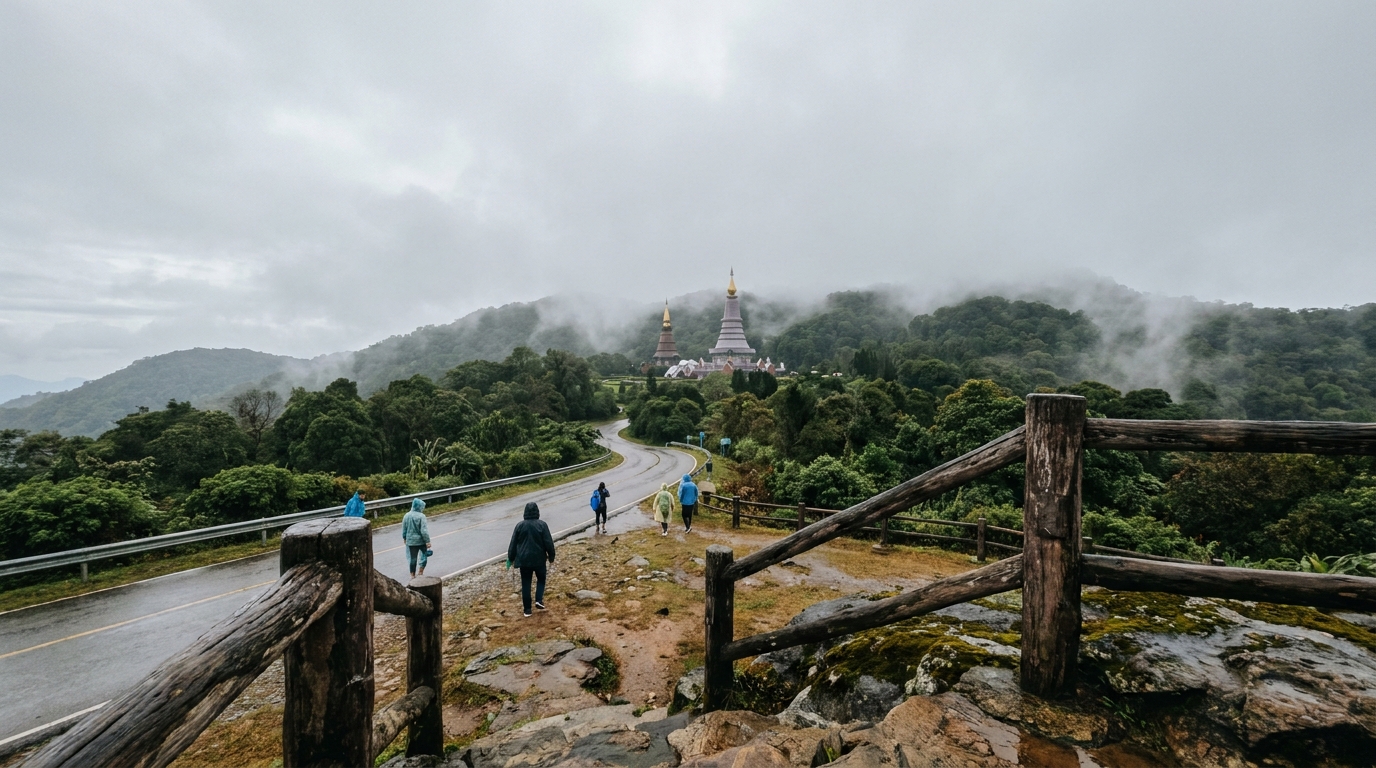
Doi Inthanon National Park sits in Chiang Mai Province in northern Thailand, and it is home to the highest mountain in the country. The summit rises to 2,565 metres above sea level, which is why the park is often called “the Roof of Thailand.” Many travellers come here to escape the heat of the lowlands, and they leave with memories of cool mountain air, roaring waterfalls, misty forests and two beautiful royal pagodas. This guide brings together the practical details and the background you need to plan a smooth, enjoyable visit.
What Is Doi Inthanon National Park?
The park covers about 482 square kilometres and protects a huge range of landscapes, from lower slopes at roughly 800 metres to the cool cloud forest at the very top. Because of this big change in height, you can drive through several different types of forest in a single day. The lower areas have dry and mixed forest, the middle levels have pine and evergreen trees, and the highest parts are covered in moss, ferns and mist. The mountain is also said to mark the southern end of the Himalayan mountain range, which adds to its special reputation among nature lovers.
The park was declared in the Royal Gazette on 2 October 1972 and is counted as Thailand’s sixth national park. It is managed by the Department of National Parks, Wildlife and Plant Conservation. Today it is one of the most visited protected areas in the country, and it welcomes hikers, bird lovers, photographers and families who simply want a day in cooler weather.
The Story Behind the Name
The mountain was once known to local villagers as Doi Luang, which means “big mountain” in the northern Thai dialect. It was later renamed in honour of King Inthawichayanon, who was the last independent ruler of Chiang Mai and died in 1897. He was worried about the loss of forests in northern Thailand and wanted them protected. Following his wishes, his ashes were placed at the mountain, and a small memorial stupa now stands near the summit. Visitors can reach it by a short boardwalk, and many people stop there to pay their respects.
How to Get to Doi Inthanon National Park

The main entrance is in Chom Thong District, and the park is roughly 70 kilometres southwest of Chiang Mai in a straight line. By road the journey is longer, usually around 90 to 100 kilometres, and it normally takes about two hours by car. The route follows Highway 108 out of the city and then turns onto Route 1009, which climbs all the way up the mountain. The first park checkpoint is found along this road.
There are three common ways to make the trip. Driving yourself, either by rental car or motorbike, gives you the most freedom to stop wherever you like. Joining a guided day tour is the easiest option, because most tours include transport, a guide and the main stops. Some travellers also use shared red songthaew trucks or a private driver. Whichever you choose, remember that the mountain roads are steep and winding, so it is wise to avoid riding a motorbike in the park after dark.
Opening Hours and Entrance Fees
Most sources list the park as open daily from early morning until early evening, with typical hours quoted from around 5:30 or 6:00 in the morning to around 5:30 or 6:30 in the evening. Some individual trails and attractions keep different hours, so it is sensible to check the latest times before you travel.
The entrance fee for foreign adults is 300 baht, and for foreign children it is 150 baht. Thai nationals pay a much lower rate, commonly listed as 50 baht for adults and 20 baht for children. Vehicles are charged a small extra fee. Your park ticket usually covers the main waterfalls and viewpoints on the same day, but a few places charge separately. The Royal Twin Pagodas and the Kew Mae Pan trail guide are two examples, and prices can change, so keep a little extra cash with you.
The Royal Twin Pagodas
The two pagodas are among the most photographed places in the park. Phra Mahathat Naphamethanidon was built to honour the 60th birthday of King Bhumibol Adulyadej and was completed in 1987. Its partner, Phra Mahathat Naphaphonphumisiri, was built for the 60th birthday of Queen Sirikit and was completed in 1992. Both pagodas hold Buddha relics, and they stand side by side on a hillside surrounded by neat gardens.
The gardens bloom for much of the year, and on a clear morning the view across the valley can be spectacular. Early visitors are often rewarded with a sea of clouds below the terrace. Both pagodas are managed separately from the national park itself, which is why a small extra ticket is normally required.
Waterfalls You Should Not Miss
The rivers that begin high on the mountain create several waterfalls, and most of them are easy to reach. Wachirathan Waterfall is one of the most popular because it is right beside the main road and drops in a wide, powerful curtain that fills the air with cool mist. Sirithan Waterfall is another favourite, and it can be reached by a short walk through the forest.
Mae Klang Waterfall is close to the entrance, so it is a natural first stop for many visitors. Siriphum Waterfall is known for its twin streams and is near the royal agricultural station. Mae Ya Waterfall is the tallest of the group and is reached by a side road, which means it needs a little extra travel time. Heights quoted for these falls vary between sources, so it is best to think of Mae Ya as the biggest and Wachirathan as the most dramatic. The water flow is strongest after the rainy season, and it can be much lighter in the dry months.
Hiking and Nature Trails

Kew Mae Pan Nature Trail is the best-known hiking route in the park. It is a loop of roughly two and a half to three kilometres that runs along a high ridge, and it rewards walkers with wide views over forest-covered mountains. The trail is usually open from November to May and closed from June to October so that the forest can recover during the rains. Visitors need to hire a local guide, and the guide fee is paid separately from the park entrance ticket.
Ang Ka Nature Trail is a much shorter and easier option. It is a boardwalk of a few hundred metres near the summit, and it takes you through a mossy cloud forest that feels almost like a fairy tale. Pha Dok Siew is another trail worth knowing about. It passes through jungle, bamboo groves and farmland before reaching waterfalls, and it is generally open through the year unless heavy rain makes it unsafe. Comfortable shoes and a light rain jacket are useful on all of these routes.
Birdwatching at Doi Inthanon
Doi Inthanon is one of the best places in Thailand to look for birds. Different heights of the mountain support different birds, so the variety is exceptional. Published bird counts range from about 380 to around 500 species depending on the source and the year, and this simply reflects how many records have been added over time. What is clear is that the park is home to some of the richest bird life in the country, including a few species that are rarely seen anywhere else in Thailand.
The cool season, from November to March, is widely seen as the best time because migrating birds arrive from the north. Early morning is the best hour of the day. Good places to try include the Ang Ka boardwalk, the roadside near the summit and the jeep track area, which is a well-known route among birders. Hiring a local bird guide is a smart choice if you want help spotting and naming what you see.
Best Time to Visit
The park can be visited all year, but the experience changes with the seasons. The cool and dry season from November to February is the most comfortable and offers the clearest skies. Wildflowers are also at their best in these months, and the red rhododendron blooms near the summit in the coldest weeks. The hot season from March to May can bring hazy views, although the mountain stays cooler than the city. The rainy season, from about June to October, turns the forests deep green and fills the waterfalls, but downpours and fog can hide the views and some trails close.
Weekdays are quieter than weekends, and it is best to avoid big holidays such as New Year and Songkran, when the road and the summit can be very crowded.
Weather and What to Pack
Temperatures drop as you climb, so the summit is much cooler than Chiang Mai. In winter, especially December and January, the top of the mountain can feel close to freezing, and strong wind makes it feel even colder. A warm jacket is a good idea in the cool season and is still useful in other months, since mornings and nights stay chilly. Bring a rain jacket, sun protection, water, snacks, comfortable walking shoes and some cash. If you plan to hike Kew Mae Pan, wear shoes with a good grip.
Local Culture and Villages
The mountain is also home to Hmong and Karen communities, and their villages are part of the park’s character. Near the twin pagodas there is a market where local people sell handmade crafts, fresh fruit and highland produce. Coffee grown on the mountain is another popular treat, and several small cafés serve it in a peaceful setting. The Inthanon Royal Project station, started under King Bhumibol to help farmers move away from opium growing, is also worth a stop if you are interested in the region’s history.
Where to Stay
Many visitors stay in Chiang Mai and make Doi Inthanon a day trip, which gives you more choice of hotels and restaurants. If you want to see the mountain at sunrise or spend more time birdwatching, staying near the park is a better choice. There are camping areas, park bungalows and small guesthouses around the mountain, and park accommodation is booked through the national park authorities.
Practical Tips for a Smooth Trip
Start early, because mornings are usually clearer and quieter. Give yourself a full day if you want to see the pagodas, at least two waterfalls and a short trail. Take your rubbish with you, and stay on marked paths to protect the fragile moss and plants. Confirm current fees, opening hours and trail conditions on official park channels before you go, because they can change without notice.
Final Thoughts
Doi Inthanon National Park is far more than a tall mountain. It blends royal history, rich wildlife, cool forests, powerful waterfalls and warm local culture into one trip that suits almost every traveller. With a little planning and an early start, it can easily be the highlight of a stay in northern Thailand.
Disclaimer: This article is for general information only. Entrance fees, opening hours, trail access, road conditions and weather can change at any time, and figures such as bird counts and waterfall heights differ between sources. Please confirm the latest details with the Department of National Parks, Wildlife and Plant Conservation or a trusted local operator before you travel. Follow all park rules and safety advice during your visit.
Explore More
Must See in Canyonlands National Park: Unconnected Districts and Top Sights

I’m Muhammad Ubaid, founder of YBR Magazine. I research and write detailed guides on America’s National Parks — covering entry fees, permits, best times to visit, and planning tips — using official NPS sources and up-to-date information.

