

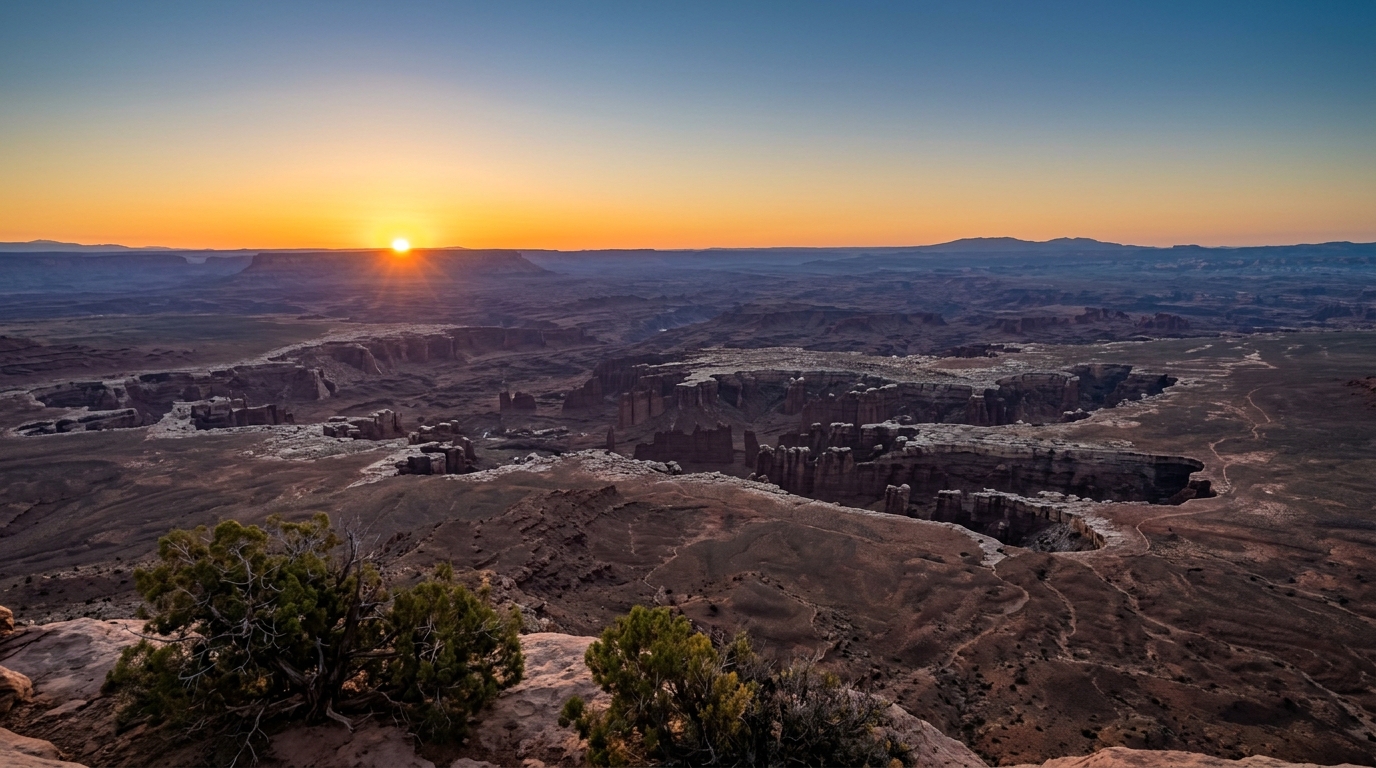
Planning a road trip to Utah requires accepting that Canyonlands National Park is not a single, easily drivable loop. When travelers look for the must-see in Canyonlands National Park, they often make the mistake of assuming all the main viewpoints sit right next to each other. The park is physically split into separate regions by deep river gorges, meaning visitors cannot drive directly from one section to another. Understanding these massive geographical barriers is the only way to avoid wasting hours behind the wheel on outside highways.
Understanding the Four Districts of Canyonlands National Park
Geography dictates every single route inside Canyonlands National Park because the Colorado and Green rivers carved massive canyons that separate the land into isolated sectors.
Driving from the northern entrance at Island in the Sky to the southern region known as The Needles takes roughly two hours on paved state highways. There are no bridges or internal roads connecting these two areas inside park boundaries, so every traveler must exit the park and drive completely around the canyons. Travelers planning a full vacation often benefit from reading a detailed Canyonlands National Park itinerary to map out these long highway stretches properly. Furthermore, gas stations, grocery stores, and food options do not exist within park limits. Visitors must fill up fuel tanks and pack all supplies in nearby gateway towns like Moab before driving toward any park entrance.
Must See in Canyonlands National Park: Island in the Sky District
Island in the Sky serves as the most visited sector because its paved roads lead directly to dramatic canyon rim lookouts and short walking paths.
Mesa Arch stands out as the most photographed landmark in this northern sector, featuring a natural stone frame that glows brilliant orange during early morning sunrise hours. Grand View Point sits at the very end of the paved scenic drive, offering sweeping panoramas of layered red rock canyons and distant mountain ranges. Green River Overlook provides another breathtaking vantage point where visitors gaze down at the winding river thousands of feet below the plateau edge. These roadside stops require very little strenuous hiking, making Island in the Sky ideal for travelers who want maximum scenery with minimal walking effort.
Must See in Canyonlands National Park: The Needles District
The Needles district shifts the focus away from quick roadside viewpoints and toward immersive hiking trails among colorful rock pillars.
This southern region sits about an hour away from Moab and draws hikers who want to spend an entire day exploring a labyrinth of red and white banded sandstone spires. Chesler Park is a premier destination here, taking visitors into a hidden meadow surrounded by tall rock towers that look like a natural fortress. Elephant Hill marks another famous landmark in this area, serving as a notoriously bumpy four-wheel-drive route and a trailhead for remote wilderness loops. Summer heat in these southern canyons gets intensely high, so park rangers strongly advise starting all long hikes right at sunrise.
Must See in Canyonlands National Park: The Maze and Rivers
The Maze represents the wildest and most isolated corner of Canyonlands National Park, requiring serious off-road vehicles and advanced backcountry survival preparation.
Very few travelers ever venture into The Maze because the dirt tracks are exceptionally rough and rescue services are many hours away. High-clearance four-wheel-drive vehicles are mandatory for anyone attempting to navigate these remote western roads without destroying their suspension or getting stranded. Along with the dry desert tracks, the Green and Colorado rivers draw multi-day boaters through deep gorges where cell service completely disappears. Anyone exploring these remote river canyons or backcountry desert tracks must carry extra water, emergency tire repair kits, and reliable navigation tools.

Practical Planning Rules and Park Fees
Visitors must follow strict conservation guidelines and pay standard entrance fees set by the National Park Service to protect the delicate desert ecosystem.
According to the National Park Service, entrance fees apply per vehicle, and digital passes can be purchased online before arrival. Pets are strictly prohibited on all dirt trails and backcountry tracks inside Canyonlands National Park to prevent wildlife disturbance and protect fragile biological soil crusts. These living soil crusts take decades to grow, and a single footprint can destroy them permanently, which is why hikers must stay strictly on bare rock or designated paths. Carrying at least one gallon of drinking water per person each day is another non-negotiable rule for staying safe under the hot desert sun.
Frequently Asked Questions
Can I drive from Island in the Sky to The Needles in one afternoon?
No, the two districts do not connect inside the park, and driving between them on outside highways takes about two hours each way.
Do I need a four-wheel-drive vehicle to visit Canyonlands National Park?
Standard passenger cars easily reach all paved viewpoints in the Island in the Sky and The Needles districts, while high-clearance four-wheel-drive vehicles are required for rough dirt roads like The Maze.
Where is the closest town with hotels and gas stations?
Moab is the main gateway town for the northern and eastern districts, offering plenty of lodging, dining, and fuel options.
Are dogs allowed on hiking trails in Canyonlands National Park?
No, pets are banned on all dirt trails and backcountry areas to protect wildlife and fragile desert soils, and they are restricted mostly to paved parking lots.
Is there drinking water available inside the park?
Drinking water is very limited and only found at a few main visitor centers, so everyone must pack all the water they need for their trip.
How much does it cost to enter Canyonlands National Park?
Entrance fees are charged per vehicle by the National Park Service, with standard weekly passes or national park annual passes accepted.
Note: Park fees, operating hours, and road conditions can change based on weather and seasonal maintenance. Always check official sources before your trip.

I’m Muhammad Ubaid, founder of YBR Magazine. I research and write detailed guides on America’s National Parks — covering entry fees, permits, best times to visit, and planning tips — using official NPS sources and up-to-date information.