

If you love the outdoors, chasing waves and mountain trails on the same trip is easier in the United States than almost anywhere else in the world. The best adventure travel spots for hiking and surfing in the USA combine rugged coastlines with nearby trail systems, so a single trip can include both a morning surf session and an afternoon hike. This matters now because more travelers are planning combination trips instead of single-activity vacations, and several U.S. coastal regions offer both sports within a short drive of each other.
An adventure travel spot for hiking and surfing is a coastal destination that offers reliable waves for surfers alongside maintained trails for hikers, usually within the same day’s reach. Below, you’ll find the top U.S. regions that deliver on both fronts, along with practical details on when to go and what to expect.
What Makes a Destination Good for Both Hiking and Surfing?
A destination works well for both hiking and surfing when it has consistent wave conditions near a coastline that also features elevation, forest, or cliff trails within a short drive. Surfing depends heavily on swell direction, wind, and tide, while hiking depends on trail access, elevation gain, and weather season. The strongest combination spots, like Hawaii’s North Shore or California’s Central Coast, sit where mountains or cliffs meet the ocean directly, so the two activities share the same general area instead of requiring separate trips.
Travelers planning a combined trip should also consider skill level. Big-wave surf breaks like Oahu’s Pipeline are not beginner-friendly, while many nearby hiking trails welcome all experience levels. Matching your surf skill to the break, and your hiking fitness to the trail, keeps the trip enjoyable instead of overwhelming.
Why Is Oahu’s North Shore a Top Hiking and Surfing Destination?
Oahu’s North Shore is considered one of the world’s premier surfing destinations, home to legendary breaks like Pipeline, Sunset Beach, and Waimea Bay. These breaks produce some of the largest and most powerful waves in the surfing world, particularly during the winter swell season from November through February. Because of the size and power of these waves, North Shore surfing is best suited to experienced or professional surfers during peak season, though summer months bring calmer conditions for beginners.
For hiking, the North Shore sits close to trails like the Ka’ena Point Trail, a coastal path along Oahu’s westernmost tip that passes through a protected nature reserve home to seabirds and, in winter, monk seals. Inland, the Ko’olau mountain range offers ridge hikes with ocean views stretching across the island.
What Should You Know About Surfing and Hiking in Big Sur, California?
Big Sur combines dramatic coastal hiking with some of California’s most scenic, if challenging, surf spots along a rugged 90-mile stretch of Highway 1. The region’s steep cliffs and rocky shoreline mean surf breaks here are less crowded than Southern California but often require local knowledge of currents and rock hazards.
Hiking is where Big Sur truly shines. Julia Pfeiffer Burns State Park features the McWay Falls trail, a short walk leading to a waterfall that drops directly onto a beach. Farther inland, trails through redwood groves in Pfeiffer Big Sur State Park offer a completely different landscape within a few miles of the coast.
Here’s a quick comparison of what each activity offers in this region:
| Activity | What to Expect |
|---|---|
| Surfing | Rocky breaks, strong currents, best for intermediate to advanced surfers |
| Hiking | Coastal bluff trails, redwood groves, waterfall viewpoints |
| Best Season | Spring and fall for milder weather and smaller crowds |
Where Can You Combine Surfing and Hiking on the East Coast?
The Outer Banks of North Carolina offers one of the East Coast’s best combinations of surfing and hiking, centered around Cape Hatteras National Seashore. The barrier islands here catch consistent Atlantic swell, making spots like Rodanthe and Buxton popular with East Coast surfers, especially during hurricane season swells in late summer and early fall.
While the Outer Banks isn’t known for mountain hiking, it offers extensive coastal trail systems through maritime forests and dune ecosystems, along with the chance to climb the Cape Hatteras Lighthouse for panoramic ocean views. Nearby, the northern end of the Outer Banks connects to Nags Head, where soft, rolling dunes make for an easier introduction to both sports.
For hikers looking to add mountain terrain to an East Coast surf trip, the Blue Ridge Mountains and Shenandoah National Park sit a few hours inland, offering a completely different landscape for a multi-region road trip.
What Makes Santa Cruz and San Diego Good Choices for Beginners?
Santa Cruz and San Diego stand out as two of the most approachable U.S. cities for travelers who want to try both surfing and hiking without extreme conditions or advanced skill requirements. Santa Cruz is home to Steamer Lane, a well-known point break that works for a range of skill levels depending on the day’s swell, along with numerous surf schools for beginners.
For hiking, Santa Cruz sits close to Henry Cowell Redwoods State Park, where old-growth redwood trails offer shade and relatively flat terrain. San Diego pairs its famous Blacks Beach surf break with the Torrey Pines State Natural Reserve, where sandstone cliff trails overlook the Pacific Ocean.
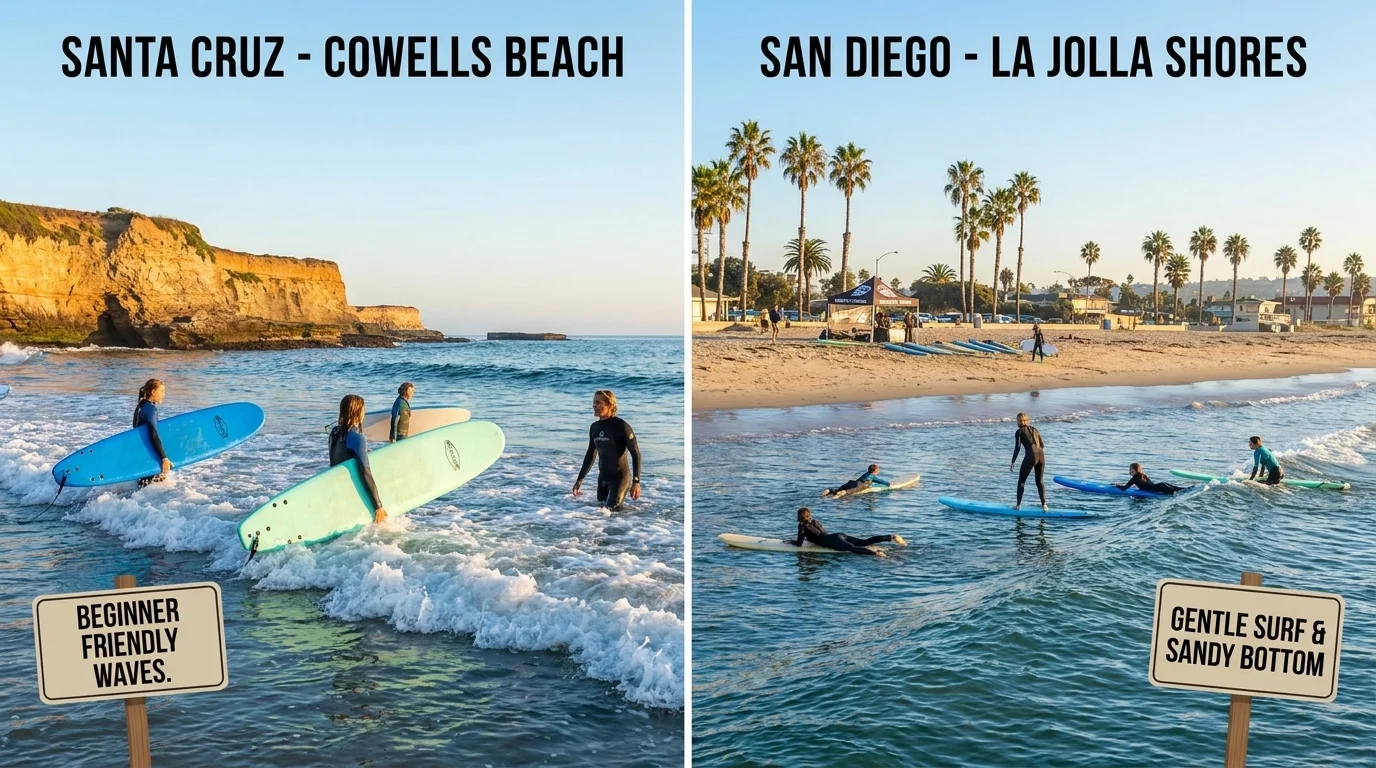
Both cities also benefit from mild, consistent weather most of the year, which makes trip planning simpler than in regions with strong seasonal swings.
How Does Olympic National Park Combine Surfing and Rainforest Hiking?
Olympic National Park in Washington state offers a rare combination of cold-water surfing and temperate rainforest hiking within the same coastal region. Surf towns like Westport and La Push attract surfers willing to wear thick wetsuits year-round, since Pacific Northwest water temperatures stay cold even in summer.
The hiking side of Olympic National Park is where the region becomes truly unique. The Hoh Rainforest Trail winds through one of the few temperate rainforests in the United States, with moss-covered trees and dense undergrowth unlike anything found on the sunnier coasts of California or Hawaii. Coastal trails along the park’s wilderness beaches also let hikers explore tide pools and driftwood-covered shores between surf sessions.
Explore: A Complete Guide to Exploring Pacific Northwest National Parks
Which Adventure Spots Are Best for Each Season?
Timing your trip around seasonal surf and hiking conditions makes a significant difference in enjoyment and safety. Here’s a general seasonal breakdown for the regions covered above:
- Winter (Dec–Feb): Oahu’s North Shore for advanced surfing; Southern California for milder hiking weather
- Spring (Mar–May): Big Sur and Santa Cruz for balanced surf and mild hiking temperatures
- Summer (Jun–Aug): Outer Banks and Olympic National Park for warmer coastal conditions
- Fall (Sep–Nov): Outer Banks hurricane swells for experienced surfers; San Diego for stable year-round hiking
Frequently Asked Questions
What is the best U.S. destination for both hiking and surfing beginners?
Santa Cruz and San Diego both work well for beginners because they offer surf schools alongside accessible, well-marked hiking trails. Mild year-round weather in both cities also means fewer scheduling restrictions compared to regions with harsher seasons.
Is Oahu’s North Shore safe for beginner surfers?
Winter conditions on Oahu’s North Shore are generally not safe for beginners due to powerful, large waves at breaks like Pipeline. Summer months bring calmer water, making the North Shore more approachable for less experienced surfers during that season.
Can you hike and surf in the same day in Big Sur?
Yes, Big Sur’s coastal layout allows travelers to surf in the morning and hike scenic trails like McWay Falls or nearby redwood groves in the afternoon. Distances between surf spots and trailheads are typically short, often under 30 minutes by car.
Do you need a wetsuit to surf on the U.S. East Coast?
Yes, most East Coast surf spots, including the Outer Banks, require a wetsuit for at least part of the year due to cooler Atlantic water temperatures. Summer months allow for lighter wetsuits or boardshorts, depending on personal cold tolerance.
What is the best time of year to visit Olympic National Park for surfing?
Summer offers the most comfortable conditions for surfing near Olympic National Park, though water temperatures remain cold year-round and require a thick wetsuit regardless of season. Rainforest hiking trails are also most accessible during the drier summer months.
Are there adventure travel spots that combine mountain hiking with surfing?
Yes, regions like Big Sur and Olympic National Park combine coastal surfing with nearby mountain or forest hiking within a short drive. These combinations work well for travelers who want varied terrain without needing to change destinations entirely.
Which East Coast location is closest to both surfing and mountain trails?
The Outer Banks of North Carolina offers coastal surfing, while Shenandoah National Park and the Blue Ridge Mountains sit a few hours inland for mountain hiking. Combining both requires a short road trip but keeps the entire adventure within one region.
Final Thoughts
The United States offers a genuinely wide range of adventure travel spots where hiking and surfing come together, from the powerful winter waves of Oahu to the rainforest trails of Olympic National Park. Matching your skill level and the season to the right destination makes all the difference between a frustrating trip and an unforgettable one. Start with a region that fits your experience level, and you’ll likely find yourself planning the next combination trip before you’ve even left.
This article reflects general travel information available at the time of writing. Surf and hiking conditions vary by season, weather, and skill level, so please verify current conditions, safety advisories, and local regulations with official park services or local surf shops before your trip.

I’m Muhammad Ubaid, founder of YBR Magazine. I research and write detailed guides on America’s National Parks — covering entry fees, permits, best times to visit, and planning tips — using official NPS sources and up-to-date information.