
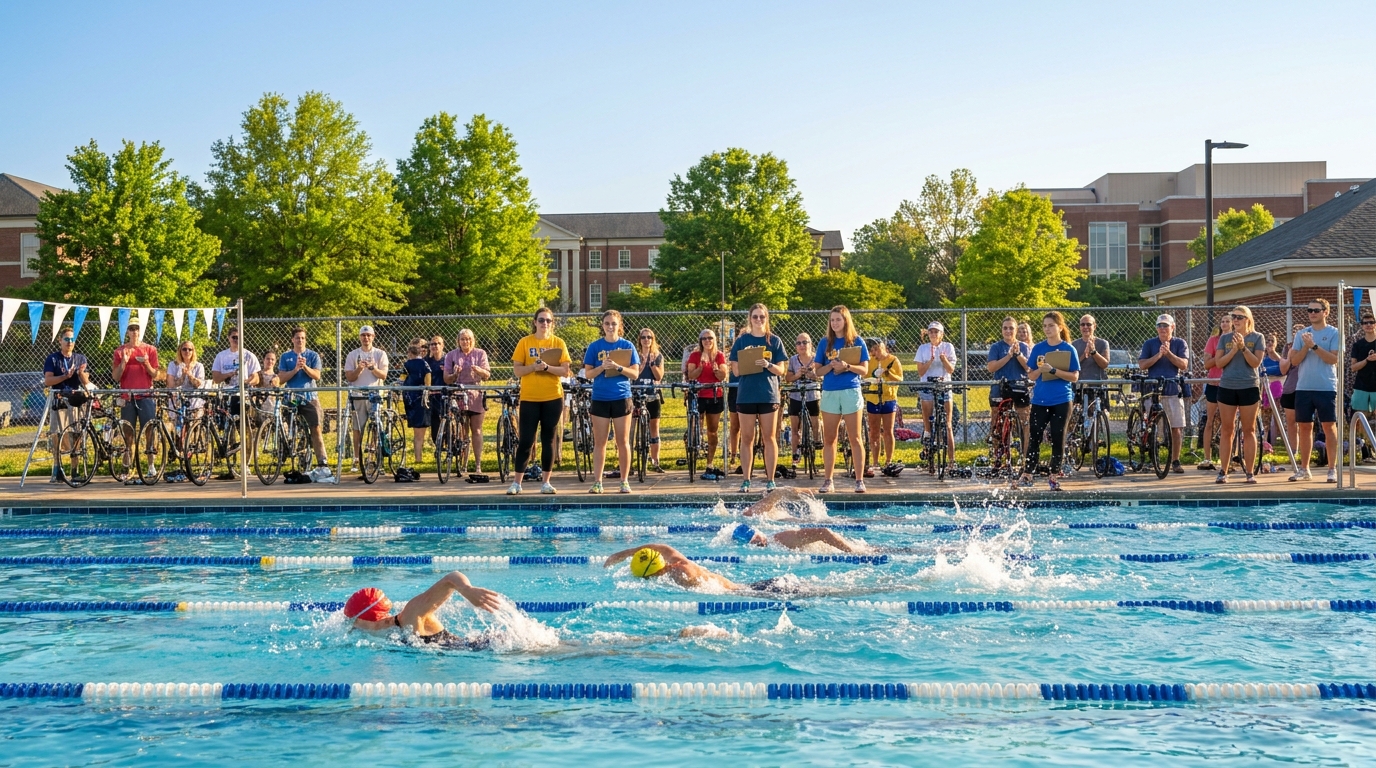
If you have typed “trideltathon” into a search bar, you probably saw a mix of results. Some pages talk about a triathlon in Knoxville, Tennessee, while others talk about sorority fundraisers for children’s hospitals. The confusion is understandable, because the word links a sporting event with a much larger sisterhood and its charity work. This guide explains the name, the history, the race format, the cause behind it, and the other fundraisers that people often mix up with it, so you can leave with a clear and accurate picture.
What Is the Trideltathon?
The Trideltathon, which is also written as TriDeltaThon, is an annual pool triathlon in Knoxville, Tennessee. It is organized with the help of the Delta Delta Delta sorority, known to most people as Tri Delta, and the name is a blend of “triathlon” and “Tri Delta.” Race listings describe it as the oldest running pool triathlon in the country, which makes it a long-standing tradition in the East Tennessee racing community rather than a brand-new event.
A pool triathlon follows the same swim, bike, and run order as a standard triathlon, but the swim takes place in an indoor or outdoor pool instead of a lake or river. That small change makes the sport much friendlier for beginners. There are no waves, no cold open water, and no worry about currents, so first-time triathletes can focus on pacing and finishing.
The Trideltathon is not a USAT sanctioned event, according to its own race page. That detail matters if you are a competitive athlete who needs sanctioned results for rankings or qualifying, but it does not change the experience for most participants, who come for the community, the cause, and the challenge.
A Short History of the Trideltathon

The event began in 1984, when Tri Delta started it as a fundraiser for Camp Eagles’ Nest, a summer camp for children with cancer and blood disorders that was sponsored by East Tennessee Children’s Hospital. That origin explains why the race has always felt closer to a community gathering than a pure sports competition.
Since then, the race has kept its core idea intact. Athletes pay an entry fee, they complete the swim, bike, and run, and the money raised supports children’s health in East Tennessee. According to the race registration page, proceeds go to East Tennessee Children’s Hospital, and volunteer support is provided by the women of Delta Delta Delta.
Like many events, it was also affected by the pandemic. In 2020, the University of Tennessee, Knoxville moved to online learning for the rest of the academic year, and the organizers announced that the race had to be canceled after trying and failing to find a later date. Registered athletes were given several choices, including donating their entry fee to the hospital, moving to the following year’s race, switching to another sprint triathlon from the same timing company, using the fee as a credit toward a longer race, or asking for a refund.
How the Race Works

The Trideltathon follows the regular swim, bike, and run format, and organizers have kept that structure for several years. Registration and race-day management are handled through RaceDay Events, a timing and event company that has been listed as the contact on the race page.
Because it is a pool triathlon, the swim portion is usually based on lap counts instead of a marked open-water course. Athletes are typically placed in the pool according to their expected swim pace, and they then move on to the bike and the run. Exact distances, start times, age groups, and entry fees can change from year to year, so the official registration page is always the best place to confirm the current details before you sign up.
Who Should Consider Racing?
The Trideltathon is a good match for several types of people:
- Beginners who want a gentle introduction to multisport racing without the stress of open water.
- Students and locals who want to support a campus tradition with a clear charitable purpose.
- Experienced triathletes who enjoy shorter races and want a fun, low-pressure event in their calendar.
- Families and friends who prefer to volunteer, cheer, or join as a relay group instead of racing alone.
If you are new to the sport, it helps to practice each part separately in the weeks before the race. Swimming laps in a pool, riding a bike on a familiar route, and running at an easy pace will help you feel comfortable, and practicing the quick change between each stage, called a transition, can save time and calm your nerves on race day.
The Bigger Story: Tri Delta and Its Charity Work
To understand why the Trideltathon matters, it helps to know the organization behind it. Delta Delta Delta was founded on November 27, 1888, at Boston University in Boston, Massachusetts, and its motto is “Let us steadfastly love one another.” The sorority’s colors are silver, gold, and blue, its symbols include the dolphin, the pine tree, and the pearl, and its patron Greek divinity is Poseidon.
Tri Delta has a long record of fundraising for children’s health. In 1999, the organization formed a national partnership with St. Jude Children’s Research Hospital in Memphis, Tennessee. Through that partnership, St. Jude helps Tri Delta chapters plan and run philanthropy events that benefit children and support research. In 2014, Tri Delta committed to raising $60 million over ten years for St. Jude, and the organization announced that it had reached the halfway point of $30 million in January 2018. Tri Delta also funded Tri Delta Place, an on-campus housing facility at St. Jude for patient families, and it was named St. Jude’s partner of the year in 2014, becoming the first non-corporation to receive that honor.
This is where much of the search confusion comes from. The Trideltathon is a local Knoxville triathlon whose proceeds go to East Tennessee Children’s Hospital, while the national Tri Delta partnership focuses on St. Jude. Both causes help children, but they are separate efforts with different beneficiaries.
Other Tri Delta Fundraisers You May Come Across
Because Tri Delta chapters across the country host their own events, you will find many similar-sounding fundraisers online. These are not the Trideltathon, but they show how creative the chapters are:
- Sincerely Yours: a national letter-writing campaign in which members write personal letters to friends, family, and supporters to ask for donations for St. Jude. It is described by chapters as the largest fundraiser for St. Jude and Tri Delta.
- Delta House of Pancakes (DHOP): an all-you-can-eat pancake event that several chapters hold each year.
- Delta Wild Wings and Mac Attack: food-based events at some campuses where guests pay a small ticket price and enjoy wings or mac and cheese while supporting St. Jude.
- 5K in a Day and 3K in a Day: online challenges in which supporters donate over a 24-hour period to help a chapter reach a fundraising goal.
- Delta Dodgeball: a campus tournament in which Tri Deltas coach teams from other organizations.
If you searched for the Trideltathon hoping to find one of these, check the website of your local chapter, because dates and names often change from one school year to the next.
Tips for Taking Part
Whether you plan to race, volunteer, or simply donate, a few practical steps will make the experience smoother:
- Check the official registration page first. Dates, distances, and prices can change, and only the current listing is reliable.
- Register early. Smaller community races can fill up, and early entry gives you more time to prepare.
- Train all three sports. Even a short sprint-style event feels easier when you have practiced the swim, bike, and run in the same week.
- Plan your transitions. Lay out your gear in order, wear something that works for all three parts, and rehearse the changeovers at home.
- Consider volunteering. Races like this rely on helpers for check-in, lap counting, course safety, and cheering.
- Confirm where your money goes. If giving matters to you, read the event page to see which charity receives the proceeds.
Why the Trideltathon Still Matters
Many races come and go, but the Trideltathon has lasted for decades because it combines three things people value: an approachable sport, a strong sense of community, and a cause that helps children and families who are facing serious illness. For a beginner it offers a friendly first step into triathlon, for a student organization it offers a meaningful way to serve, and for the wider Knoxville area it offers a yearly reminder that a sporting event can do real good.
Frequently Asked Questions
What does Trideltathon mean?
It is a combination of “triathlon” and “Tri Delta,” the common name of the Delta Delta Delta sorority, which supports the event.
Where is the Trideltathon held?
It is a Knoxville, Tennessee event connected to the University of Tennessee community.
Is it an open-water triathlon?
No. It is a pool triathlon, so the swim takes place in a pool.
Is the Trideltathon USAT sanctioned?
According to the official race page, it is not.
Who benefits from the race?
The race page states that proceeds support East Tennessee Children’s Hospital.
Is the Trideltathon the same as Tri Delta’s St. Jude fundraising?
No. The St. Jude partnership is Tri Delta’s national philanthropy, while the Trideltathon is a local triathlon that benefits a Knoxville children’s hospital.
Who handles registration?
Registration has been handled through RaceDay Events, so use the official event listing to sign up.
Final Thoughts
The Trideltathon is more than a race with a clever name. It is a long-running pool triathlon with roots in a 1984 fundraiser for children with cancer and blood disorders, and it continues to bring athletes, volunteers, and sorority members together for a good cause. If you are curious, start with the official registration page, confirm the current date and rules, and decide whether you want to race, volunteer, or support from the sidelines.
Disclaimer: This article is provided for general information only. Event dates, distances, entry fees, rules, beneficiaries, and organizers can change from year to year, and some details may have been updated after this article was written. Always confirm the latest information on the official race registration page or with the event organizers before registering, donating, or making travel plans. This article is not affiliated with or endorsed by Delta Delta Delta, St. Jude Children’s Research Hospital, East Tennessee Children’s Hospital, RaceDay Events, or the University of Tennessee. Consult a doctor before beginning any new training program.
Explore More
GrammarVista.com USA: Honest Guide to Features, Safety, Limits and Best Uses

I’m Muhammad Ubaid, founder of YBR Magazine. I research and write detailed guides on America’s National Parks — covering entry fees, permits, best times to visit, and planning tips — using official NPS sources and up-to-date information.