
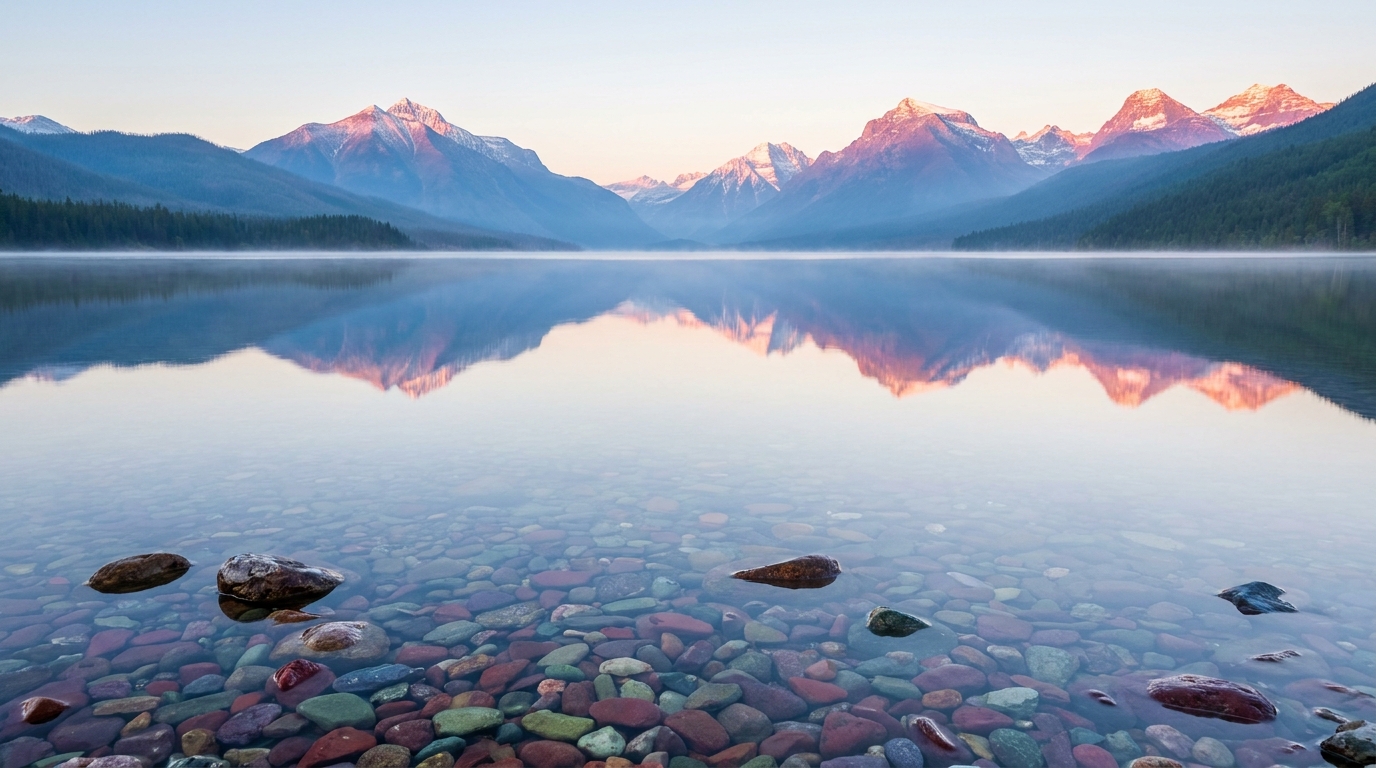
Glacier National Park is a vast mountain wilderness in the northwest corner of Montana, along the border with Canada, and it is often described as one of the most beautiful protected places in North America. Sharp peaks carved by ice, deep blue lakes, waterfalls, alpine meadows and ancient cedar forests all sit within a single park, which is why people travel from around the world to see it. This guide explains what makes the park special, when to go, what to do, how much it costs, where to stay and how to stay safe, so you can plan a smooth and memorable visit.
What Is Glacier National Park?
Glacier National Park covers roughly one million acres of the northern Rocky Mountains and was established on May 11, 1910, which makes it one of the older national parks in the United States. The landscape sits in a region often called the “Crown of the Continent,” a nickname that reflects how the area feeds rivers flowing toward three different oceans. Glacier is also connected to Canada’s Waterton Lakes National Park, and together the two parks form the Waterton-Glacier International Peace Park, created in 1932 as a symbol of friendship between the two countries. The combined area has also been recognized as a UNESCO World Heritage Site and a Biosphere Reserve, and it holds International Dark Sky Park status, so the night sky here is as impressive as the scenery by day.
The mountains you see today were shaped over millions of years by tectonic forces and then sculpted by moving ice. Giant glaciers carved the U-shaped valleys, sharp ridges called arêtes, bowl-shaped cirques and long, narrow lakes that define the park’s look. In the middle of the 1800s there were an estimated 150 glaciers in this region, but only a few dozen remain, and the park has become an important place for scientists who study how a warming climate changes mountain ecosystems. Seeing the surviving ice is part of the appeal, but it is also a reminder that this landscape is changing.
Why Glacier National Park Is Worth the Trip
The park combines many different environments in a compact area. Within a single day you can move from a quiet rainforest-like valley filled with western red cedar and hemlock to a windswept alpine tundra where wildflowers grow in short bursts during the brief mountain summer. That variety supports a rich wildlife community, including grizzly bears, black bears, mountain goats, bighorn sheep, moose, elk, wolves, lynx and hundreds of bird species. Few places in the lower 48 states still offer such an intact ecosystem where large predators and their prey live together.
Another reason to visit is the sense of space. The park has more than 700 miles of maintained trails and over a hundred named lakes, so even in busy months you can find a quiet shoreline or ridge if you are willing to walk a little. Whether you prefer a short boardwalk stroll, a full day of alpine hiking or a multi-night backcountry trip, there is a route that fits your energy and experience.
Going-to-the-Sun Road: The Park’s Signature Drive
The most famous feature of Glacier National Park is the Going-to-the-Sun Road, a paved two-lane mountain highway of about 50 miles that connects the west side of the park to the east side. Completed in 1932, it is considered a landmark of civil engineering, and it crosses the Continental Divide at Logan Pass, which sits at an elevation of 6,646 feet. The road clings to cliffs, passes through a tunnel, runs beside waterfalls and offers constant views of valleys and peaks, so it is not unusual for a drive without any long stops to take two hours or more.
Because it crosses high mountain terrain, the road cannot stay open all year. In a normal season the full route opens sometime between late June and early July after crews clear heavy snow, and it usually closes in mid-October. In 2026 the entire road opened to vehicles on June 22. Lower sections on each side may stay open longer, but the high central part near Logan Pass can close quickly when autumn snow arrives, so it is wise to check current conditions on the official park website before you travel.
There are some practical rules to know in advance. Vehicles longer than 21 feet or wider than 8 feet, including mirrors, are not allowed on the stretch between Avalanche Creek and Rising Sun, which means many large RVs and trailers cannot use the most scenic section. Parking at popular stops such as Logan Pass, Avalanche and The Loop fills early in the day, so arriving in the morning or late afternoon makes the experience far more relaxed. For 2026, the park removed its vehicle reservation requirement, but it introduced a three-hour parking limit at Logan Pass and a ticketed Logan Pass shuttle from July 1, so it is worth checking each season’s rules because they can change from year to year.
Best Time to Visit Glacier National Park
The best time for most visitors is from July through early September, when the high-elevation roads and trails are generally open, the weather is warmest and all visitor services are running. Early July can still have snow on higher trails, while late July and August are usually the best months for alpine wildflowers and lake activities. The trade-off is that this period is also the most crowded, and the summer sun can bring wildfire smoke on some days.
September is a favorite among experienced visitors because crowds thin, the air is crisp and the evenings are good for stargazing, although some services begin to close and snow is possible at high elevations. October brings golden autumn colors in the lower valleys and a very quiet park, but the central road is typically closed or about to close. Winter, from roughly November to April, turns Glacier into a peaceful snow-covered landscape suited to cross-country skiing and snowshoeing, mainly around the Apgar and Lake McDonald area, since most facilities and roads are closed. Spring is a muddy, unpredictable transition season with growing waterfalls and few visitors.
Top Things to Do in Glacier National Park
Hike Iconic Trails
Hiking is the heart of the Glacier experience, and the park offers routes for every level. The Hidden Lake Overlook trail starts at Logan Pass and is about 2.7 miles round trip, leading across alpine meadows to a view of a turquoise lake below sharp peaks. The Highline Trail follows a ledge along the Continental Divide for around 11 miles and is widely seen as one of the best hikes in the park, with long views and frequent sightings of mountain goats. Avalanche Lake, a roughly 4.5-mile round trip, climbs gently through old forest to a cirque lake framed by waterfalls, making it a good option for families who want a real mountain payoff without extreme elevation gain.
On the east side, the Many Glacier region is known for some of the park’s finest scenery and wildlife. The Grinnell Glacier trail, about 10 miles round trip, brings you close to one of the park’s remaining glaciers and a glacial lake, while the easier Iceberg Lake hike offers a cold, blue lake that can hold floating ice well into summer. If you prefer a very short walk, the Trail of the Cedars is a flat loop of under a mile on a boardwalk and paved path through towering, moss-draped trees.
Explore the Lakes
Lake McDonald is the largest lake in the park, about 10 miles long and more than 400 feet deep, and it is famous for its clear water and the colorful pebbles visible along its shore. You can walk the beach at sunrise, rent a kayak or canoe, or take a scenic boat tour. On the east side, St. Mary Lake is known for Wild Goose Island, a tiny tree-covered island that appears in countless photographs, while Two Medicine offers calm water, boat rides and trails with fewer crowds than the busiest areas.
Ride a Historic Red Bus
Glacier’s vintage red touring buses, often called “Red Jammers,” have carried visitors along the Going-to-the-Sun Road since the 1930s, and the fleet is one of the park’s best-loved traditions. Taking a guided bus tour lets you enjoy the views without worrying about narrow curves or parking, and the drivers usually share stories about the park’s history, geology and wildlife.
Watch Wildlife and Stargaze
Early morning and evening are the best times for spotting animals, especially in meadows and along lake edges in the Many Glacier valley. At night, the park’s dark skies reveal the Milky Way clearly on moonless evenings, and in some years strong solar activity creates a chance to see the northern lights from the park’s northern areas. Rangers sometimes host evening programs during the summer season, which are a helpful way to learn about the night sky and local ecology.
Park Areas at a Glance
Glacier is best understood as several distinct regions, each with its own character. Choosing the right base can save hours of driving, because the park is large and the main road is slow.
| Area | Known For | Good For |
|---|---|---|
| West Glacier and Apgar | Lake McDonald, the main entrance, services | First-time visitors, families, boat rentals |
| Lake McDonald Valley | Cedar forest, historic lodge, Avalanche Lake | Easy hikes and photography |
| Logan Pass | Continental Divide, alpine meadows | Highline and Hidden Lake hikes |
| St. Mary and Rising Sun | Large east-side lake, Wild Goose Island | Scenic stops and sunrise views |
| Many Glacier | Glacier views, historic hotel, high wildlife activity | Serious hikers and wildlife watchers |
| Two Medicine | Quiet lakes and peaks | Peaceful days away from crowds |
| North Fork | Remote, rustic, undeveloped | Solitude and a more primitive experience |
Entrance Fees, Passes and Getting There
For summer 2026, the standard private vehicle entrance pass was $35 and is valid for seven days, with a lower winter rate of $25 for the November to April period. Visitors aged 16 and older who live outside the United States must also pay an additional $100 non-resident fee unless they hold a qualifying annual pass, and the park no longer accepts cash at entrance stations, so it is best to carry a card. Holders of the America the Beautiful annual pass can enter with that pass, and it is usually a good value if you plan to visit more than one national park in the same year.
The closest major airport is Glacier Park International Airport near Kalispell, about 30 miles from the West Glacier entrance, and many visitors rent a car there. Amtrak’s Empire Builder route also stops near the park at West Glacier and East Glacier Park, which makes a train journey a scenic alternative for those who do not want to drive long distances. Once you are in the park, cell service is limited and unreliable in many areas, so download offline maps and trail information before you leave town.
Where to Stay
Lodging options inside the park include historic hotels such as Lake McDonald Lodge and Many Glacier Hotel, rustic cabins and several campgrounds, and these tend to book up many months ahead for the summer season. Campers can choose from developed sites such as Apgar, Fish Creek and Many Glacier, while backcountry campers need a permit to stay at designated sites along the trails. If you cannot find space inside the park, the gateway communities of West Glacier, Columbia Falls and Whitefish on the west side, and St. Mary, Browning and East Glacier Park on the east side, offer hotels, vacation rentals and restaurants. Whitefish in particular has a lively town center and a wide range of dining options.
Bear Safety and Park Etiquette
Glacier is home to both grizzly and black bears, so every visitor should treat bear safety as a basic part of the trip rather than an afterthought. Carry bear spray in an easy-to-reach place and learn how to use it, hike in a group when you can, and make noise on trails, especially in thick vegetation or near streams where sound is muffled. If you meet a bear, stay calm, do not run, and slowly back away while keeping your eyes on the animal. Park rules require you to keep at least 100 yards from bears and wolves and 25 yards from other wildlife, which protects both you and the animals.
Food storage matters just as much. Never leave food, trash or scented items unattended, use bear-proof bins, and avoid feeding any animal, including small ones like squirrels. Stay on marked trails, park only in designated spaces, and avoid walking on lingering snowbanks near roads, which can be unstable. Weather in the mountains can change fast, and snow can fall at high elevation in any month, so bring layers, rain gear, sturdy footwear, sun protection and plenty of water even for short outings.
Sample Itineraries
If you have only one day, start early on the west side with a walk along Lake McDonald or the Trail of the Cedars, drive the Going-to-the-Sun Road to Logan Pass, walk toward Hidden Lake Overlook, and finish with sunset on the east side near St. Mary. With three days, you can add a full hike such as Avalanche Lake or the Highline Trail, spend a day in the Many Glacier valley looking for wildlife, and leave time for a boat ride or a relaxed afternoon by a lake. Visitors with a week can explore quieter regions like Two Medicine or the North Fork, try a longer backcountry hike and still keep a rest day, which makes the trip less rushed.
Frequently Asked Questions
How many days do you need in Glacier National Park?
Most people find that three to four days is enough to see the main highlights without rushing, although hikers and photographers often want a week.
Is Glacier National Park good for beginners and families?
Yes, because the park offers many short, well-marked paths, boat rides and scenic drives, and children usually enjoy the lakes, the red buses and ranger programs.
Can you see glaciers in Glacier National Park?
You can, although the number of active glaciers has dropped sharply, and Grinnell Glacier and Sperry Glacier are among the better-known ones that can be reached by hiking.
Is there food available inside the park?
Restaurants and small stores operate at lodges and some developed areas in the season, but there is no food or water for sale at the Logan Pass visitor center, so bring snacks and a refillable bottle.
Final Thoughts
Glacier National Park rewards visitors who plan ahead but remain flexible, because road openings, weather, wildfire smoke and parking conditions can all shape the day. Start with the official park website for the latest alerts, pick one or two areas rather than trying to see everything, and give yourself time to simply sit by a lake or watch the light change on the mountains. With respect for wildlife and for the fragile landscape, a trip here can become the kind of journey you remember for the rest of your life.
Disclaimer: This article is for general informational purposes only. Park rules, entrance fees, road opening dates, shuttle services, parking limits, trail conditions, wildlife activity and weather can change without notice, and some details above describe the 2026 season. Always confirm current information on the official National Park Service Glacier National Park website or with park staff before you travel. Outdoor activities such as hiking, driving mountain roads and viewing wildlife carry real risks, and readers are responsible for their own safety and decisions.
Explore More
San Francisco to Sequoia National Park: Drive Time, Routes, Costs and Trip Tips

I’m Muhammad Ubaid, founder of YBR Magazine. I research and write detailed guides on America’s National Parks — covering entry fees, permits, best times to visit, and planning tips — using official NPS sources and up-to-date information.