

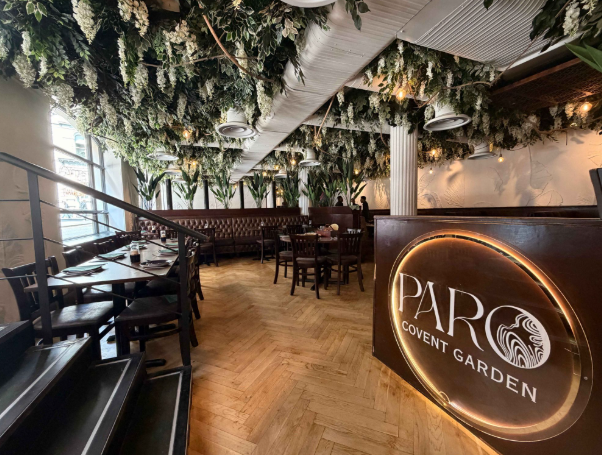
Choosing between restaurants West End visitors love comes down to who is at the table. Couples want conversation, families need mild options, groups need food that shares easily. Indian cooking suits all three because it is built for sharing, and when hunting for the best indian restaurant covent garden offers, the right order matters as much as the menu.
Why does party size change which restaurants West End diners should choose?
Running a dining room in Covent Garden teaches you quickly that a table of two and a table of ten are different jobs. The kitchen times dishes differently. The front-of-house team reads the table differently. Even the ideal seat changes: couples want a corner, groups want space for dishes in the middle, families want a little room for a pushchair and an easy route to the toilets.
At Paro, beside the Lyceum Theatre, we plan for all three every day. What follows is the advice we would give a friend about eating in the West End, whichever kind of table they are bringing.
How should each kind of table order?
| Party | What usually works | What to avoid |
|---|---|---|
| Couple | Two small plates, one curry, one vegetable, rice and one bread to share | Ordering two big mains each and running out of room for anything else |
| Family with children | A mild dal, plain rice, a creamy curry, tandoor dishes, chutneys on the side | Assuming everything must be mild; let adults add heat at the table |
| Group of six or more | A spread ordered for the table: roughly one main per person plus sides | Everyone ordering individually, which fragments timing |
The logic is the same each time. Indian dishes are built to be eaten alongside each other, so ordering for the table gives everyone more variety for the same appetite.
What makes a good evening for couples?
Couples tend to want two things that pull against each other: time to talk, and food interesting enough to talk about. Small plates help. A smoky tandoor starter, then a slow-cooked curry, then something unfamiliar to share is a good shape for a date.
This is also where regional cooking earns its place. Our kitchen is led by Chef Niaz, whose cooking comes from Kolkata and West Bengal. Bengali food has a distinctive flavour language: mustard oil and mustard paste with a sharp, nasal heat; panch phoron popping in hot oil; a quiet sweetness in some dishes that surprises people used to standard curry-house food. A dish neither of you has tried before makes a better story than one you could order anywhere.
Plenty of couples ask us what the best indian curry to share is. Honestly, the answer is two contrasting ones: something rich and something sharp, so each makes the other taste better.
How do families get the most from an Indian menu?
Parents often worry that Indian food will be too spicy. In practice, heat in Indian cooking mostly comes from fresh or dried chilli, which a kitchen can control, while the depth comes from aromatics such as cumin, coriander, cardamom and cinnamon that children usually enjoy. Every dish at Paro starts with our house 48-spice mix, but spice in that sense means fragrance and warmth, not burn.
A few things make a family lunch easier:
- Come at lunchtime. We open Wednesday to Sunday from midday, and the area is calmer than in the pre-theatre rush.
- Order rice and bread first. Hungry children settle faster with something familiar on the table.
- Use the dietary tags. Our menu is marked for halal, vegan, vegetarian, gluten-free, dairy-free and nut-free diners, which helps when one child has an allergy.
- Ask for chutneys on the side. Raita cools, mango chutney sweetens, lime pickle wakes up an adult’s plate.
What helps large groups eat well together?
Groups bring energy and logistics. The best group meals we serve have one thing in common: somebody orders for the table. It lets the kitchen fire dishes in waves that arrive together, rather than ten plates at ten different moments.
A thali-style approach also works well for groups because portions are fixed and balanced. If you have searched for an indian thali london option for a work lunch or birthday, ask the team when booking whether a thali-style selection can be arranged for your party. Tell us the headcount, any dietary needs and whether you have theatre tickets; it makes a real difference to how smoothly the evening goes.
How do you spot the best indian restaurant covent garden can offer?
There is no single answer for everyone, but there are reliable signs. A kitchen with a clear regional identity rather than a generic list of every dish in the subcontinent. A menu that labels allergens and diets plainly. Staff who can tell you how a dish is cooked, not just what is in it. And a location that fits your evening: close to your theatre, your hotel or your train.
Good indian food covent garden diners tend to show care in small things: rice cooked so each grain is separate, breads made to order, whole spices warmed in fat before the sauce goes in. Those details matter more than décor.
Frequently Asked Questions
Is Indian food a good choice for a first date?
Yes. Sharing dishes gives you something to talk about, and ordering small plates keeps the pace relaxed. Choose one familiar dish and one you have never tried.
How much Indian food should a group order?
Plan roughly one main per person, ordered for the table, plus rice, breads and a couple of vegetable sides. Ordering together helps the kitchen serve everything at the same time.
Are West End Indian restaurants child-friendly?
Many are, especially at lunchtime. Look for mild dishes such as dal and creamy curries, and ask for chutneys and chilli on the side so adults can adjust their own heat.
Can a group with mixed diets eat at one Indian restaurant?
Usually, if you tell the restaurant in advance. Paro’s menu is tagged for halal, vegan, vegetarian, gluten-free, dairy-free and nut-free diners, which makes planning simpler.