

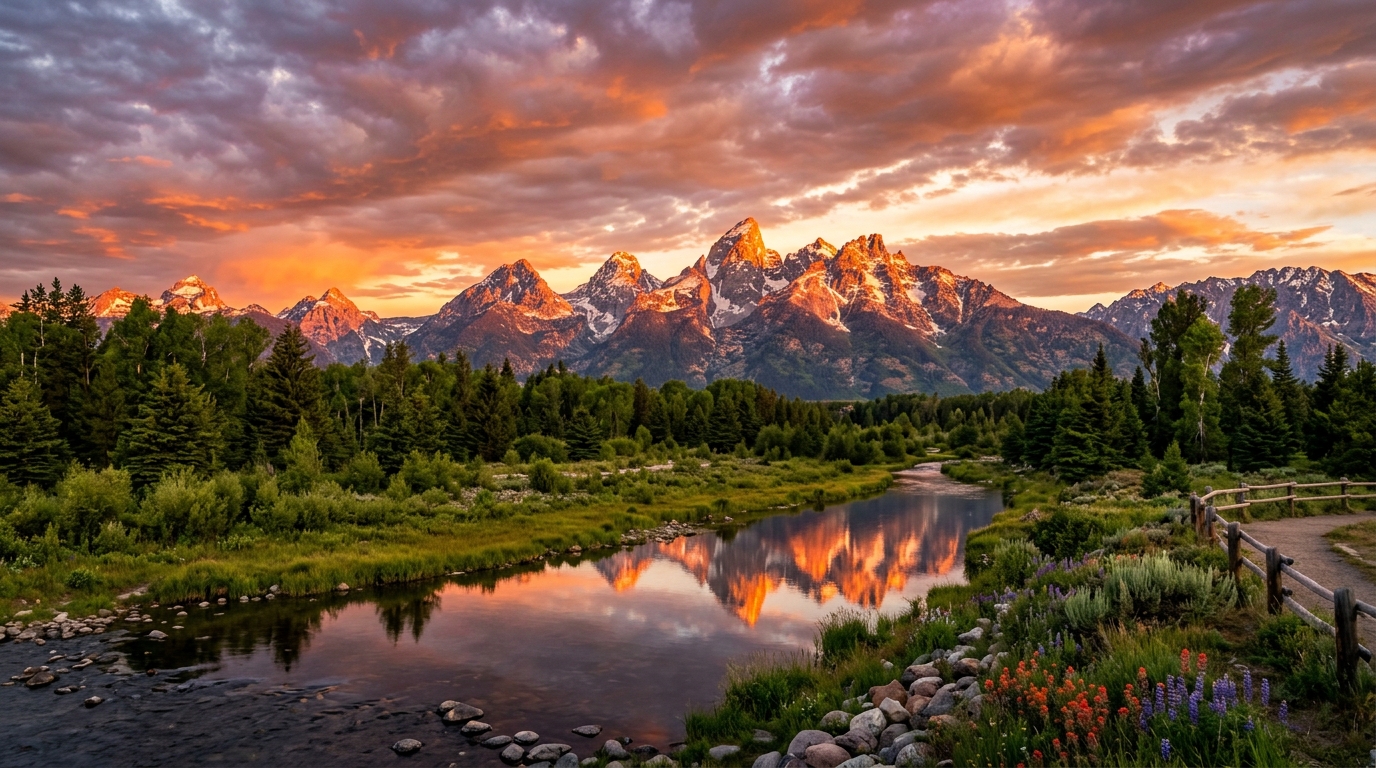
Planning an evening excursion through Grand Teton National Park brings entirely different visual rewards compared to standard daytime sightseeing. While morning visitors flock to Mormon Row to capture bright sunlight striking the eastern rock faces, a Grand Teton National Park sunset unfolds from an opposite perspective. The sun drops directly behind the towering Teton Range, casting long silhouettes, deep valley shadows, and vibrant fiery colors across the winding Snake River and local beaver ponds. Travelers hoping to experience this dramatic transition need specific guidance on western-facing locations, precise lighting behavior, and dusk safety.
Because the massive mountain wall sits directly to the west, evening illumination shifts much faster than casual visitors usually anticipate. Knowing the exact angles and shoreline overlooks helps travelers avoid missing the prime color window. For broader travel inspiration covering regional outdoor adventures, visitors can check out a weeklong trip plan for Grand Teton to map out longer stays and daytime trail options.
Best Places to Watch the Sunset in Grand Teton National Park
The best places to watch the sunset in Grand Teton National Park offer clear, unobstructed lines of sight toward the western ridgeline where the sun sinks below the horizon.
Oxbow Bend remains a prime location because the gentle curve of the Snake River captures stunning mirror reflections of Mount Moran and the glowing sky above. Schwabacher Landing provides another exceptional setting, featuring calm beaver ponds that mirror the dramatic hues of the fading day. Jackson Lake Dam offers vast water expanses facing the highest peaks, while Signal Mountain Summit Road takes drivers high above the valley floor for a panoramic perspective of the entire Jackson Hole basin.
Timing Your Evening Visit
Timing your evening visit correctly is a critical step because the tall mountain peaks block direct sunlight long before the official valley sunset hour arrives.
When the sun drops behind the sharp peaks, the valley floor plunges into shadow much earlier than standard weather forecasts suggest. Visitors should arrive at their chosen viewpoint at least sixty to ninety minutes before the official sundown. Reaching the location early gives everyone enough time to secure parking, set up camera equipment, and enjoy the gradual shift in lighting as the golden hour takes over.
Evening Wildlife Activity and Safety
Evening wildlife activity and safety require constant alertness because large animals become much more active as day turns to twilight.
As evening arrives, moose frequently emerge to feed in the wetland marshes near Schwabacher Landing and the Snake River, while bears often cross park roads and trails. Visitors must always maintain a respectful distance from any animals spotted near the road. Carrying bear spray and keeping it instantly accessible is a vital safety measure for anyone staying out past standard daylight hours.
What to Bring for an Evening in the Park
Knowing what to bring for an evening in the park ensures a comfortable experience because mountain air cools down instantly once the sun disappears behind the peaks.

Even during warm summer months, the temperature plummets the moment the mountains cast their shadow over the valley. Packing warm fleece layers, windproof jackets, hats, and gloves keeps the chill away while waiting for twilight colors to finish. Carrying a reliable headlamp or flashlight is also necessary for navigating the walk back to the vehicle safely after the last light fades.
| Viewing Area | Primary Visual Feature | Suggested Arrival Window |
|---|---|---|
| Oxbow Bend | River reflections and Mount Moran | 60 to 90 minutes before sundown |
| Schwabacher Landing | Beaver ponds and mirror imagery | 60 minutes before sundown |
| Signal Mountain Summit | Panoramic valley views | 90 minutes before sundown |
Disclaimer: Weather patterns, park regulations, and gate hours can shift throughout the year. Visitors should always confirm current guidelines and safety updates directly from official park channels before starting their evening trip.
What time does the sun actually disappear behind the Teton Range?
The sun slips behind the high mountain ridges 30 to 45 minutes before the official valley sunset time, plunging overlooks into early shadow.
Where are the best water reflection spots for evening photography?
Oxbow Bend and Schwabacher Landing offer the calmest river and pond surfaces for capturing clear mountain reflections.
For more ideas on exploring scenic evening landscapes in other protected natural areas, take a look at our guide to evening vistas at Shenandoah to compare mountain dusk characteristics.
Do I need a special pass to stay in the park after dark?
A standard park entrance pass is required for Grand Teton National Park, and this pass remains valid during evening and night hours.
Is it safe to walk back to my vehicle in the dark?
Walking back to your car in the dark is common, but you should always use a bright headlamp and talk loudly to alert wildlife.
How cold does it get after sunset in the park?
Temperatures drop sharply the moment the sun goes down, often requiring warm fleece jackets even during mid-summer evenings.
Are bears active during twilight hours in Grand Teton National Park?
Bears and moose frequently move out to forage during dusk, making it essential to remain alert and carry bear spray.

I’m Muhammad Ubaid, founder of YBR Magazine. I research and write detailed guides on America’s National Parks — covering entry fees, permits, best times to visit, and planning tips — using official NPS sources and up-to-date information.