

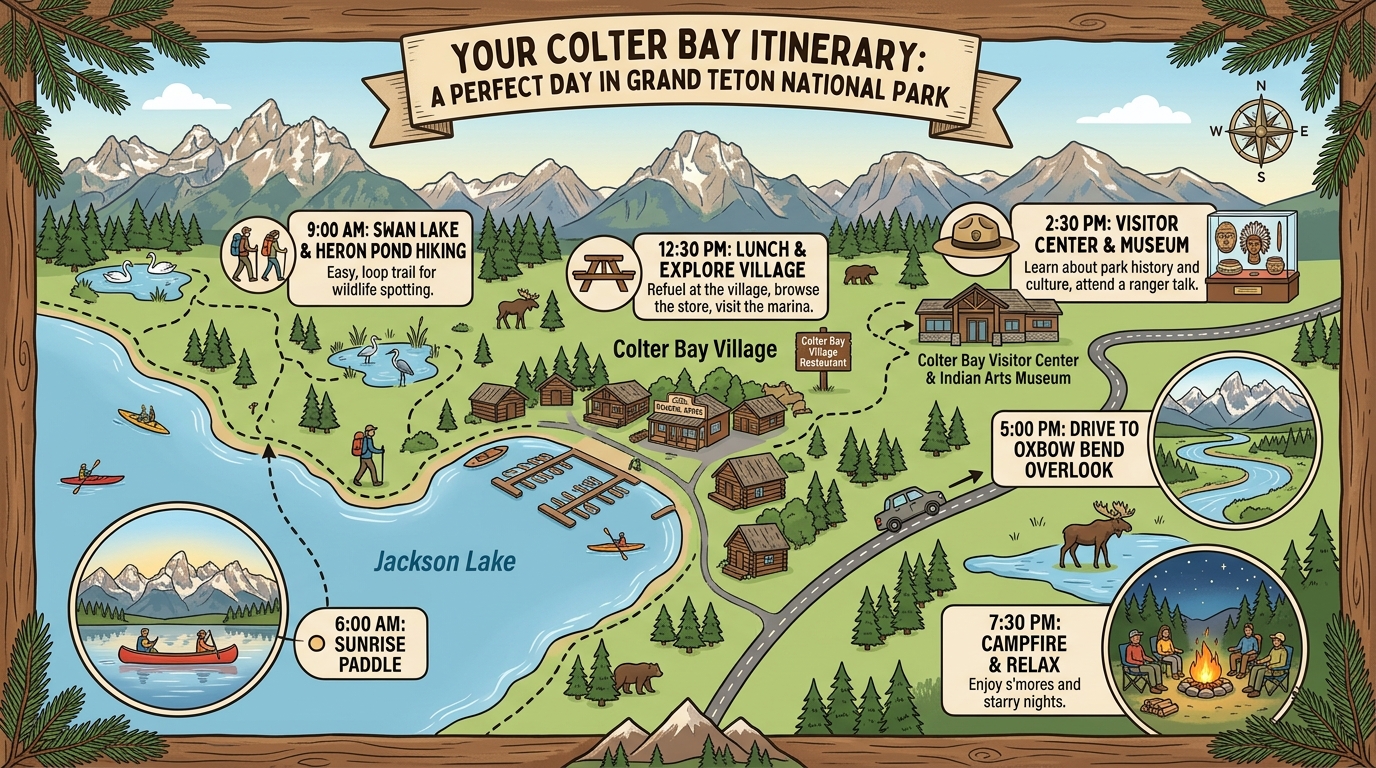
Planning a full week in Grand Teton National Park offers a rare chance to slow down and truly absorb the landscape instead of rushing from one scenic overlook to the next. When travelers commit to a single hub for an entire week, daily packing and camp setups disappear, leaving more room for genuine outdoor exploration. A well-paced 7 day itinerary Colter Bay Grand Teton National Park balances demanding alpine adventures with relaxing lake days right along the shores of Jackson Lake.
Why Choose Colter Bay as Your 7-Day Basecamp
Colter Bay serves as an ideal home base because it combines deep wilderness access with convenient modern amenities right on the edge of Jackson Lake.
Colter Bay Village features campgrounds, cabins, a grocery store, laundry facilities, a visitor center, and a full-service marina. Staying at Colter Bay means visitors avoid the daily morning traffic coming up from the town of Jackson, saving precious time before heading out on morning hikes or wildlife drives. Colter Bay puts travelers within easy reach of the dramatic Teton Range while offering a quiet, forested lakeside environment to return to each evening.
Getting Settled and Exploring Colter Bay Village on Day 1
Day one focuses on unpacking gear, stretching travel-weary legs, and getting familiar with the immediate Colter Bay layout.
Visitors should begin their afternoon by stopping at the Colter Bay Visitor Center to check current trail conditions, chat with park rangers, and browse the exhibits. Afterward, walking down to the Colter Bay Marina provides a sweeping view of Jackson Lake with Mount Moran rising sharply in the background. A stroll along the lakeshore path helps travelers settle into mountain time without pushing too hard on the first day.
Hitting the Trails Around Colter Bay on Day 2
Day two keeps the focus entirely local by tackling the scenic hiking trails that start right from Colter Bay without requiring any driving.
The Swan Lake and Heron Pond loop offers an easy-to-moderate hike that winds through peaceful forests and marshy wetlands where wildlife frequently gathers. This trail loop measures roughly three miles and provides fantastic opportunities to spot waterfowl, beavers, and occasionally moose feeding in the quiet shallows. Returning to Colter Bay Village in the afternoon leaves plenty of time to explore the Colter Bay Indian Arts Museum to view Native American artifacts and historical exhibits.
Spending Day 3 on the Water at Jackson Lake
Day three trades hiking boots for boat paddles to experience the expansive open waters of Jackson Lake from a completely different perspective.
Renting a kayak, canoe, or motorboat from the Colter Bay Marina allows visitors to cruise out toward Elk Island or find a secluded pebble beach along the shoreline. Morning hours usually offer the calmest lake conditions, making it the best time for paddling before afternoon winds pick up across the open water. A scenic boat cruise is also available for travelers who prefer a guided tour with historical insights about the surrounding peaks.
Exploring Jackson Lake Lodge and Signal Mountain on Day 4
Day four moves just a short distance south of Colter Bay to take in famous valley vistas and exceptional wildlife viewing areas.
Jackson Lake Lodge sits on a high bluff overlooking the Jackson Lake dam and the vast willow flats of the Willow Flats Overlook, where grizzly bears, elk, and moose are frequently spotted at dawn and dusk. Driving up Signal Mountain Summit Road afterward provides a paved route to a panoramic viewpoint overlooking Jackson Lake, Jackson Lake Junction, and the entire sweeping expanse of Jackson Hole. Having lunch at one of the nearby lodge dining rooms offers a comfortable break in the middle of the day.
Venturing South to Jenny Lake and Cascade Canyon on Day 5
Day five introduces the central part of Grand Teton National Park with a day trip to the bustling Jenny Lake area.
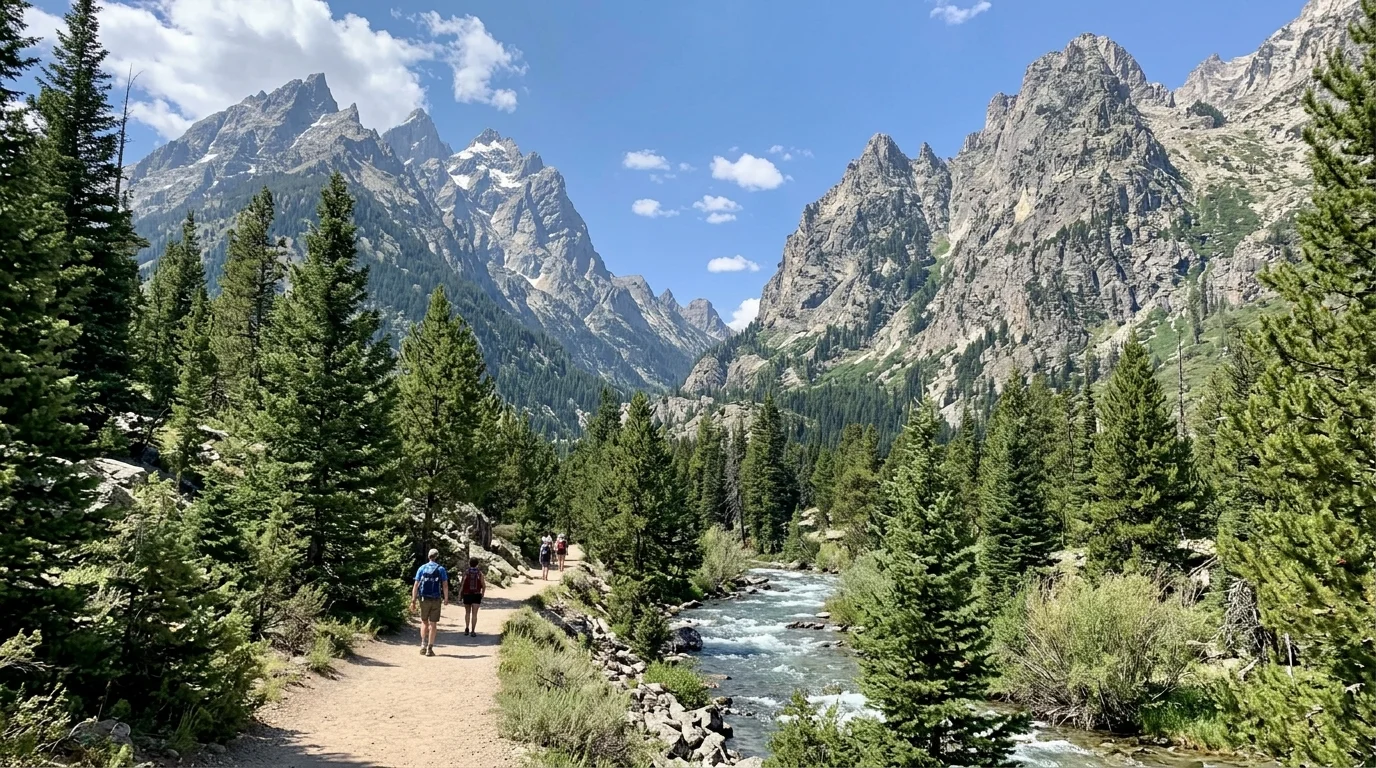
Jenny Lake is one of the most popular hubs in the entire park, serving as the main jumping-off point for iconic hikes into Cascade Canyon. Taking the Jenny Lake shuttle boat across the water cuts down on walking distance and drops hikers near Hidden Falls and Inspiration Point. Continuing further into Cascade Canyon reveals towering rock walls, tumbling streams, and deep glacial valleys that define the rugged beauty of the Teton Range.
Discovering History and Wildlife in the Northern and Eastern Sectors on Day 6
Day six directs attention toward the northern and eastern corners of Grand Teton National Park to explore historic sites and prime wildlife corridors.
Oxbow Bend is a famous photography stop located just east of Jackson Lake Junction, where the Snake River curves gracefully beneath Mount Moran. Early morning visits to Oxbow Bend often yield reflections of the mountains in the glass-like water alongside feeding pelicans, great blue herons, and moose. Continuing down toward Mormon Row later in the day allows travelers to photograph historic pioneer homesteads against the dramatic backdrop of the Teton Range.
Wrapping Up Your Week with a Slow Day at Colter Bay on Day 7
Day seven allows visitors to wind down their vacation with a relaxed schedule focused on personal favorite spots around Colter Bay.
Travelers can spend their final morning revisiting the lakeshore for a quiet cup of coffee or picking up souvenirs at the Colter Bay trading post. Taking time to pack bags calmly and review vacation photos ensures a smooth departure without the stress of a rushed morning. A final meal overlooking Jackson Lake provides a memorable closing note before heading home.
Essential Practical Tips for a Week at Colter Bay
Successful execution of a week-long stay requires careful preparation for variable mountain weather, wildlife safety, and park logistics.
| Category | Key Recommendation |
|---|---|
| Weather Prep | Pack layers, rain gear, and warm clothing for chilly mountain nights even in mid-summer. |
| Wildlife Safety | Carry bear spray in an accessible place on your belt or pack, and know how to use it safely. |
| Reservations | Book campgrounds or cabins at Colter Bay Village many months in advance due to high demand. |
| Supplies | Stock up on extra groceries and provisions in larger towns if you have specific dietary needs. |
Mountain weather can shift rapidly from bright sunshine to afternoon thunderstorms, making adaptability essential for every outdoor plan.
Frequently Asked Questions About Visiting Colter Bay
Do I need a park pass to visit Colter Bay?
Yes, entering Grand Teton National Park requires a valid park entrance fee or an interagency annual pass.
Can I swim in Jackson Lake near Colter Bay?
Swimming is permitted in Jackson Lake, but the water remains extremely cold throughout the summer because it is fed by alpine glaciers.
Are bear canisters required for camping at Colter Bay?
Food storage regulations are strict in Grand Teton National Park, requiring all food and scented items to be stored in hard-sided vehicles or approved lockers.
Is Wi-Fi and cell service available at Colter Bay Village?
Cellular reception is generally very limited or nonexistent throughout most of Grand Teton National Park, including the Colter Bay area.
Are pets allowed on hiking trails around Colter Bay?
Pets are restricted to developed areas like roads, parking lots, and campgrounds, and are not permitted on park hiking trails to protect wildlife.
What is the best time of year for a 7-day trip to Colter Bay?
Summer and early autumn between June and September offer the most reliable weather and fully open park facilities. If you enjoy planning extended park getaways, you might also appreciate checking out a Zion National Park 1 day itinerary for another western adventure, or perhaps map out an intelligent escape to Olympic National Park if you want to explore coastal rainforests next. For travelers looking to expand their western national park bucket list further beyond the Tetons, exploring a Pacific Northwest park expedition makes a fantastic companion trip.

I’m Muhammad Ubaid, founder of YBR Magazine. I research and write detailed guides on America’s National Parks — covering entry fees, permits, best times to visit, and planning tips — using official NPS sources and up-to-date information.