


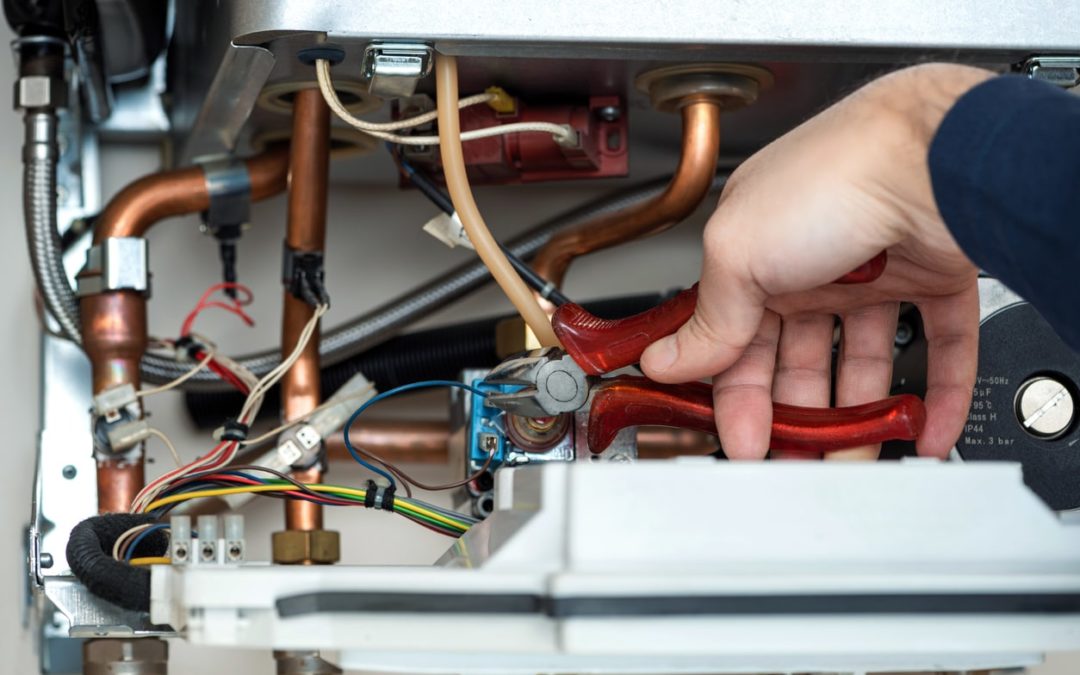
Desert homes do not run the heater for months, so the first cold snap can expose problems that sat unnoticed since last winter. A furnace that starts, runs briefly, and shuts itself off can point to predictable issues: restricted airflow that overheats the heat exchanger, an ignition or flame sensing fault, or a venting and condensate problem in high-efficiency units. The sequence matters because each control is interlocked for safety. Use this playbook to recognize patterns, avoid common missteps that make matters worse, and explain symptoms clearly to a technician. Better descriptions at the start usually translate into faster, cleaner diagnoses once tools come out.
- Recognize the heating fault pattern before you touch the thermostat
Short cycling means the furnace fires, runs a minute or two, then shuts down and tries again. Lockout means it tries and fails several times, then quits until power is reset. Cold blow happens when the blower runs, but the burners never establish a stable flame. Homeowners who recognize these patterns often search for Furnace repair in Tucson, but a little structured troubleshooting can help you describe the issue clearly when you call.
Two quick examples can separate harmless from harmful. After the first heat of the season, a dusty smell for a short time is normal as dust burns off the heat exchanger. By contrast, a unit that heats for 90 seconds, shuts off, then restarts repeatedly may be tripping its high limit switch because temperature is rising too fast. If the thermostat is set to heat and the room is still cool when the burner stops early, the thermostat is rarely the culprit; safety or airflow controls likely are.
- Airflow and temperature rise: from filter to high limit switch
Airflow governs temperature rise across the heat exchanger. If a return filter is clogged, several supply registers are closed, the blower wheel is caked with dust, or the indoor coil above the furnace is matted, less air moves. The same fuel input now drives a higher temperature increase, and the high limit switch opens to protect the exchanger. That looks like short cycling. A technician will compare the measured temperature rise to the furnace nameplate and check static pressure across the filter, coil, and supply plenum to find the pinch point.
Filter choice is a trade-off. High MERV pleated media capture fine dust but raise resistance. Many older furnaces with PSC blowers cannot overcome that added pressure at higher fan speeds, especially if returns are undersized. Stacking multiple filters or using a 1-inch high MERV filter in a system designed for low resistance often leads to overheating and limit trips. If you recently switched to a more restrictive filter and short cycling started, that timing is a useful clue. Choosing a larger filter area or a less restrictive media can restore airflow while maintaining reasonable filtration.
- Ignition and flame sensing: what causes the burner to light, then die
Most gas furnaces follow this order: the call for heat starts the inducer motor; the pressure switch proves draft; the hot surface igniter glows; the gas valve opens; and the flame sensor confirms flame. If the flame sensor is coated with oxides, the control board cannot “see” the flame and shuts the gas valve within a few seconds. That mimics a thermostat problem, but the thermostat simply asked for heat. A technician typically removes the flame rod, cleans it gently with a nonabrasive pad or fine emery cloth, reinstalls it, and confirms a steady microamp flame signal. Safety first: power and gas should be off during disassembly.
Failures earlier in the sequence cause different symptoms. A weak inducer, a blocked flue or intake, or a full condensate trap can keep the pressure switch open so ignition never proceeds. You might hear the inducer run and the igniter glow, but no flame appears, or it lights and drops out quickly. On rooftop package units, wind-driven debris can lodge at the combustion air intake or under the burner cover, and sun exposure can make wiring brittle at connectors. These are solvable faults, but they often require roof access and a proper manometer to test the draft circuit.
- Condensate and venting in low humidity homes
High-efficiency condensing furnaces pull additional heat from exhaust gas, creating condensate that must drain through a trap. If the trap or hose plugs with dust, algae, or scale, the inducer cannot establish proper draft and the pressure switch will not close. In Tucson, long dry spells followed by occasional moisture can leave a trap half-filled and sticky with residue. The result is a furnace that tries to light and then shuts down. Clearing the trap, confirming it is oriented correctly, inspecting the drain termination, and verifying the flue slope back to the furnace are part of a complete fix.
Condensing equipment offers meaningful fuel savings, but it introduces maintenance sensitivities that standard furnaces do not have. Rooftop installations add exposure: UV can harden PVC elbows and condensate hoses, and summer heat ages gaskets and wire insulation. A cleanout and trap refill are simple once you are at the unit, yet getting there safely and confirming draft with the proper tools is where trained help earns its keep. When the condensate path is corrected, a technician will run the unit long enough to be sure the pressure switch stays made during steady operation.
Quality verification after a repair
After the obvious fault is corrected, the work is not finished until numbers confirm stable operation. A thorough check includes manifold gas pressure, measured temperature rise against the nameplate range, total external static pressure, and a verified flame sense microamp reading. On condensing units, verifying no flue gas recirculation at terminations and confirming clear condensate flow are important. The blower wheel should be inspected for balance and a loose set screw on the motor shaft, which can cause intermittent airflow and noise. Thermostat settings, including cycles per hour and heat anticipator (on older models), should match the equipment type.
For ongoing reliability, change filters on a calendar and check for return obstructions like furniture or rugs. If several rooms are too warm, resist the urge to close many supply registers because that increases static pressure and can recreate limit trips. In attics, leaky duct connections can pull dusty air into the return side and load filters fast; sealing major leaks reduces that burden. If the furnace requires repeated resets or exhibits the same shutdown pattern after maintenance, log the timing from call for heat to shutdown, note any blink codes on the control board, and share that detail during scheduling. Clear information speeds accurate diagnosis and keeps the heat on when Tucson nights turn cold.


