


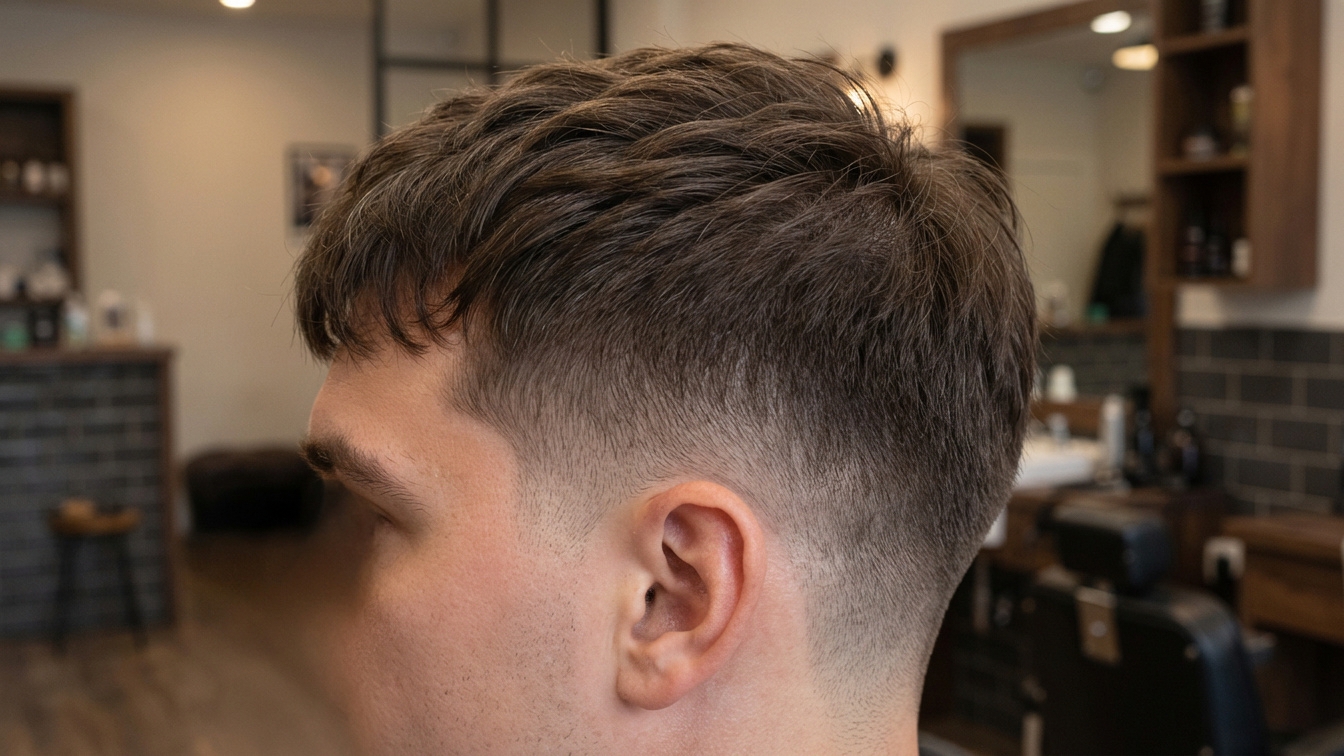
A mid taper fade fringe pairs a neat, gradually shortening back and sides with a longer top that falls forward over the forehead. It sits in a comfortable middle ground in men’s barbering, because it looks sharper than a low taper but is less dramatic than a high fade, which is a large part of why it keeps appearing in barbershop requests. This guide explains how the cut is built, how it differs from similar haircuts, who it tends to suit, what to tell your barber, and how to style and maintain it, while also pointing out where popular online guides disagree or make claims that cannot be verified.
Quick Facts
| Detail | What to know |
|---|---|
| Category | Short blended sides with a longer top that falls forward |
| Where the blend starts | Around the temple, about halfway up the side of the head (some guides place it just above the ear) |
| Sides and back | Shorten gradually toward the neckline and ears, with some length kept if a taper rather than a skin fade is chosen |
| Top | Long enough to reach the forehead, usually cut with scissors and texturized |
| Common fringe looks | Textured, messy, side-swept, curly, or blowout |
| Tools needed | Clippers and scissors, so a barber is strongly recommended |
How a Mid Taper, a Fade, and a Fringe Fit Together
The name of this haircut is really three ideas stacked together, and barbers do not always use the words in the same way. A taper usually keeps some visible length as the hair shortens toward the neckline and ears, while a fade is generally cut shorter and can work all the way down to bare skin, and The Art of Manliness describes the taper as the longer of the two. In everyday barbershop talk the terms are often swapped, which is why a request for a “taper fade” can lead a good barber to ask whether you want to keep some length at the bottom or go down to the skin.
The word “mid” describes where the blend begins, but there is no single standard measurement for it. Several barber guides say a mid blend starts around the temple, roughly halfway up the side of the head, whereas Man of Many places it about an inch above the ear and lets it climb toward eye level. Because the starting point depends on head shape and on the individual barber, a reference photo is more reliable than the label alone.
The fringe is the part of the top that falls forward over the forehead, and it is cut and styled separately from the sides. Luxe Digital notes that low, mid, and high tapers, as well as blowout, burst, and skin fades, can all sit under the same fringe, which explains why most people name the sides first and describe the top afterward. FashionBeans describes the mid version as a forward-falling fringe on top with sides that blend down from the midpoint, giving a youthful look that stays tidy.

What Makes a Mid Taper Fade Fringe Different From Other Cuts
Choosing between low, mid, and high versions mostly comes down to contrast and upkeep. A low version begins about an inch above the ear and leaves the most hair on the sides, which makes it the gentlest option and usually the easiest to grow out. A high version starts near the upper temple and creates bold contrast that draws attention to the top, but it shows regrowth sooner, so barber guides say it needs visits more often.
Sitting between the two, the mid version is commonly described as the balanced option, and one barber guide calls it the safer choice for conservative workplaces while still looking modern. The fringe can also change the personality of the cut, from a soft, side-swept shape that looks smart with a collared shirt to a choppy, messy shape that carries more edge.

Which Hair Types and Faces It Suits
Many guides describe a mid taper fade fringe as suitable for nearly every face shape and hair type, but that claim is too broad to treat as a rule. The details that matter more are hair density, the way the front hairline grows, the height of the forehead, and how much natural wave the hair has, because those factors decide how the fringe will sit once it is dry.
Straight hair usually needs a texturizing product and some thinning from the barber so the fringe does not look flat or heavy. Wavy hair tends to work especially well because the natural movement creates texture with little effort, and the tapered sides help control the volume that waves can add around the temples. Tight curls can form a full, rounded fringe on top, and a barber can keep the sides closer so the overall shape stays narrow rather than wide.
How to Ask Your Barber for It
The most useful thing to bring is a set of photos that show the cut from the front, the side, and the back, since a single picture can hide how the sides blend. One styling guide suggests describing four details in plain terms: the level where the blend starts, how short it goes at the bottom, whether the shape is standard, drop, or burst, and how much length stays on top. A sentence covering those points gives a barber far more to work with than asking for a mid taper fade fringe by name alone.
It also helps to mention your hair type, how you normally style it, and whether you want the weight kept above the ears so the sides grow out evenly, a tip offered by Man of Many. Guard numbers vary between clipper brands and between barbers, so it is better to point to a photo than to quote a number you found online.
How to Style a Mid Taper Fade Fringe at Home
Styling works best on towel-dried or slightly damp hair, because the fringe takes direction more easily before it has fully set. Blow-drying the top forward with your fingers or a small brush gives the fringe its basic direction, and a low heat setting protects the hair while still creating lift at the roots.
Once the hair is nearly dry, a pea-sized amount of a matte product such as clay, paste, or texturizing powder, worked through with the fingertips, adds the broken-up finish most people want. Sea salt spray before drying can help straight hair gain body, while a curl cream suits curls and waves better than a stiff wax. Heavy gels tend to weigh the fringe down and make the sharp sides look disconnected, so a lighter product is usually the better starting point.

Trim Schedule and Maintenance
Online advice on how often to book a trim is not consistent. A few barber guides suggest every two to four weeks for a mid taper, another site suggests every three to four weeks, and a third puts taper fades closer to four or five weeks while recommending shorter intervals for skin fades. The difference mostly reflects how short the bottom of the blend is and how crisp the person wants it to look, so it is worth asking your own barber which interval keeps your hair looking right.
Between visits, the sides lose their shape before the top does, and the fringe will eventually reach the eyebrows or eyes. Because a mid taper fade fringe keeps some length at the bottom of the blend, it usually grows out more gradually than a skin fade, although the fringe itself will need attention first. If it starts to sit in your eyes, asking the barber to take a little length off the top while refreshing the sides is the simplest fix.
Trend Claims and Origins: What Is Actually Confirmed
A large share of the pages that rank for the mid taper fade fringe are near-identical templates, and some contain garbled wording that suggests automated rewriting, so their bold claims deserve caution. Statements that the cut is the hottest haircut of 2025, or that it traces back to early twentieth-century barbering, are not backed by any named barber, survey, or historical record that could be found, and they should be treated as unconfirmed.
What can be said with reasonable confidence is smaller but more useful. Fringes themselves are old, with the mop-top styles of the 1960s cited by Luxe Digital as an early ancestor of today’s textured versions, and tapered or faded sides over a longer top are now standard offerings in barbershops. No public source identifies who first combined the two, and there is no reliable data on how many people ask for this exact combination.
Frequently Asked Questions
Can I get this cut if my hair is short on top?
You need enough length to reach the forehead when combed forward, which for many people means growing the top out for a few weeks or months first. Tell the barber how far forward you want the fringe so they can advise whether to wait.
What if I have a cowlick at my front hairline?
A cowlick can push the fringe in an unwanted direction, so barbers often leave a little extra length there or style it to sweep sideways instead of straight down. Mentioning it at the start of the appointment lets the barber cut with it rather than against it.
How long does it take to grow out?
Hair grows about half an inch (roughly 1 centimeter) per month on average, so the sides take several weeks to look natural again while the top needs longer to change shape. Individual growth rates differ.
Is it a good option for thinning hair at the front?
It can work in some cases, because the fringe uses the hair you still have and the neat sides keep the overall shape looking intentional, but results depend on how much density remains. A barber can judge this in person, and a doctor or dermatologist is the right contact if hair loss is sudden or patchy.
Can I do the fade myself with clippers?
Barber guides generally advise leaving the blend to a professional, since a poor blend is obvious and hard to correct, and they suggest keeping home clippers for light neckline tidying only.
Conclusion
For anyone who wants sides that look tidy and a top that looks relaxed, a mid taper fade fringe is a dependable choice, as long as you and your barber agree on the details the name leaves open, such as where the blend starts and how long the fringe should be. Clear photos and a few specific words will usually do more for the result than following any trend label.
Disclaimer: This article offers general grooming information only. Results vary with hair type, density, and growth patterns, so consult a professional barber for a cut tailored to you, and see a doctor or dermatologist for any scalp or hair-loss concerns.
EXPLORE MORE: How Long to Lose 10kg? A Realistic Timeline for Safe, Lasting Weight Loss

I’m Muhammad Ubaid, founder of YBR Magazine. I research and write detailed guides on America’s National Parks — covering entry fees, permits, best times to visit, and planning tips — using official NPS sources and up-to-date information.

