

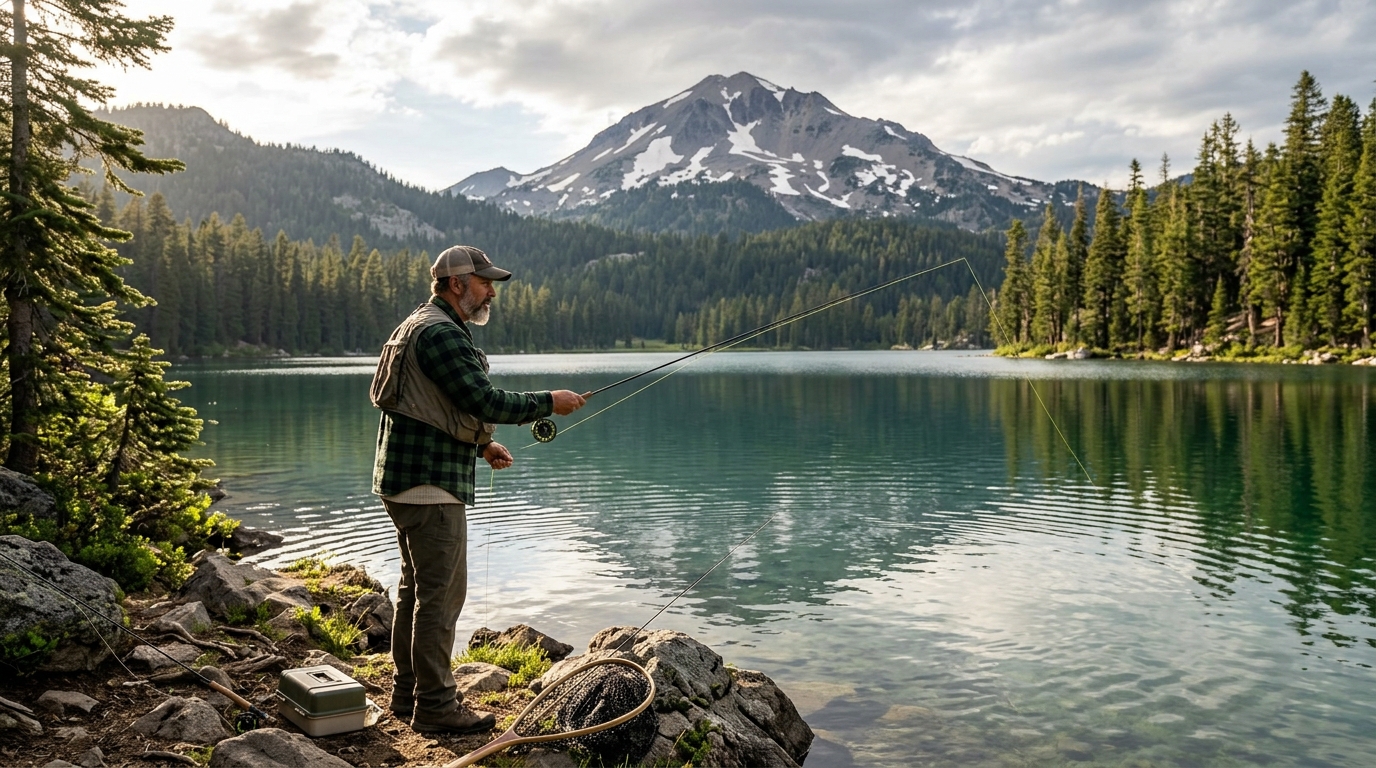
Fishing in Lassen National Park offers a unique alpine experience inside a striking volcanic landscape. High-elevation lakes and remote backcountry streams provide peaceful settings for anglers who want to escape the crowded lowlands. Waters sit high above the surrounding valleys, meaning the environment changes quickly and requires careful planning. Anglers must understand how high-altitude weather, seasonal snowmelt, and specific park regulations shape every trip.
Understanding Park Rules and Fishing Licenses
Anglers must follow specific regulations set by the National Park Service alongside standard guidelines from the California Department of Fish and Wildlife.
Before casting any line, visitors need a valid California state fishing license. The National Park Service enforces additional rules within park boundaries regarding bait types, catch-and-release zones, and seasonal closures to protect native fish populations. Regulations can change depending on water conservation efforts and wildlife protection needs. Anglers should check official National Park Service updates before heading out to avoid fines and protect local aquatic habitats. Reviewing these requirements also helps visitors understand whether they can use live bait or if artificial lures are strictly required in certain streams. Checking current park publications guarantees that anglers stay fully compliant with local conservation laws, preventing accidental violations during their mountain getaway.
Top Waters for Lassen Volcanic National Park Fishing
Lassen Volcanic National Park fishing locations include a variety of picturesque alpine lakes and rushing mountain creeks.
Manzanita Lake stands out as one of the most popular spots because it offers easy access, scenic views of the peak, and regulations that often encourage catch-and-release fly fishing. Reflection Lake is another accessible option that appeals to families and casual visitors looking for quiet water near main roads. For those willing to hike further into the wilderness, Juniper Lake and Summit Lake provide rewarding backcountry experiences with fewer visitors. Each body of water holds different trout species, meaning anglers should pack a diverse selection of tackle to match local feeding habits. Furthermore, remote creeks offer hidden pools where quiet patience pays off with beautiful wild trout.
Practical Downsides and Mountain Challenges to Watch Out For
Mountain fishing comes with real physical hurdles and unpredictable weather that every visitor must respect.
Heavy winter snowpacks often keep high-altitude roads and trails closed well into June, which drastically shortens the safe fishing window. Sudden afternoon thunderstorms are common during summer months, bringing lightning risks to open shorelines and exposed alpine lakes. Furthermore, hiking to remote streams demands physical effort at elevations exceeding 6,000 feet, which can catch unprepared visitors off guard. Wildfire recovery areas also mean some trails and shorelines may have standing dead trees or unstable terrain that requires extra caution. Anglers must always monitor changing weather reports and carry extra gear for sudden cold snaps, ensuring they stay safe while navigating rugged terrain.

Best Times of Year and Seasonal Tips
Timing your mountain visit correctly makes the difference between a successful outing and a frustrating trip.
Late July through September usually provides the most reliable access as snow melts and trails become fully clear. Early morning hours offer the calmest water surface and active fish feeding patterns before afternoon winds pick up. Water temperatures rise slightly during late summer, which pushes trout into deeper parts of the lakes or faster-moving stream currents. Planning your schedule around these natural rhythms helps maximize your time on the water. Additionally, autumn brings cooler temperatures and quieter shores, making it an appealing season for dedicated anglers who prefer solitude over peak summer crowds.
Frequently Asked Questions About Fishing in Lassen National Park
Do I need a special park permit to fish in Lassen National Park?
No separate park permit is required, but you must carry a valid California state fishing license while fishing within park boundaries.
What types of fish can I catch in the park?
Anglers frequently encounter rainbow trout, brown trout, brook trout, and occasionally native Lahontan cutthroat trout in designated waters.
Are there catch-and-release rules in the park?
Certain waters enforce strict catch-and-release rules or require barbless artificial lures to protect native fish populations.
When does the fishing season open?
The season generally follows California state guidelines, but high-elevation snowpack often keeps many park waters inaccessible until late spring or early summer.
Can I use live bait everywhere in the park?
No, many park streams and lakes restrict bait types to protect native species, so check current regulations before using live bait.
How can I prepare for altitude sickness while fishing?
Drink plenty of water, eat high-energy snacks, and give your body time to adjust to the elevation before tackling strenuous backcountry hikes.
For outdoor enthusiasts looking for a handy log for tracking US park adventures, this collection pairs wonderfully with your alpine trips.
I’m Muhammad Ubaid, founder of YBR Magazine. I research and write detailed guides on America’s National Parks — covering entry fees, permits, best times to visit, and planning tips — using official NPS sources and up-to-date information.