

Navigating the Big Island Geography From Kona to the East Side
Driving across the Big Island from the western sunny coast to the eastern volcanic range requires careful planning for shifting island elevations.
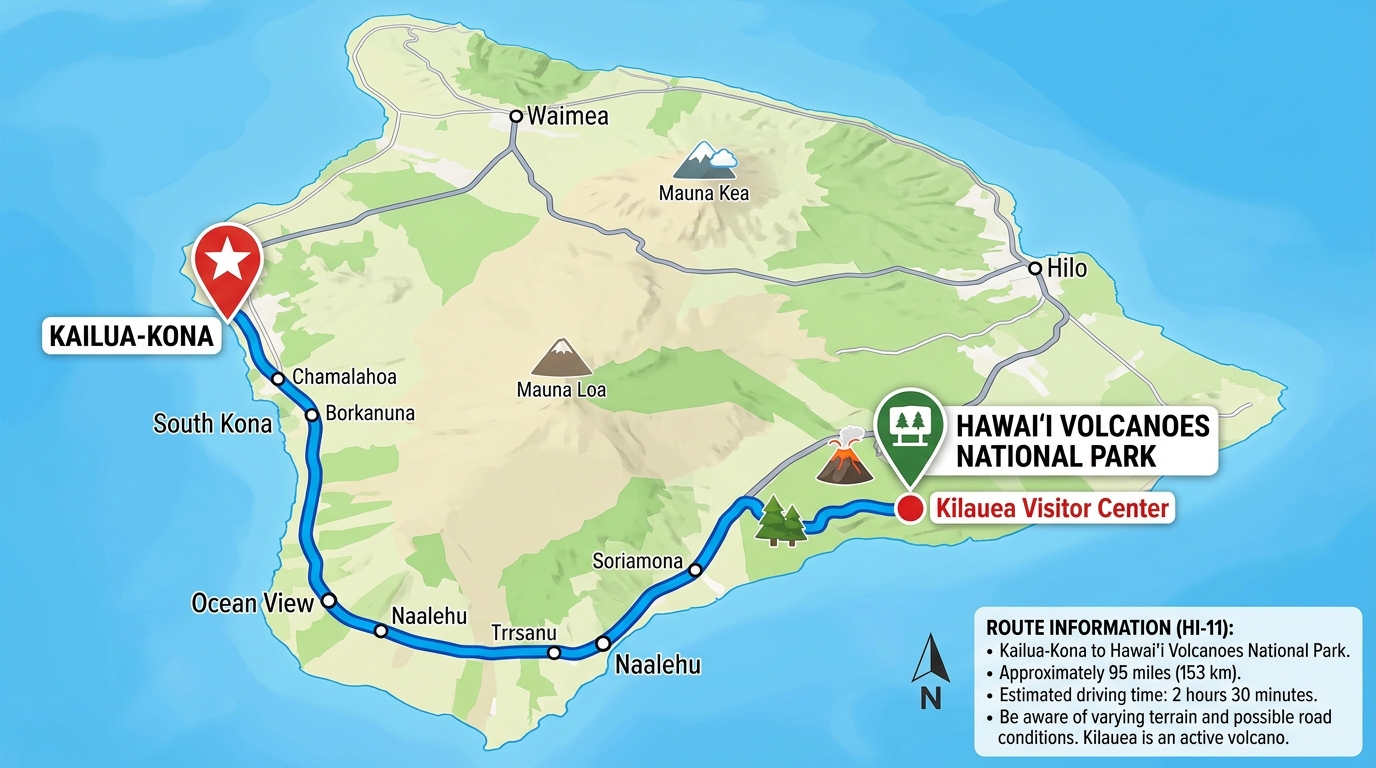
When you start to Drive Kona to Volcano National Park, you leave behind the warm beachside resorts of the western shore and climb directly into high-altitude mountain terrain. The Big Island features massive shield volcanoes that dominate the interior, meaning your journey will test both your vehicle and your navigation skills. Understanding the unique geography of Hawaii helps make this cross-island transition smooth, safe, and memorable.
Comparing the Daniel K. Inouye Highway and Southern Coastal Route
Choosing between the fast interior highway and the winding southern road depends entirely on your sightseeing goals and comfort level with mountain driving.
Drivers have two primary paths when they prepare to Drive Kona to Volcano National Park. The first option is Route 200, officially known as the Daniel K. Inouye Highway or Saddle Road. Saddle Road cuts right through the high plateau nestled between Mauna Kea and Mauna Loa, offering wide lanes, modern asphalt, and higher speed limits that make it the fastest choice. The second option is Route 11, which takes you south past Ocean View and Naalehu before looping up toward the eastern volcanic zone. Route 11 is longer and features tighter turns, but it gives you a chance to see small local towns and ocean vistas.
To help you decide which path suits your schedule, the comparison table below outlines the core differences between these two mountain corridors.
| Route Choice | Main Highway | Typical Travel Time | Landscape and Driving Conditions |
|---|---|---|---|
| Saddle Road | Route 200 | About 2 hours | Fast, smooth interior highway with high-altitude mountain weather |
| Southern Route | Route 11 | About 2.5 to 3 hours | Winding rural and coastal road passing through small island towns |
Essential Fuel, Offline Maps, and Packing Preparations
Gathering supplies, checking gas levels, and packing warm clothing before you leave the coast prevents unexpected trouble in remote areas.
Before you get behind the wheel to Drive Kona to Volcano National Park, you should fill your gas tank completely because remote stretches lack frequent service stations. Cell phone reception can drop entirely in deep valleys and high mountain passes, so downloading offline maps beforehand is a very smart precaution. Because Hawaii Volcanoes National Park sits at a high elevation, temperatures drop significantly compared to the coast, and heavy fog or rain showers are common. Packing a warm jacket, sturdy footwear, and rain gear ensures you stay comfortable while exploring the volcanic craters.
Managing Mountain Weather and Driving Hazards Along the Way
Staying alert for sudden fog patches, high-speed zones, and local traffic keeps everyone safe during the trans-island journey.
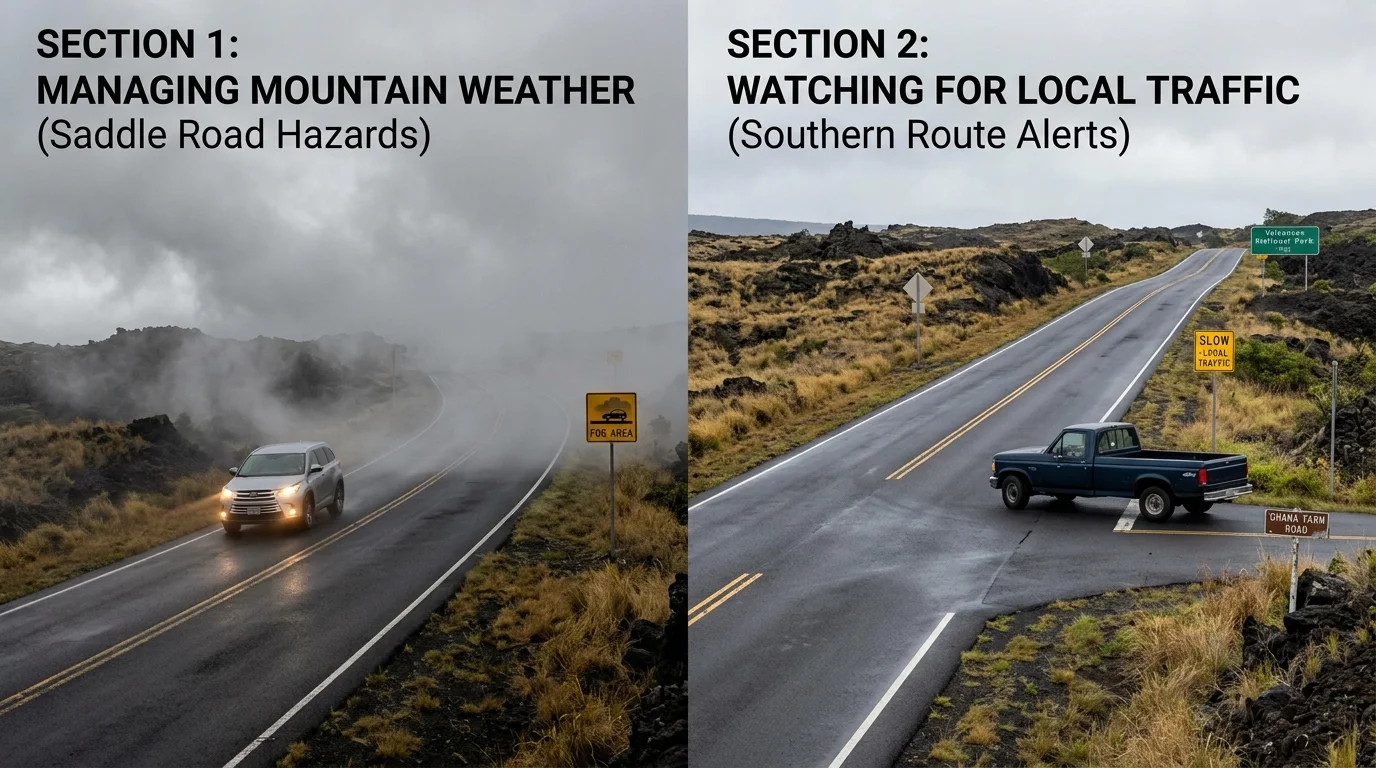
As you Drive Kona to Volcano National Park, you will encounter drastically changing weather patterns within a very short distance. Saddle Road features long stretches where thick mountain clouds can roll across the asphalt in minutes, reducing visibility to a few car lengths. On the southern route, lower speed limits, local agricultural vehicles, and frequent residential turns require extra patience and steady attention. Keeping your headlights on during low-visibility conditions and maintaining a safe following distance helps manage these natural island shifts with ease.
Maximizing Your Time Upon Reaching Hawaii Volcanoes National Park
Arriving at the park with a clear plan for visitor centers and crater overlooks ensures you experience the primary geological highlights before daylight fades.
Once you complete your Drive Kona to Volcano National Park excursion, a dramatic landscape of active steam vents and hardened lava fields opens up before you. Many travelers stop at the Kilauea Visitor Center right away to check current volcanic activity alerts, trail closures, and ranger-led talk schedules. From there, driving along Crater Rim Drive or walking out to viewing overlooks lets you witness the raw power of the region up close. Starting your journey early in the morning gives you plenty of daylight to enjoy the park before making the return trip back to the western coast.
Frequently Asked Questions About Driving from Kona to Volcano National Park
How long does it take to drive from Kona to Volcano National Park?
The drive usually takes between two and two and a half hours each way, depending on your chosen route and traffic flow.
Which road is safer for first-time visitors: Saddle Road or the southern route?
Saddle Road is generally considered an easier drive due to its wide lanes and modern paving, though drivers must stay alert for sudden mountain fog.
Are there enough gas stations along the highways?
Gas stations are limited on certain stretches of both routes, so filling up your vehicle in Kona before departure is strongly recommended.
Do I need a four-wheel-drive vehicle for this trip?
A standard rental car is entirely sufficient for all paved highways connecting Kona to the national park.
Why do I need a jacket at Hawaii Volcanoes National Park?
The park sits at a high elevation where temperatures are often much cooler and windier than the coastal areas of the Big Island.
Is the park accessible twenty-four hours a day?
Hawaii Volcanoes National Park is generally open every day of the year, though specific visitor center buildings and backcountry areas maintain set operating hours.
Can I complete this cross-island trip in a single day?
Many travelers successfully drive from Kona to the park and back in one day by starting early in the morning.
Disclaimer: Travel conditions, road rules, and park hours can change over time. Always verify current details from official sources before starting your trip.
If you are also interested in planning extended vacation itineraries elsewhere in national parks, our guide on duration planning for desert parks offers helpful scheduling advice.

I’m Muhammad Ubaid, founder of YBR Magazine. I research and write detailed guides on America’s National Parks — covering entry fees, permits, best times to visit, and planning tips — using official NPS sources and up-to-date information.