

Understanding the Alaskan Wilderness and Brown Bear Activity
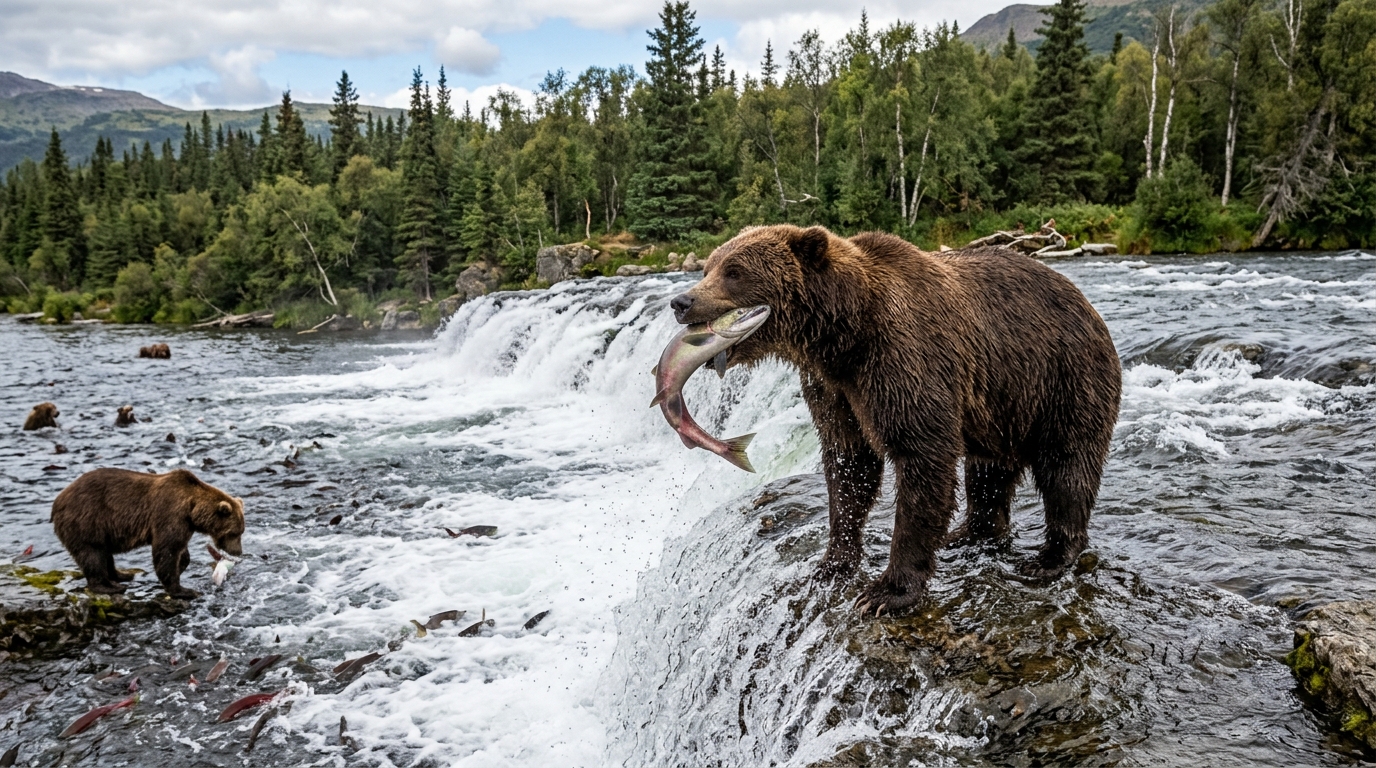
The Katmai National Park Salmon Run brings thousands of migrating fish up rushing Alaskan waterways every single year. This natural spectacle pulls brown bears out of the surrounding wilderness by the dozens. Brown bears gather near remote river ledges and waterfalls to catch migrating fish as the animals swim upstream to spawn. Planning a trip to witness these gatherings requires a deep understanding of remote Alaskan geography. There are no highways or paved roads leading into this corner of the park, which makes every journey an expedition into true wilderness.
Timing Your Summer Journey Around Fish Waves
Salmon arrive in distinct waves throughout the summer months, dictating when brown bears congregate at prime feeding spots. The first major surge of migrating fish usually starts in late June and lasts through the entire month of July. During this peak summer window, hungry bears line the riverbanks and waterfall ledges to feed heavily after emerging from winter sleep. Late summer and early autumn bring a second wave of fish, offering a different wildlife-viewing experience as bears prepare for the upcoming cold season. Weather conditions shift rapidly across these months, meaning travelers must keep their daily schedules flexible.
Navigating Brooks Falls and Elevated Viewing Platforms
Brooks Falls serves as the iconic destination where most famous wildlife photographs and videos are captured. This specific waterfall forces leaping salmon high into the air, creating an easy feeding station for waiting brown bears. Visitors watch these animals from secure elevated viewing platforms managed by park rangers. Because viewing space on these wooden platforms is strictly limited, park staff regulate visitor numbers during busy morning and evening hours. Beyond Brooks Falls, remote streams across the wider park also support healthy bear populations, though those alternate areas lack visitor facilities.
Mastering Bush Plane Travel and High Costs
Reaching the remote rivers of Alaska involves a complex travel sequence that demands careful financial and logistical preparation. Visitors typically fly from Anchorage to King Salmon before boarding a small floatplane to reach Brooks Camp. Weather delays happen frequently in this region due to heavy fog, strong winds, and persistent rainstorms. Smart travelers always build extra buffer days into their itineraries to handle grounded bush flights and missed connections. The high costs associated with remote air taxis, backcountry lodging, and park fees make budgeting an essential first step for any prospective visitor.
Following Strict National Park Service Regulations
Visitors must follow strict federal rules to protect both human safety and local wildlife during the annual fish migration. According to the National Park Service, overnight visitors need advance reservations secured through competitive lottery systems or booking windows. Day visitors must check in immediately upon arrival and complete a mandatory bear safety briefing led by rangers. Federal regulations require people to maintain a safe distance from all brown bears at all times. For more gear guidance and tips on managing waste in protected areas, check out our guide on national park hydro flask options.
Frequently Asked Questions About Viewing the Salmon
What month offers the best bear viewing at the river?
July is widely considered the peak month because high numbers of migrating fish attract dozens of bears to the waterfalls.
Can I drive my personal car to Brooks Camp?
No roads connect to this part of the park, so all travelers must arrive by floatplane or permitted boat.
How early should I book overnight lodging?
Visitors need to reserve campsites and lodge rooms many months in advance through the official reservation system.
What happens if heavy fog cancels my floatplane?
Flight cancellations are common in coastal Alaska, requiring travelers to add buffer days to their travel plans.
Are park rangers present near the viewing areas?
National Park Service staff monitor all viewing platforms and lead mandatory safety orientations for new arrivals.
Do day visitors need a special permit?
Day visitors must check in with rangers upon arrival and complete the required bear safety training before walking to the falls.
I’m Muhammad Ubaid, founder of YBR Magazine. I research and write detailed guides on America’s National Parks — covering entry fees, permits, best times to visit, and planning tips — using official NPS sources and up-to-date information.