

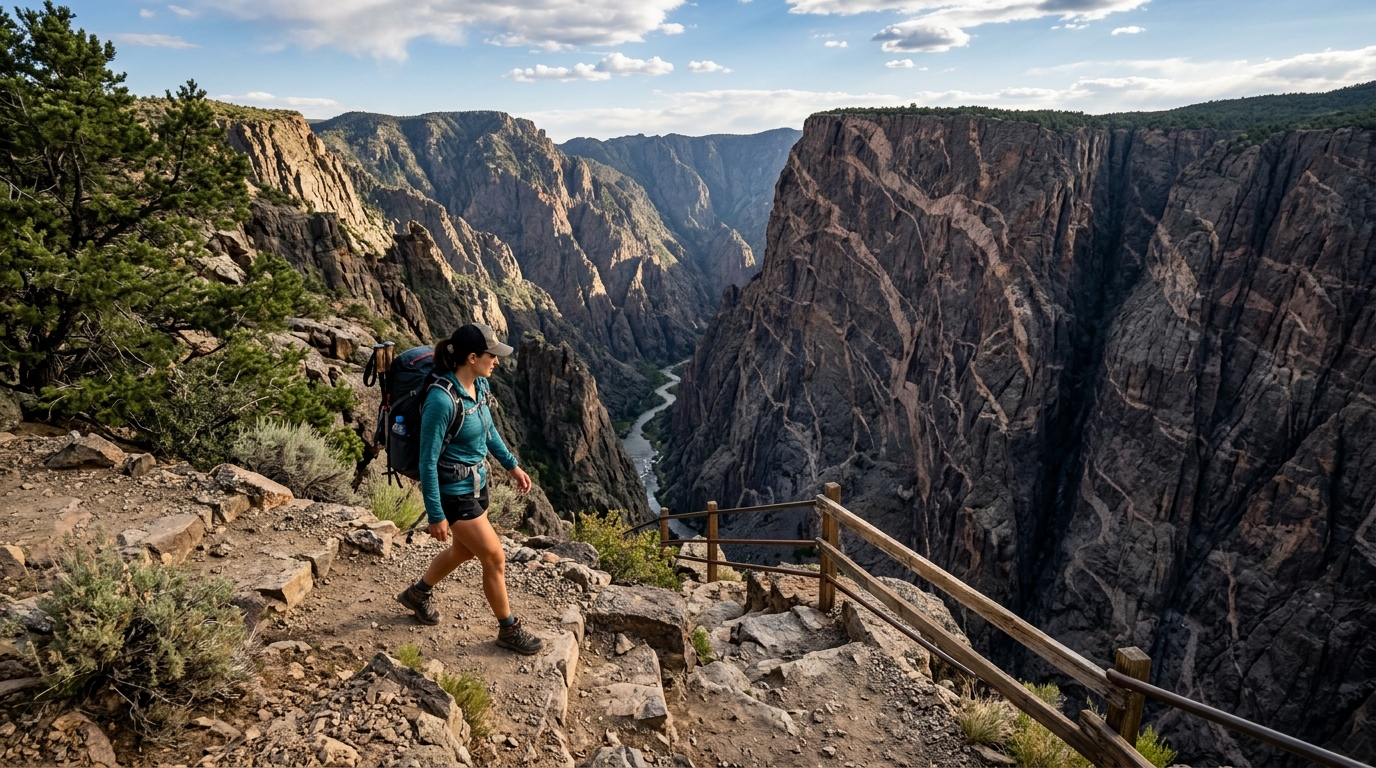
Planning a trip into the rugged terrain of Colorado requires a clear understanding of what makes this landscape so unique. Black Canyon of the Gunnison National Park hiking is entirely different from hiking in most other national parks because of the extreme steepness of the terrain. Unlike parks with rolling hills or gradual mountain trails, almost every trail that descends from the rim into the inner canyon is intensely steep, unmaintained in places, and requires scrambling over rocks with your hands. Another distinct feature is that hiking here is sharply divided into two completely different experiences: easy, flat walks along the rims versus grueling, technical wilderness routes down to the Gunnison River. The park also receives far fewer visitors than places like Yosemite or Zion, meaning hikers must be much more self-reliant if something goes wrong.
Most online guides for Black Canyon of the Gunnison National Park hiking tend to group all trails together, which misleads casual tourists into thinking canyon-floor routes are casual walks. Articles often fail to emphasize that inner canyon routes require a special wilderness permit from the National Park Service and involve severe physical risks like loose rock, poison ivy, and a lack of water. Furthermore, many guides gloss over the brutal physical toll of climbing back up the canyon, where you must gain over two thousand feet of elevation in just a mile or two under direct sun. A genuinely useful guide must clearly separate rim trails from inner canyon routes, front-load the difficulty warnings, and explain the exact permit rules for the inner canyon.
Understanding the Geography of Black Canyon of the Gunnison National Park Hiking
Black Canyon of the Gunnison National Park hiking is split into two very different types of experiences: flat rim walks and extremely steep inner canyon climbs.
Visitors stepping out of their cars often assume every path leads gently along the edge. In reality, the park features a dramatic drop that plunges straight down to the river far below. Understanding this divide helps keep visitors safe and ensures everyone chooses a path that matches their physical fitness and outdoor experience. Those looking for a relaxing afternoon will find plenty of beauty on top, while true thrill-seekers will find plenty of challenge below.
Navigating the Gentle Overlooks Along the Rim
Navigating the gentle overlooks along the rim offers flatter, safer paths along the canyon edges that give everyone amazing views without the extreme physical danger.
The Oak Flat Loop and the Rim Rock Nature Trail provide wonderful ways to experience the park without risking injury or severe exhaustion. These upper paths stay near the visitor centers and paved viewpoints, allowing families and casual walkers to gaze down into the dark, narrow abyss safely. Walking along the rim lets visitors see the sheer depth of the canyon walls and the rushing water of the river far below without needing ropes or technical climbing skills. National Park Service rangers recommend these upper paths for anyone who wants to enjoy the scenery at a relaxed pace.
Descending the Steep Wilderness Trails to the River
Descending the steep wilderness trails to the river details the difficult, steep paths that drop all the way down to the river and why they are only meant for very fit, experienced hikers.
Routes such as the Tomichi Route, Gunnison Route, and Warner Point extensions require absolute focus, physical endurance, and comfort with heights. There are no maintained trails with switchbacks on these inner canyon descents; instead, hikers slide down steep dirt slopes, scramble over massive boulders, and sometimes hold onto tree branches to keep from falling. Because the canyon walls block out the sun for much of the day, temperatures at the bottom can feel drastically different from the rim. Anyone attempting these routes must be prepared for a relentless physical test from start to finish.
Securing Backcountry Access and Following Park Regulations
Securing backcountry access and following park regulations explains the mandatory wilderness permit requirements and rules set by the National Park Service so hikers stay legal and safe.
According to the National Park Service, anyone hiking below the rim into the inner canyon must obtain a wilderness permit before starting their descent. These permits help park rangers track who is in the canyon and ensure that visitors understand the extreme risks involved in reaching the river. Group sizes are strictly limited, and camping at the bottom requires following specific backcountry regulations to protect the delicate natural environment. Ignoring these rules can result in heavy fines and puts rescue teams at unnecessary risk if an emergency occurs.

Managing Environmental Hazards and Physical Exhaustion
Managing environmental hazards and physical exhaustion gives readers honest warnings about loose rocks, scorching summer heat, poison ivy, and the brutal climb back up the canyon.
One major downside of inner canyon hiking is the relentless climb back up, which often takes twice as long as the descent and burns an immense amount of physical energy. Hikers frequently encounter thick patches of poison ivy near the river, steep drop-offs with loose gravel that causes slipping, and summer temperatures that turn the inner canyon into a natural oven. Furthermore, water sources at the bottom must be treated or filtered thoroughly before drinking, and carrying enough water for the entire day is mandatory. For outdoor enthusiasts planning a long western road trip to multiple rugged canyon destinations, comparing these trails to a Utah park-to-park travel route assessment helps travelers map out their driving itineraries.
Frequently Asked Questions
Do I need a permit for all hikes in Black Canyon of the Gunnison National Park?
No, permits are only required if you hike below the rim into the inner canyon, while rim trails require no permits.
Are dogs allowed on the trails?
Pets are heavily restricted and are generally only allowed on certain rim trails and paved overlooks, but never on inner canyon routes.
How hard is the climb back up from the river?
The climb out of the inner canyon is extremely strenuous, requiring hikers to gain over two thousand feet of elevation in a very short distance.
Is there drinking water available at the bottom of the canyon?
There is no treated drinking water available in the inner canyon, so you must carry all the water you need or filter natural sources.
What is the best time of year for inner canyon hiking?
Spring and fall offer the most manageable temperatures, as summer afternoons in the canyon become dangerously hot.
Are there guided hikes available?
The National Park Service does not offer guided inner canyon hikes, meaning visitors must navigate these technical routes independently.
Disclaimer: Park rules, permit procedures, and trail conditions can change over time. Always verify the latest safety information and weather updates directly with official park sources before starting your hike.

I’m Muhammad Ubaid, founder of YBR Magazine. I research and write detailed guides on America’s National Parks — covering entry fees, permits, best times to visit, and planning tips — using official NPS sources and up-to-date information.