

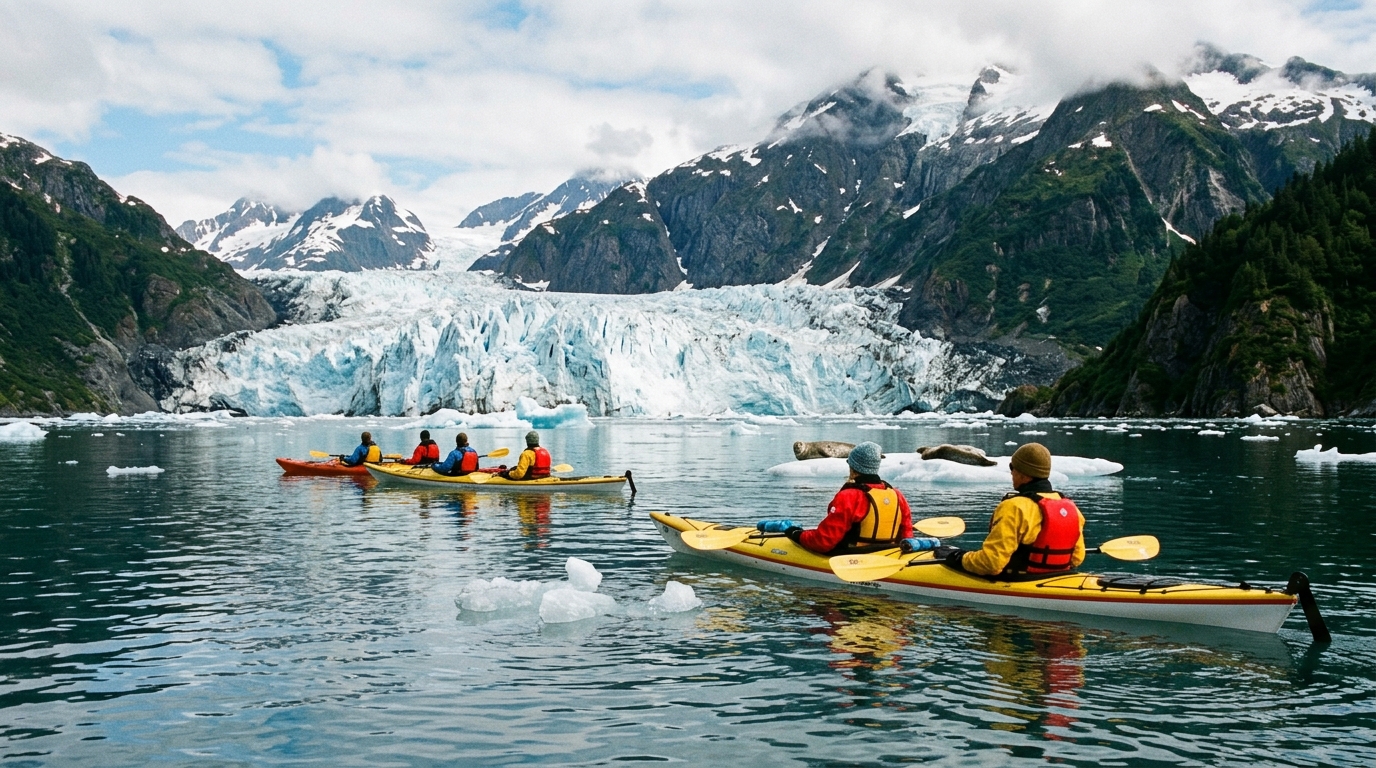
Kenai Fjords National Park kayaking places travelers directly inside a dynamic subarctic marine wilderness dominated by massive tidewater glaciers and freezing ocean waters. Unlike typical inland lake paddling, this extreme activity requires facing unpredictable ocean winds, massive floating icebergs, and strong tidal currents off the coast of Seward, Alaska. Visitors planning an adventure here must understand the severe physical demands, specialized gear requirements, and logistical hurdles of reaching deep glacial bays.
Understanding Glacial Waters and Open Ocean Pressures
Kenai Fjords National Park kayaking exposes paddlers to frigid water temperatures and shifting ice hazards that demand constant vigilance and advanced preparation.
The sea surface near active glaciers like Aialik or Northwestern stays near freezing throughout the summer season, meaning any accidental capsize triggers immediate cold water shock. Massive chunks of glacial ice, known as bergy bits or growlers, calve off the ice faces with little warning and create dangerous swells or sudden underwater shifts. Ocean currents driven by Gulf of Alaska tides roar through narrow fjords and around exposed headlands, requiring strong paddling stamina just to maintain position. Because of these intense physical factors, Kenai Fjords National Park kayaking is strictly suited for those with solid ocean-paddling skills and proper cold-water rescue training.
Booking Motorized Water Taxis From Seward Harbor
Reaching the remote launch zones for Kenai Fjords National Park kayaking requires hiring a commercial motorized water taxi out of the small boat harbor in Seward.
No roads lead directly from the mainland highway to the tidewater glaciers and deep marine inlets hidden inside the park boundaries. Travelers must load their sea kayaks, camping gear, and survival supplies onto a chartered boat for a two- to three-hour transit across open ocean water. These water taxi trips depend entirely on safe sea states and manageable wind forecasts, meaning rough weather can easily postpone or cancel departures. When high winds trap visitors on remote gravel beaches, waiting for a pick-up can extend an itinerary by several unexpected days.
Choosing Between Independent Trips and Guided Outings
Deciding between renting equipment for a solo expedition or joining a professional guided tour depends heavily on your prior open-water experience.
Novice sea kayakers or those unfamiliar with Alaskan coastal wilderness should always book a multi-day or single-day guided excursion with a permitted Seward outfitter. Licensed guides handle complex marine navigation, tide chart calculations, emergency satellite communications, and secure wilderness camp setups. Experienced paddlers with verified self-rescue capabilities can rent dry suits and kayaks in town to organize independent trips, but they must carry all necessary bear-resistant food canisters and survival gear since cell phones do not work in the deep fjords.
Navigating National Park Service Wilderness Regulations
Visitors participating in Kenai Fjords National Park kayaking must follow strict rules set by the National Park Service to protect fragile coastal ecosystems and local wildlife.
According to the National Park Service, all backcountry travelers must store food and scented items securely in approved bear-resistant containers to prevent habituating black bears and coastal brown bears. Wildlife viewing laws require kayakers to maintain a respectful, legal distance from marine mammals such as sea otters, harbor seals, Steller sea lions, and humpback whales resting or feeding in the bays. Paddlers must never approach resting animals on shore or paddle between mother whales and their calves. Before launching, visitors should check in at the Seward visitor center to review current marine weather warnings, ice hazard reports, and emergency protocols. To help track your broader travel milestones while planning grand wilderness trips like this, you can use a handy log for tracking US park adventures.
Evaluating Financial Costs and Environmental Risks
Kenai Fjords National Park kayaking involves significant financial investments and physical risks that every traveler must weigh before finalizing travel plans.
The cumulative expense of specialized dry-suit rentals, water taxi transport, and guided service fees adds up quickly, making this a very expensive outdoor vacation. Unpredictable south-central Alaskan weather can bring heavy rain, dense fog, or fierce katabatic winds that make paddling unsafe for days at a time. Physical exhaustion is also a very real factor, as paddling heavy ocean kayaks against fierce winds requires immense upper body strength. For travelers seeking a relaxing vacation, these severe environmental hurdles might outweigh the remote wilderness rewards.
Common Questions About Kenai Fjords National Park Kayaking
Do I need a dry suit for Kenai Fjords National Park kayaking?
Yes, wearing a professional-grade dry suit with appropriate insulating layers underneath is standard practice because the ocean water temperature is dangerously cold year-round.
Can beginners go on overnight kayaking trips in the park?
Complete beginners should stick to guided day trips or hire a licensed guide service for overnight expeditions, as independent multi-day trips require advanced ocean navigation and self-rescue skills.
How do I book a water taxi from Seward?
You can reserve a water taxi through various licensed marine transport companies operating out of the Seward small boat harbor well in advance of the summer season.
What kind of wildlife can I expect to see while paddling?
Paddlers frequently encounter sea otters, harbor seals, bald eagles, and occasionally whales or porpoises swimming through the glacial fjords.
When is the best time of year for this trip?
The peak operating season runs from late May through early September when weather conditions are milder and water taxi operators run regular schedules.
Are permits required for backcountry camping along the fjords?
According to the National Park Service, overnight backcountry permits are not currently required for day-use or camping in Kenai Fjords National Park, but campers must still follow strict Leave No Trace principles.
Disclaimer: Marine weather, water taxi pricing, and park regulations can change over time. Always verify current conditions, operating permits, and safety advisories directly with the National Park Service and local outfitters before embarking on your trip.

I’m Muhammad Ubaid, founder of YBR Magazine. I research and write detailed guides on America’s National Parks — covering entry fees, permits, best times to visit, and planning tips — using official NPS sources and up-to-date information.