

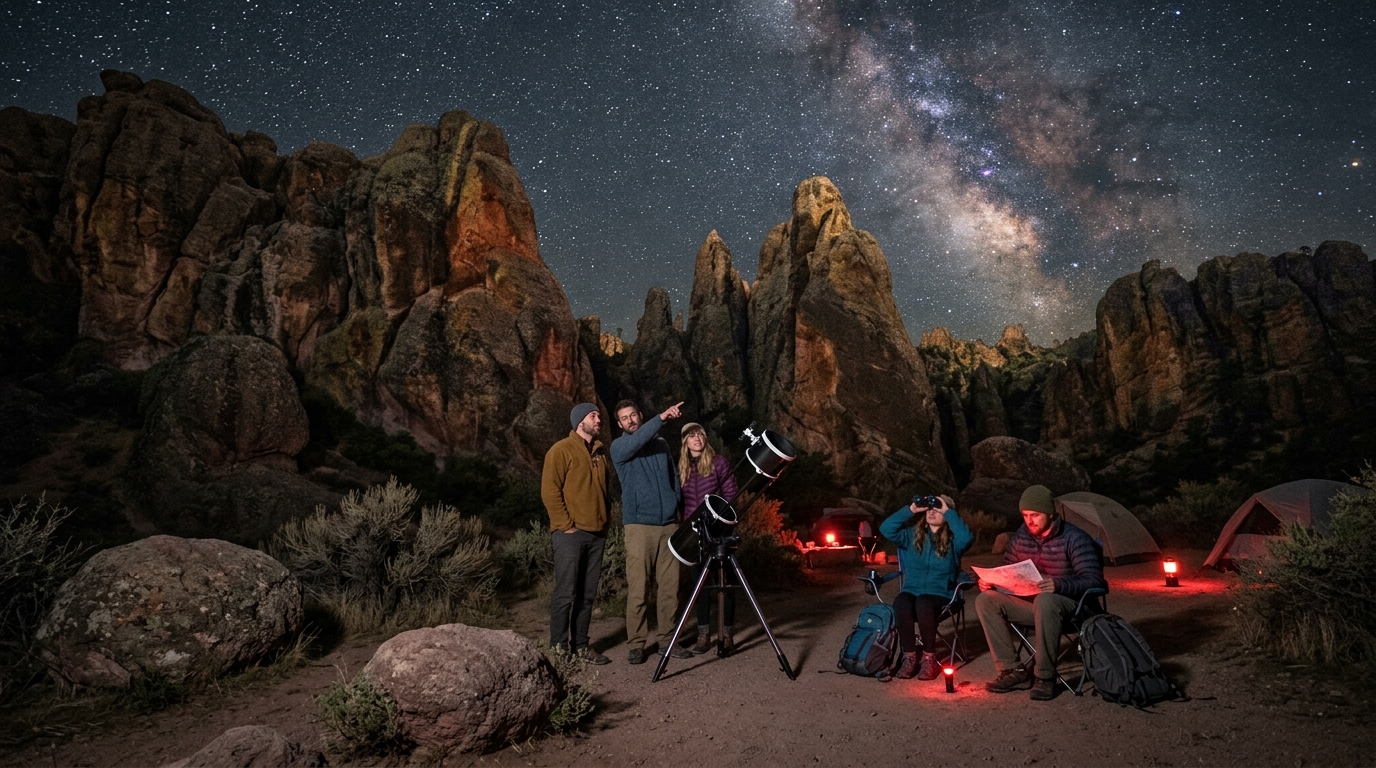
Pinnacles National Park stargazing offers a unique window into the dark night skies of central California, far away from the blinding lights of major cities. Visitors who look up at night can spot countless stars, bright planets, and the glowing band of the Milky Way across clear skies. However, planning a night viewing trip requires careful preparation because the park has strict vehicle access rules and challenging natural terrain. Unlike many urban parks that stay open all night, Pinnacles National Park manages its gates closely to protect local wildlife and park property. Understanding these constraints helps astronomers and casual stargazers avoid frustration and make the most of their time under the stars.
Navigating Strict Night Gate Closures and Camping Permits
Night access at Pinnacles National Park is strictly controlled by the National Park Service through vehicle gate closures and permit requirements for overnight campers. When daytime visitor hours end, the main park vehicle gates lock to prevent unauthorized vehicle entry and ensure visitor safety across the rugged terrain. Only registered campers staying at the Pinnacles Campground or visitors holding special authorized permits are allowed to remain inside the park boundaries after dark. Visitors who plan to stay late must understand these official park policies to avoid getting locked out or fined by park rangers on patrol. Planning ahead ensures that stargazers have proper authorization before setting up telescopes, cameras, or bulky observation gear.
Choosing Open Horizons Around Towering Volcanic Spires
The best locations for Pinnacles National Park stargazing are open parking lots and designated trailheads where the massive volcanic rock spires do not block the horizon. Pinnacles National Park is famous for its rough rock formations and towering monoliths, which create dramatic scenery during daylight hours but can easily obstruct wide views of the night sky if visitors choose the wrong canyon floor. The East Visitor Center parking area and the main Pinnacles Campground provide much wider viewing angles than narrow canyon trails enclosed by steep cliffs. Stargazers should choose flat, open areas that lift them away from deep canyons so they can see stars stretching from horizon to horizon without sudden stone barriers blocking their line of sight.
For travelers interested in building a broader itinerary around the region, reviewing our guide on outdoor activities in Pinnacles National Park can help balance daytime exploring with nighttime astronomy.
Coping With Valley Fog and Central California Weather
Weather conditions at Pinnacles National Park can change quickly because coastal fog and central California valley heat haze often roll into the region. Even when skies look clear near the coast, low-level fog or agricultural light pollution from nearby farming valleys can drift over the park and blur faint stars unexpectedly. Stargazers should check real-time weather forecasts and cloud cover maps provided by official weather services before making the drive out to the remote entrances. Summer nights bring comfortable warmth, but autumn and spring often provide crisper air, much sharper viewing conditions, and more reliable cloud-free windows for deep sky photography.
Packing Red Light Gear and Managing Sub-Zero Desert Winds
Proper equipment and careful dark sky etiquette ensure a great viewing experience while protecting nocturnal animals and preserving night vision. Stargazers should always use red-filtered flashlights or headlamps instead of bright white lights because red light does not ruin human night vision or disturb creatures like bats and rodents that hunt after sunset. Bringing warm layers of clothing is also essential because desert and valley temperatures at Pinnacles National Park drop rapidly after sunset, leaving unprepared visitors shivering in the cold mountain air. Visitors should pack comfortable seating, extra batteries, a portable power bank, and plenty of water since nighttime park facilities remain very limited and water stations may be turned off.
Frequently Asked Questions About Pinnacles National Park Stargazing
Can anyone stay in Pinnacles National Park all night?
No, only registered campers staying at the official Pinnacles Campground or authorized permit holders are allowed to remain inside the park after closing hours.
Are the rock formations a problem for stargazing?
The towering rock spires can block large portions of the low horizon, so choosing wide-open parking areas or flat trailheads is necessary for the best views.
Do I need a special permit just to look at the stars?
Daytime visitors cannot stay late for stargazing without an overnight camping reservation or a valid special use permit issued by the National Park Service.
When is the best time of year for clear night skies?
Autumn and spring typically offer the clearest nights, whereas summer can bring valley heat haze and winter often brings rain risks and heavy cloud cover.
Can valley fog ruin a stargazing trip here?
Yes, regional valley fog and agricultural lights from nearby farming areas can drift into the park and obscure distant stars unexpectedly.
What kind of flashlights should visitors bring?
Stargazers should use red-light flashlights or headlamps to protect their night vision and avoid blinding other people who are viewing the stars.
Disclaimer: Park rules, camping fees, and gate hours can change over time. Always verify current operating details directly with the National Park Service before planning your visit.
I’m Muhammad Ubaid, founder of YBR Magazine. I research and write detailed guides on America’s National Parks — covering entry fees, permits, best times to visit, and planning tips — using official NPS sources and up-to-date information.