

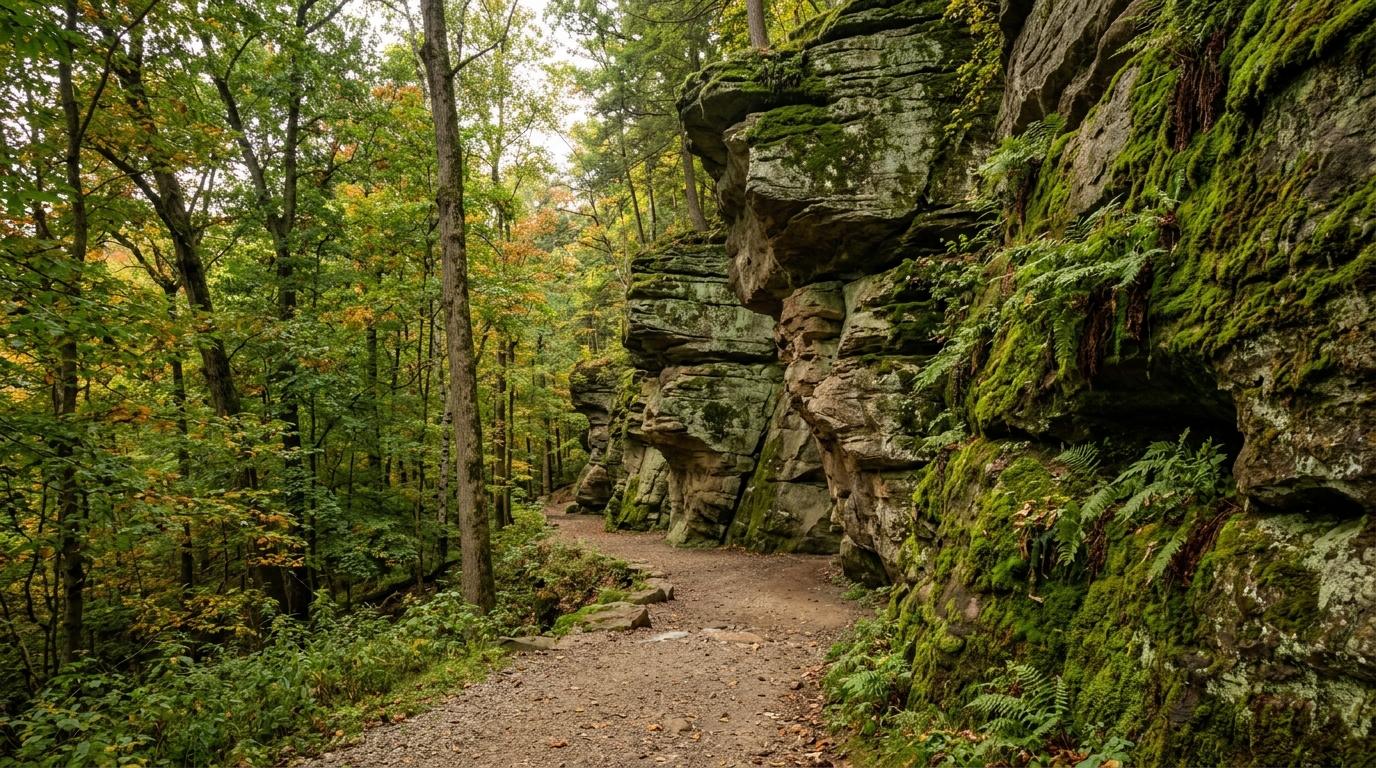
Finding the best hikes in Cuyahoga National Park means exploring a protected landscape that feels very different from rugged western parks. Cuyahoga Valley National Park sits right between busy urban centers and quiet green spaces, combining paved local paths with deep shale gorges and winding rivers. Public roads, private homes, and scenic railroad tracks cut through the valley, so trails often cross paths with local civilization rather than feeling completely wild. Visitors looking for outdoor adventures will find lush river valley ecosystems, historic canal paths, and hidden waterfalls tucked away in forested ravines. Preparing for these trails requires knowing which parking lots fill up early on busy weekends and understanding how local clay soil turns certain paths into muddy stretches after a rainstorm.
Ledges Trail: Navigating Sharon Conglomerate Rock Formations
Ledges Trail is the most famous walking route in Cuyahoga National Park, taking visitors past massive sandstone blocks and through quiet, shaded oak forests.
The main loop stretches for about two miles and winds around towering rock walls that glow a warm orange color when the sun hits them just right. Huge blocks of Sharon Conglomerate sandstone sit scattered through the trees, giving hikers plenty of places to pause and look at the geology up close. This path gets very busy on sunny weekends, so visitors who want a quiet walk should arrive early in the morning. Parking lots near the Ledges area fill up quickly by mid-morning, forcing late arrivals to wait for open spots or park further away.
Brandywine Gorge Trail: Descending Into Shale Ravines
Brandywine Gorge Trail leads hikers down into a lush, green river valley to experience the park’s premier waterfall attraction.
This loop trail covers about one and a half miles and features a dramatic set of wooden stairs that take visitors down into the steep shale gorge. Brandywine Falls itself is a sixty-five-foot roaring waterfall that draws large crowds throughout the year, especially during spring snowmelt and autumn color changes. The path hugs the edge of Brandywine Creek, offering beautiful views of the rushing water and surrounding trees. According to the National Park Service, visitors must stay on designated boardwalks and paths to protect the fragile shale slopes from erosion. A major downside of this area is the limited parking space at the main trailhead, which often overflows on weekends and holidays.
The Towpath Trail: Following the Historic Ohio and Erie Canal
The Towpath Trail offers an easy, accessible option for people who want a completely flat surface to walk or ride bikes along the historic waterway.
This crushed limestone path follows the route where mules once pulled cargo-carrying boats through the valley long ago. Walkers can enjoy wide-open views of the Cuyahoga River, expansive wetlands, and passing wildlife like great blue herons and beavers. Unlike the dirt gorge paths, the Towpath Trail stays relatively clean and accessible even after heavy rainstorms. However, the path lacks heavy tree cover in many sections, which leaves walkers completely exposed to the hot summer sun and cold winter winds. For travelers interested in comparing regional mountain trails with eastern river valleys, strenuous high-elevation mountain trails offer a completely different alpine trekking experience.
Navigating Clay-Heavy Soils and Park Regulations
Visiting Cuyahoga Valley National Park safely requires understanding local trail conditions, seasonal weather patterns, and official park guidelines.
According to the National Park Service, pets are allowed on select trails within the park, but they must be kept on a leash no longer than six feet at all times. Hikers should always check local weather reports before heading out, because clay-heavy dirt trails get extremely slick and muddy after storms. Bringing sturdy footwear with good traction helps prevent slips on steep gorge descents and wet tree roots. Visitors must also pack out all trash and respect wildlife boundaries to help keep the natural environment healthy for everyone.
Frequently Asked Questions About Cuyahoga Valley Trails
Are there entrance fees for Cuyahoga Valley National Park?
According to the National Park Service, there is no entrance fee to enter or explore Cuyahoga Valley National Park, making it free for all visitors.
What is the best time of year to hike in the park?
Autumn brings vibrant fall foliage colors, while spring offers rushing waterfalls and blooming wildflowers, making both seasons very popular for hiking.
How long is the Ledges Trail loop?
The main Ledges Trail loop is roughly two miles long and takes most visitors about one to one and a half hours to complete at a steady pace.
Can I bring my dog on the hiking trails?
Dogs are allowed on specific trails and towpath areas, but the National Park Service requires pets to stay on a short leash at all times.
Where are the best spots to see waterfalls?
Brandywine Falls and Blue Hen Falls are the two most famous natural waterfalls in the park, each accessible via short connecting trail loops.
Do parking lots fill up quickly on weekends?
Popular trailheads like Brandywine Falls and the Ledges usually fill up completely by mid-morning on weekends, so arriving early is strongly recommended.

I’m Muhammad Ubaid, founder of YBR Magazine. I research and write detailed guides on America’s National Parks — covering entry fees, permits, best times to visit, and planning tips — using official NPS sources and up-to-date information.