

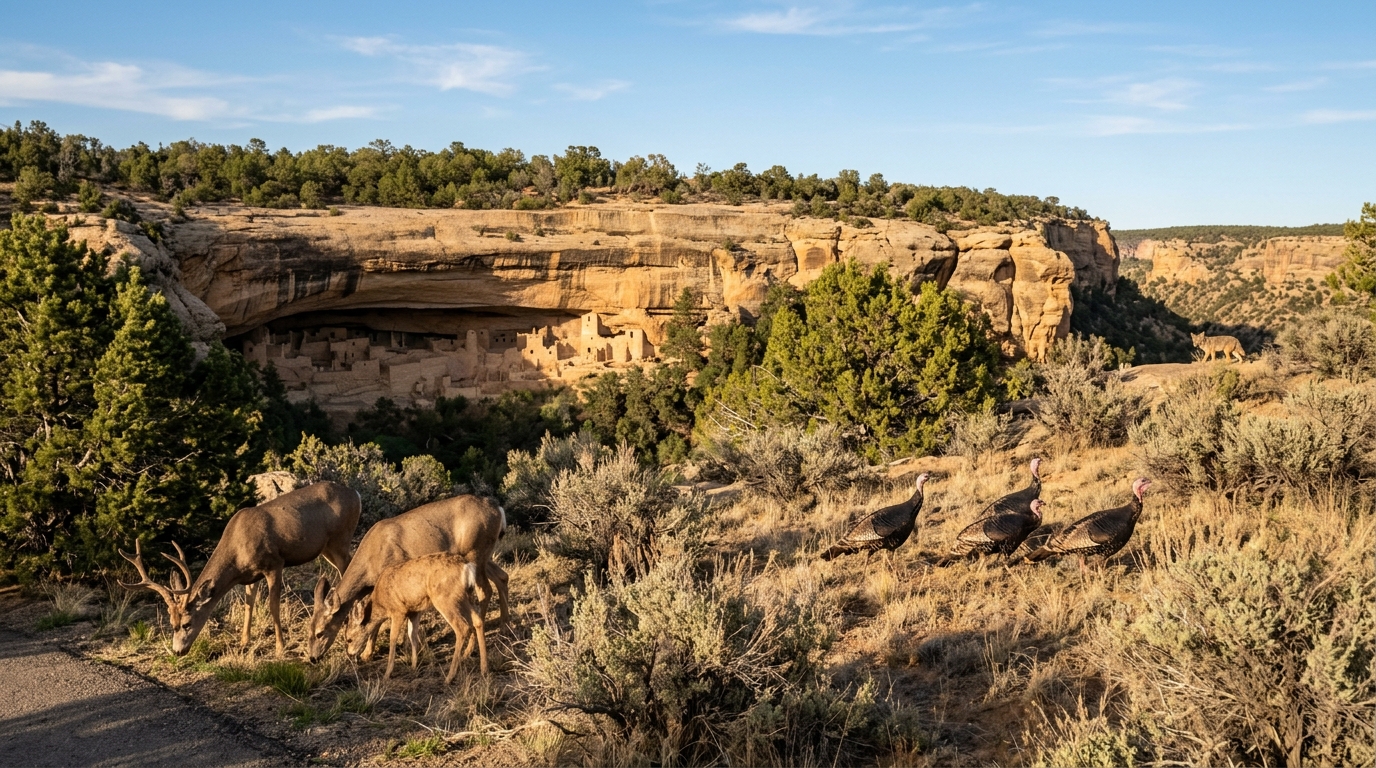
Discovering the Native Fauna Across Mesa Verde National Park
This introductory section sets the stage by exploring how the rugged geography of Mesa Verde National Park shapes local wildlife habitats far beyond the famous cliff dwellings. Mesa Verde National Park sits at a high elevation, featuring deep canyons, sandstone cliffs, and thick pinyon-juniper woodlands that provide shelter for diverse species. Animals in Mesa Verde National Park must adapt to cold winters, hot summers, and limited water sources found across the high desert plateaus. Learning about these creatures helps visitors appreciate the living ecosystem of the region rather than just focusing on its rich human history. Visitors exploring Mesa Verde National Park often find that taking time to look closely at the natural environment reveals an active community of mammals, birds, and reptiles.
Spotting Mule Deer and Other Mammals Along the Canyons
This section breaks down the specific mammals visitors are most likely to encounter, giving honest details about how often they actually show up in the terrain. Mule deer are by far the most frequently observed large mammals in Mesa Verde National Park, often grazing near roadsides or quiet trail edges during the cooler morning and evening hours. Coyotes also roam across the high mesas, and people camping or staying overnight frequently hear them calling out after dark. Other mammals living in Mesa Verde National Park include elusive black bears, mountain lions, gray foxes, and bobcats. However, large predators are naturally cautious and tend to avoid busy areas, meaning actual sightings of mountain lions or black bears are rare for tourists who stay on main park roads.
Winged Residents and Small Creatures of the High Mesas
This section highlights the rich bird life and smaller animals that populate the mesas, which are often much easier to spot than large mammals. Birdwatchers visiting Mesa Verde National Park will find dozens of resident and migratory species, including canyon wrens, scrub jays, red-tailed hawks, and golden eagles soaring along the stone walls. Smaller wildlife such as rock squirrels, chipmunks, cottontail rabbits, and lizards are common sights around parking lots and scenic overlooks. These smaller animals add constant movement to the landscape, offering great photography opportunities if visitors keep a respectful distance and avoid leaving food scraps behind.
Official Safety Guidelines for Watching Mesa Verde Wildlife
This section provides critical rules and guidelines from the National Park Service to keep both human visitors and native animals completely safe. According to the National Park Service, visitors must never approach, feed, or touch any wildlife inside Mesa Verde National Park, no matter how calm or harmless the animals might appear. Feeding wildlife disrupts their natural diet and can cause dangerous aggressive behavior toward humans, which often leads park rangers to remove habituated animals. Furthermore, park regulations state that visitors must maintain a safe distance from large animals at all times, utilizing binoculars or camera zoom lenses for close-up viewing. Bringing pets into Mesa Verde National Park is also heavily restricted on dirt trails to protect native wildlife and domestic pets from disease or conflict.

Realistic Limitations and Challenges of Wildlife Viewing Here
This section sets honest expectations about the difficulty of spotting wildlife in a rugged canyon landscape, helping build trust with the reader. Wildlife viewing in Mesa Verde National Park comes with clear limitations because many local animals are nocturnal, heavily camouflaged, or frightened by heavy summer visitor crowds. Visitors hoping to see large mammals during midday hours are often disappointed because wildlife typically rests in shaded canyons during the heat of the day. Additionally, strict trail regulations mean that visitors cannot wander off designated paths into deep wilderness areas to search for animals. Understanding these practical realities helps set realistic expectations for any trip. For broader tips on safe wildlife observation, you can read our guide on seeing and protecting native wildlife.
Frequently Asked Questions
What large animals live in Mesa Verde National Park?
Mesa Verde National Park is home to mule deer, black bears, mountain lions, and coyotes.
Are bear sightings common in Mesa Verde National Park?
Black bears live in the park, but sightings are rare because these animals are shy and actively avoid humans.
Can I feed the squirrels or birds in Mesa Verde National Park?
No, feeding any wildlife in Mesa Verde National Park is strictly prohibited by the National Park Service to protect animal health.
Where is the best place to see wildlife in Mesa Verde National Park?
Mule deer and smaller birds are often spotted near park roads, overlooks, and trailheads during early morning hours.
Are pets allowed on trails in Mesa Verde National Park?
Pets are heavily restricted on park trails to protect native wildlife and ensure visitor safety per National Park Service regulations.
What birds can I expect to see in Mesa Verde National Park?
Visitors frequently spot scrub jays, canyon wrens, ravens, and various hawks soaring over the canyons.
Disclaimer: Wildlife habits, park rules, and safety regulations can change over time. Always verify current guidelines directly with the National Park Service before your visit.

I’m Muhammad Ubaid, founder of YBR Magazine. I research and write detailed guides on America’s National Parks — covering entry fees, permits, best times to visit, and planning tips — using official NPS sources and up-to-date information.