

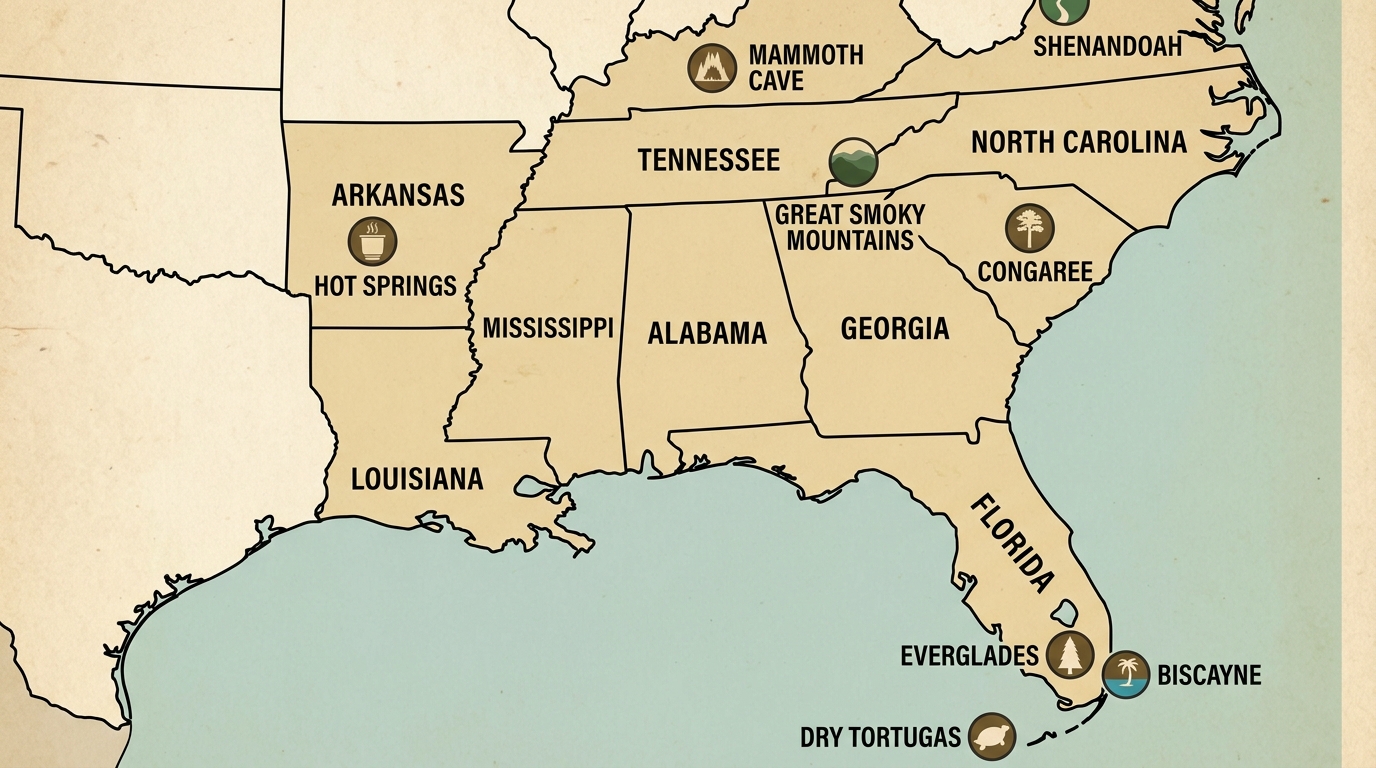
When travelers think about exploring protected public lands in the United States, towering mountain peaks and deep desert canyons usually come to mind. However, national parks in the southeast region offer an entirely different kind of natural beauty. Instead of high-altitude rock formations, southeastern parks feature subtropical wetlands, shifting coastal islands, ancient river swamps, and dense hardwood forests. These landscapes protect unique ecosystems that support rare wildlife, delicate marine habitats, and deep human histories. Because the local climate brings unique challenges like intense humidity, warm temperatures, and seasonal weather shifts, understanding what to expect helps travelers plan a smooth and enjoyable journey across these diverse public lands.
Subtropical Wetlands and Ancient Swamp Ecosystems
National parks in the southeast region feature unique subtropical wetlands and slow-moving rivers that define the southern landscape. Everglades National Park serves as the premier example of this watery wilderness, protecting a vast river of grass that spans the southern tip of the Florida peninsula. This slow-moving freshwater system supports alligators, wading birds, and elusive Florida panthers across sprawling sawgrass prairies and mangrove forests. Congaree National Park in South Carolina preserves one of the largest remaining tracts of old-growth bottomland hardwood forest in the United States. Towering cypress and tupelo trees grow straight out of the rich floodplain soils, creating a quiet sanctuary for record-sized trees and diverse wildlife that thrive in the damp environment.
High Elevation Biodiversity in the Appalachian Mountains
The Great Smoky Mountains National Park stands as the crown jewel of the region’s elevated terrain and remains the most visited national park in the country. High mountain peaks create cooler temperatures and varied microclimates that support more plant species than almost any other temperate area on Earth. Dense deciduous forests cover the rolling ridges, turning vibrant shades of red and gold during the autumn months. Black bears, white-tailed deer, and elk roam freely through the protected valleys and historic settlements scattered across the mountains. Visitors traveling through these peaks will find that early morning arrivals help avoid heavy traffic congestion along main mountain thoroughfares and popular overlooks.
Coral Reefs and Historic Island Fortifications
Coastal and island parks situated off the southern edge of the mainland protect delicate marine sanctuaries and centuries of maritime history. Biscayne National Park lies almost entirely underwater just south of Miami, safeguarding vibrant coral reefs, fish nurseries, and emerald keys. Dry Tortugas National Park sits nearly seventy miles west of Key West, featuring crystal-clear waters, nesting sea turtles, and the massive nineteenth-century masonry structure known as Fort Jefferson. Because these island destinations lack highway connections, visitors must rely on authorized ferry boats, seaplanes, or private vessels to reach the shores safely. For a broader perspective on how these marine and coastal sanctuaries compare to other protected coastal areas, travelers often review a comprehensive guide to eastern parks to understand coastal logistics and regional travel patterns.
Managing Humidity, Insects, and Wildlife Encounters
Exploring southeastern parks requires careful preparation for intense humidity, frequent rain showers, and active wildlife populations. Summer months bring high temperatures and oppressive humidity, while afternoon thunderstorms develop rapidly across the coastal and inland plains. Biting insects like mosquitoes and ticks thrive in these warm, moist environments, making effective insect repellent and breathable long sleeves essential gear for any outdoor excursion. Wildlife encounters require respectful distances, particularly when observing American alligators resting near water edges or black bears foraging in mountain forests. Knowing how to store food securely and maintain safe viewing boundaries ensures that both visitors and local animals remain protected.

Planning Your Itinerary Around Seasonal Weather
Planning a trip to southeastern protected areas involves understanding how seasonal weather patterns dictate park access and activity levels. Spring and autumn generally offer the most comfortable temperatures for hiking and wildlife viewing, though autumn also coincides with the Atlantic hurricane season. Tropical storms can occasionally impact coastal parks and low-lying roadways, requiring travelers to monitor weather forecasts closely before departure. Winter provides a welcome escape from northern snow, bringing mild days that are ideal for exploring historical monuments and coastal trails without dealing with heavy crowds or peak summer heat.
Frequently Asked Questions
What makes southeastern national parks different from western parks?
Southeastern parks are defined by subtropical climates, vast wetlands, coastal islands, and dense hardwood forests rather than towering snow-capped mountains and dry canyons.
When is the best time of year to visit national parks in the southeast?
Spring and autumn generally offer the most comfortable temperatures and lower humidity, making outdoor exploration much more pleasant than the peak heat of summer.
Do I need a boat to visit coastal parks like Biscayne or Dry Tortugas?
Yes, because these parks are primarily marine environments, visitors must use authorized ferry services, tour boats, or private watercraft to access the islands and reefs.
Are alligators common in southeastern national parks?
Alligators live in many wetland and coastal parks across the southeast, particularly in Florida, and visitors must always keep a safe distance from water edges.
What should I pack for a trip to the southeastern national parks?
Essential items include lightweight and breathable clothing, effective insect repellent, sunscreen, rain gear for sudden afternoon showers, and plenty of drinking water.
Are reservations required for the most popular southeastern parks?
Some popular campgrounds, tours, and specific vehicle entry areas require advance reservations, so checking the official National Park Service website before your trip is vital.
Disclaimer: Park rules, weather conditions, and operational hours can change over time. Always verify current details and safety guidelines directly from official park sources before planning your travel.

I’m Muhammad Ubaid, founder of YBR Magazine. I research and write detailed guides on America’s National Parks — covering entry fees, permits, best times to visit, and planning tips — using official NPS sources and up-to-date information.