

Understanding East Coast National Parks
East Coast national parks are often smaller, mixed with heavy history, or spread across islands and coastal wetlands compared to western protected lands.
When travelers think of national parks, they often picture massive, wide-open mountain ranges or deep red rock canyons out west. East Coast national parks offer a very different experience because they sit in regions with dense forests, rolling hills, and long ocean shorelines. Many of these areas feature rich historical landmarks tucked right next to natural landscapes. Travelers searching for East Coast national parks often want to know which destinations offer true wilderness versus places that focus mostly on scenic drives or historic preservation. Understanding these distinctions helps visitors set proper expectations before packing their bags for a regional road trip.
Furthermore, eastern geography shapes how people experience these protected spaces. Unlike the isolated expanses found in western states, many properties in the eastern half of the country blend seamlessly into local communities, private farmlands, and busy highway systems. Visitors encounter a patchwork of federal lands alongside state parks and private forests. This closeness to major metropolitan areas means that weekend trips require extra preparation to handle traffic, limited parking infrastructure, and popular local events.
Top True National Parks on the East Coast
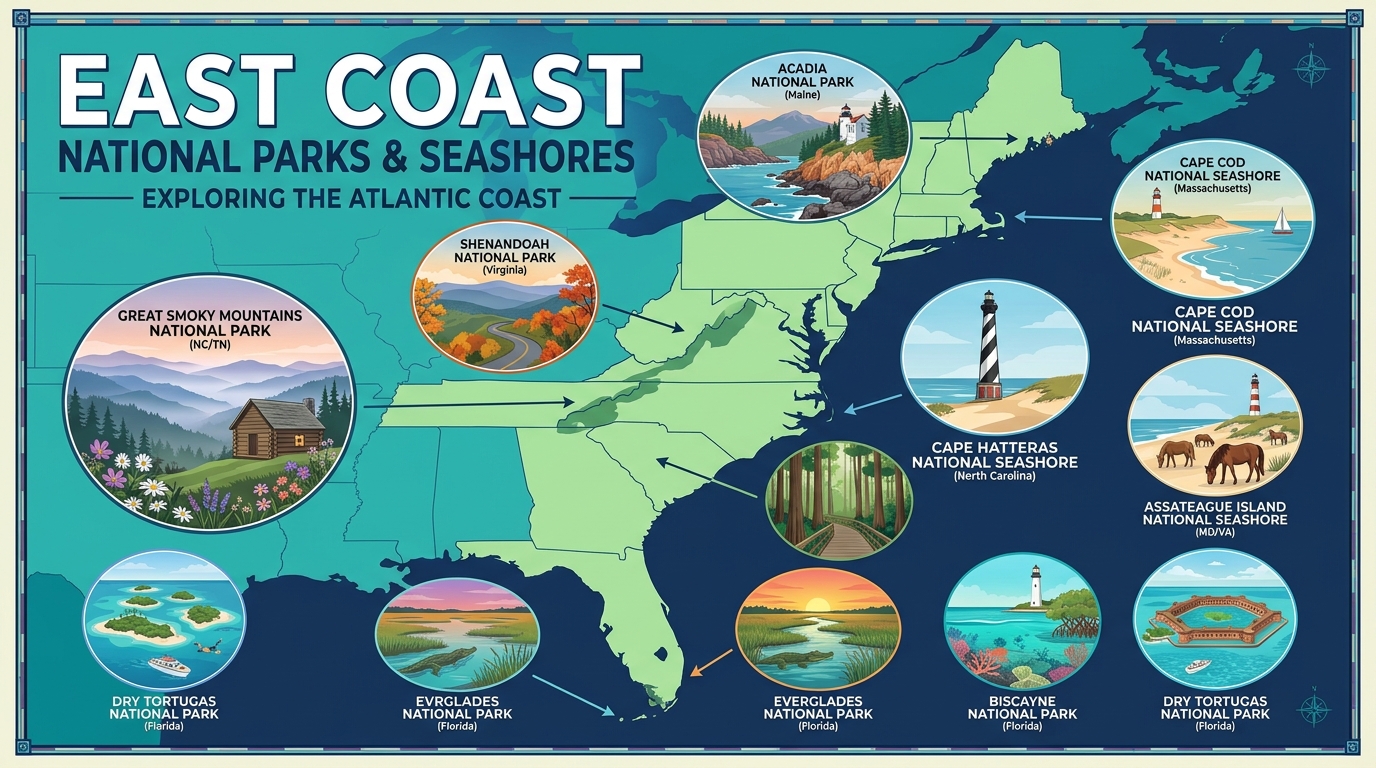
Acadia, Great Smoky Mountains, and the Everglades hold official national park status and serve as the major highlights of the region.
Acadia National Park sits along the rocky coast of Maine, offering granite peaks, ocean views, and dense pine forests. Great Smoky Mountains National Park spans the border between North Carolina and Tennessee, featuring misty mountains, rich plant life, and preserved historic cabins. Everglades National Park covers the southern tip of Florida as a vast subtropical wilderness filled with slow-moving water and diverse wildlife. Each of these official East Coast national parks brings a distinct landscape and climate to the region, giving travelers vastly different ecosystems to explore within a single geographical coast.
Visiting these signature locations requires understanding their individual layouts. Acadia relies heavily on a network of carriage roads built by John D. Rockefeller Jr., which allow visitors to hike and bike away from vehicular traffic. The Great Smoky Mountains offer hundreds of miles of walking trails, including a scenic section of the famous Appalachian Trail. The Everglades provide unique water-based adventures via airboat tours, kayaking channels, and boardwalk strolls through sawgrass marshes.
Exploring East Coast National Seashores and Scenic Parks
Popular coastal preserves and mountain parkways offer incredible outdoor recreation even though they carry different official designations.
Travelers often confuse national seashores, riverways, and parkways with traditional national parks because these units also receive protection from the National Park Service. Cape Hatteras National Seashore in North Carolina provides miles of barrier island beaches, rolling sand dunes, and historic lighthouses that guide passing mariners. Shenandoah National Park in Virginia provides high ridge driving along the scenic Skyline Drive and miles of shaded forest hiking trails. For readers interested in diverse regional landscapes, comparing these destinations alongside pacific coast and mountain park itineraries helps highlight how eastern coastal and mountain environments differ from western terrain.
Other notable coastal units include Assateague Island National Seashore, famous for its wild horses roaming freely across sandy beaches, and Cape Cod National Seashore in Massachusetts, which features dramatic glacial cliffs and pristine shoreline paths. Exploring these coastal treasures lets visitors experience ocean habitats, bird-watching spots, and saltwater marshes without needing to visit a traditional landlocked park boundary.
Best Times of Year to Visit East Coast Parks
East Coast weather changes dramatically from freezing northern winters to hot and humid southern summers.
Timing a trip to East Coast national parks requires careful attention to seasonal weather patterns and regional microclimates. Spring and autumn usually bring mild temperatures and colorful foliage, especially in northern and mid-Atlantic states where autumn leaf-peeping draws millions of travelers. Summer months bring warm, humid conditions to southern locations like the Everglades and heavy visitor traffic to coastal beaches and oceanfront campgrounds. Winter brings freezing temperatures and heavy snow to northern parks like Acadia, though some southern parks enjoy pleasant, mild weather during those exact winter months.

Travelers should also keep regional storm seasons in mind when planning coastal getaways. Late summer and early autumn occasionally bring tropical storms and hurricanes to the Atlantic and Gulf coasts, which can temporarily close low-lying beaches, barrier island roads, and visitor centers.
Tips for Planning Your Trip
Many eastern parks sit close to large population centers, meaning popular spots fill up fast and require advance planning.
Planning a trip to East Coast national parks means preparing for heavy local traffic, limited parking at popular trailheads, and possible timed-entry reservations during peak tourism windows. Visitors should check official park websites before arriving to confirm current road statuses, permit requirements, and seasonal closures. Checking details from official park sources ensures travelers have up-to-date information regarding parking, camping permits, and entrance fees.
Packing appropriate gear makes a major difference in comfort across different eastern environments. Visitors heading to southern wetlands need insect repellent and sun protection, while mountain hikers in the north need sturdy waterproof boots and layers to handle sudden weather shifts. Planning ahead keeps outdoor adventures safe, enjoyable, and smooth from start to finish.
Frequently Asked Questions
What are the main official national parks on the East Coast?
The major official national parks on the East Coast include Acadia in Maine, Great Smoky Mountains in North Carolina and Tennessee, and the Everglades in Florida.
Are East Coast national parks smaller than western parks?
East Coast national parks are generally smaller in land area and often sit closer to major cities and populated highways compared to remote western parks.
When is the best time to visit East Coast national parks?
Spring and autumn are widely considered the best seasons to visit East Coast national parks because the weather is mild and seasonal crowds are smaller.
Do I need reservations to enter East Coast national parks?
Some popular locations require advance vehicle reservations or timed-entry permits during peak summer and autumn seasons, so visitors should check official guidelines.
Can I see wildlife in East Coast national parks?
East Coast national parks offer great opportunities to view wildlife, including black bears in the Smokies, sea turtles on coastal shores, and alligators in the Everglades.
Are dogs allowed in East Coast national parks?
Pet rules vary widely across different East Coast national parks, with some areas allowing dogs on paved paths while others restrict them completely to protect local wildlife.

I’m Muhammad Ubaid, founder of YBR Magazine. I research and write detailed guides on America’s National Parks — covering entry fees, permits, best times to visit, and planning tips — using official NPS sources and up-to-date information.