

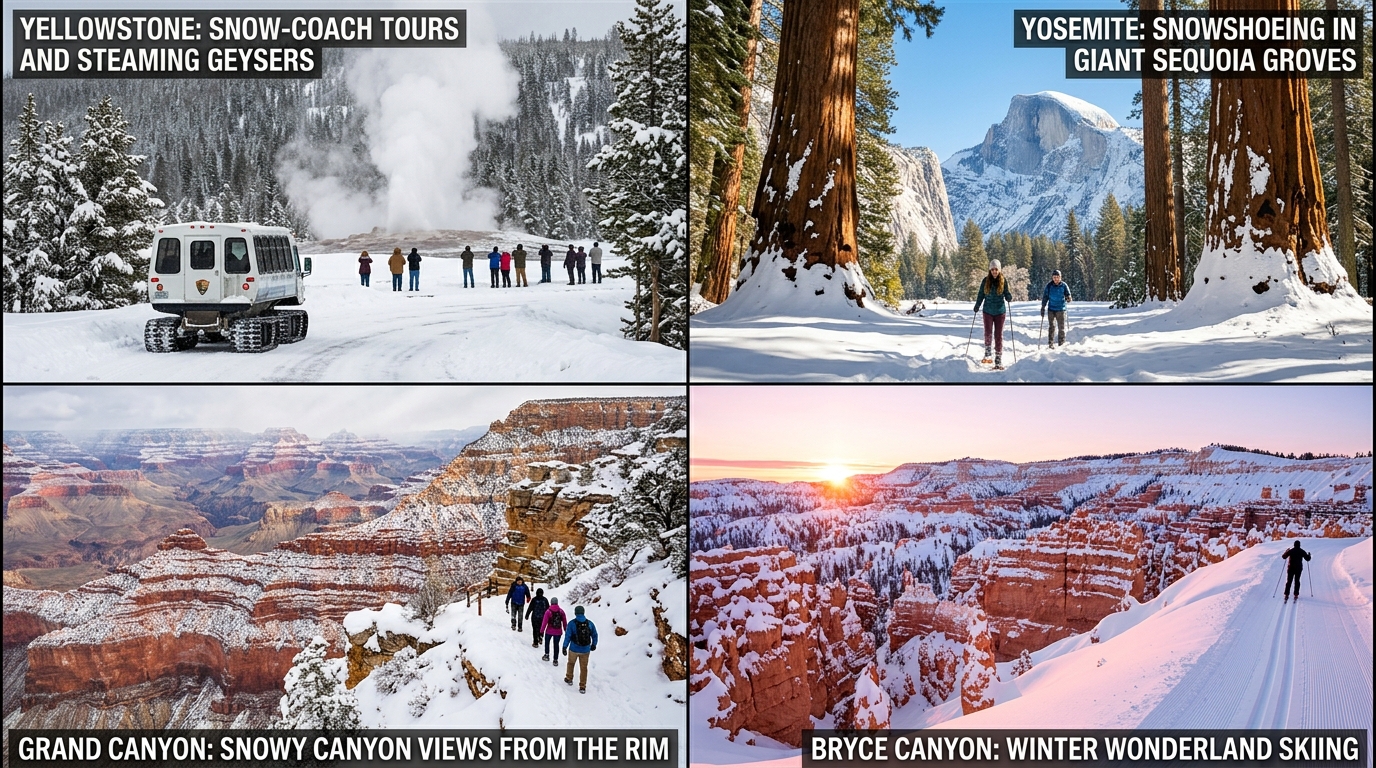
When freezing temperatures arrive across the United States, most vacationers pack away their camping gear and avoid remote mountain roads until spring. However, stepping outside during the colder months reveals a completely different side of the natural world. In fact, America’s national parks offer unique experiences during winter for visitors who want to escape the crowded peak season and witness dramatic landscapes covered in snow and ice. During these quiet months, towering peaks wear heavy white coats, and southern desert canyons take on a stark, beautiful stillness that summer crowds never get to witness. Exploring these protected lands requires extra care and preparation, but the peaceful atmosphere and striking scenery make every chilly adventure worthwhile.
Experiencing Total Solitude on Snow-Covered Trails
Winter turns popular hiking paths into peaceful retreats where travelers can enjoy complete quiet and crisp mountain air.
Popular trails that overflow with tourists and tour buses during July and August become remarkably empty once the snow starts to fall. Walking through a silent pine forest or gazing across a frost-covered canyon without hundreds of other people nearby creates a deeper connection to nature. National park wildlife also behaves differently during the colder months, making it easier to spot elk, bison, and wolves against clean backdrops of white snow. Park rangers often have more time to share detailed insights about local history and winter ecology during these slow months, giving curious travelers a much richer and more personal experience.
Discovering Frozen Deserts and Steaming Geothermal Basins
Different regions showcase striking seasonal contrasts, from snow-dusted red rock spires in Utah to steaming thermal vents in Wyoming.
National parks across the country transform in surprising ways depending on local geography. Bryce Canyon National Park in Utah becomes truly magical when bright red rock formations contrast sharply with deep layers of fresh white snow. For travelers planning a broader trip through the southwest region, Utah national parks ranked can help visitors decide which southern red rock sanctuaries provide milder daytime weather compared to freezing northern peaks. Meanwhile, Yellowstone National Park in Wyoming offers breathtaking views of rising steam against frozen geothermal basins, best explored by cross-country skis or guided snowcoaches.
Navigating Rapidly Changing Weather and Seasonal Road Closures
Unpredictable snowstorms and icy mountain grades make checking official daily weather alerts and road status updates essential before driving.
Winter weather brings sudden storms, high winds, and freezing temperatures that can shut down park roads and mountain passes with little warning. Rangers frequently close high-elevation routes until snowplows clear heavy drifts, meaning travel plans must remain flexible. Checking official park websites and local weather advisories every morning before heading out prevents drivers from getting stranded in remote areas. Staying informed about daily road conditions ensures that a cold-weather park excursion remains safe, smooth, and enjoyable from start to finish.

Preparing Proper Gear for Freezing Wilderness Conditions
Staying warm and safe on icy trails requires dressing in smart layers and carrying reliable emergency equipment.
Conquering freezing temperatures requires more than just throwing on a single heavy jacket. Dressing in three distinct layers—a moisture-wicking base layer, an insulating fleece middle layer, and a waterproof outer shell—helps regulate body temperature effectively during active hikes. Waterproof hiking boots with dependable traction, warm wool socks, hats, and insulated gloves are non-negotiable items for navigating icy terrain. Carrying extra water, high-energy snacks, a portable phone charger, and emergency blankets in the vehicle provides essential peace of mind when exploring remote winter wilderness areas.
Frequently Asked Questions
Which national parks are warmest during the winter months?
Southern parks like Joshua Tree in California, Everglades in Florida, and Saguaro in Arizona offer mild, comfortable weather while northern parks freeze.
Are park visitor centers open all winter long?
Many visitor centers remain open year-round, though some switch to reduced operating hours or close entirely depending on heavy snowfall and local staffing levels.
Do I need tire chains to drive through mountain national parks in winter?
Many mountain parks legally require tire chains or four-wheel drive during active snowstorms to keep all visitors safe on slick mountain grades.
Can visitors camp inside national parks during winter?
Yes, many campgrounds stay open through the winter season, though most operate on a first-come, first-served basis with limited amenities like running water.
Is wildlife easier to spot in national parks during winter?
Animals often stand out clearly against white snow, and bare trees make spotting birds and mammals much simpler than during dense summer foliage.
How can I check if park roads are open before I drive?
Travelers should check official park social media channels and the National Park Service website daily for real-time road status updates.
Disclaimer: Winter weather conditions in national parks change rapidly. Always verify current road closures, weather advisories, and facility hours from official park sources before starting your trip.

I’m Muhammad Ubaid, founder of YBR Magazine. I research and write detailed guides on America’s National Parks — covering entry fees, permits, best times to visit, and planning tips — using official NPS sources and up-to-date information.