

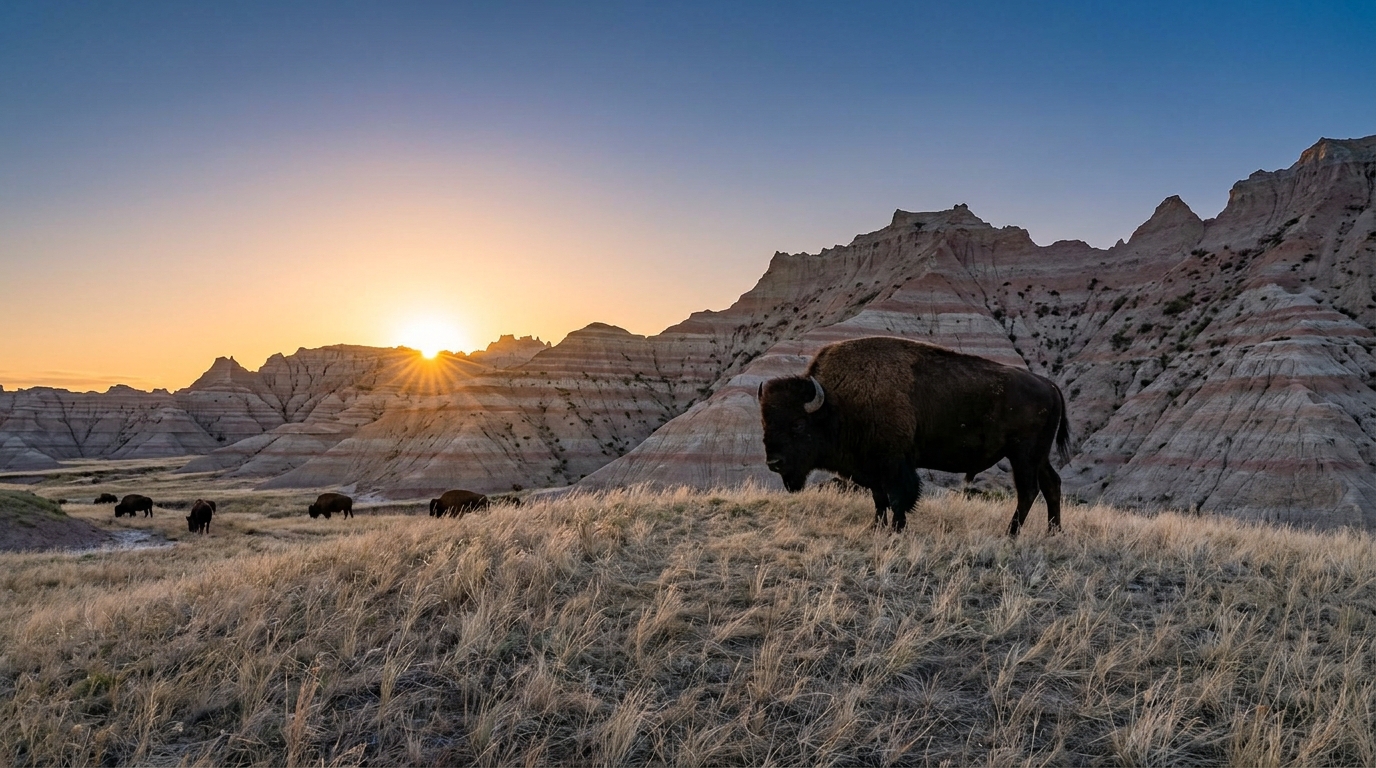
Badlands National Park is not a lush green forest where creatures hide easily in thick trees and deep bushes. Instead, it offers a wide-open, stark landscape of sharp ridges and grassy prairies. This unique terrain makes seeing wildlife very different from visiting other national parks. Visitors looking up animals at Badlands National Park are often surprised by how close they can get to large mammals from their cars. However, many people also underestimate the real safety risks of approaching powerful animals like bison and bighorn sheep. Understanding where these creatures live and how to behave around them makes for a much safer and more rewarding trip.
Where to Find Wildlife Across the Badlands Landscape
Wildlife viewing in the Badlands depends heavily on whether you are looking in the flat prairie or the steep rocky maze.
The park is roughly split into two main sections: the North Unit, which features dramatic rock formations and sweeping overlooks, and the South Unit, which is largely managed by the Oglala Sioux Tribe and includes more remote grasslands. Animals move between these open prairies and eroded canyons depending on the weather and the search for food. Early mornings and late evenings offer the best chances for spotting active creatures, as midday summer heat often sends wildlife resting in the shade of gullies or tall grass.
Iconic Large Mammals You Can Expect to See
Large animals like bison and bighorn sheep shape the experience of animals at Badlands National Park for almost every visitor.
Bison are the undisputed giants of the prairie, and herds frequently roam near the Loop Road, sometimes blocking traffic for hours. While they look calm and slow, bison can run much faster than humans and will charge if they feel threatened. Bighorn sheep are another favorite, often spotted balancing effortlessly on steep cliffs and rocky spires near viewpoints like the Pinnacles Overlook. Pronghorn, which look like small deer with white rumps, graze quietly in the open grasslands and rank among the fastest land animals in North America. Visitors must always keep a safe distance, as wild animals require plenty of personal space.
Smaller Prairie Residents and Where They Hide
Smaller mammals and birds live all around the park, though many require patience and a good pair of binoculars to spot.
Black-tailed prairie dogs live in massive underground towns called colonies, and the Roberts Prairie Dog Town is one of the most accessible spots to watch these energetic rodents chatter and play. Mule deer are also common visitors near wooded draws and grassy areas, while coyotes frequently hunt across the plains during dawn and dusk. For bird watchers, the park provides habitat for meadowlarks, golden eagles, and even the rare burrowing owl that nests inside abandoned prairie dog burrows. To learn more about appreciating and safeguarding these native creatures without disturbing their natural habits, read our guide on seeing and protecting native wildlife across protected lands.
Rare and Endangered Species to Know About
Some of the most famous animals in the park are extremely hard to see because of their small numbers and nocturnal habits.
The black-footed ferret is widely considered one of the rarest land mammals in North America and makes its home underground in prairie dog colonies. Because these ferrets only hunt at night and stay hidden during the day, casual visitors rarely spot them in the wild. Swift foxes also live within the park boundaries, using their speed to avoid predators and catch small rodents in the open grasslands. Conservation programs led by the National Park Service continue to monitor and protect these vulnerable populations.

Safety Rules and Practical Limitations for Wildlife Viewing
Visitors must follow strict safety rules and expect certain limitations when viewing animals at Badlands National Park.
According to the National Park Service, visitors must stay at least 100 feet away from large mammals like bison and bighorn sheep, and at least 300 feet away from wolves or bears if any happen to pass through. Using a zoom lens on a camera or binoculars is the best way to get a close look without putting yourself in danger. Summer temperatures in the Badlands can climb extremely high, which limits comfortable midday hiking and forces both humans and animals to seek shade. Always carry plenty of water, respect park closures, and never feed any wild creature you encounter.
Frequently Asked Questions
Can I pet the bison at Badlands National Park?
No, you should never touch or approach bison because they are wild, unpredictable animals that can attack without warning.
Where are the best places to see prairie dogs?
The Roberts Prairie Dog Town near the Sage Creek Campground is the most popular and accessible location to watch large colonies of prairie dogs.
Are there dangerous predators in the park?
Coyotes and rattlesnakes live in the park, but large predators like grizzly bears are not established residents in the Badlands today.
Do I need special permits for wildlife photography?
Casual photography from public roads and trails requires no permit, but commercial filming or specialized research equipment may need official authorization from the National Park Service.
What is the best time of day to see animals?
Early morning and late afternoon are the best times to spot wildlife when temperatures are cooler and animals are actively feeding.
Can I bring my pet on the hiking trails?
Pets are heavily restricted in the park and are not allowed on dirt trails or in areas with wildlife to protect both your pets and local animals.
Disclaimer: Wildlife habits and park regulations can change over time. Always verify current safety guidelines and park alerts directly with the National Park Service before planning your visit.

I’m Muhammad Ubaid, founder of YBR Magazine. I research and write detailed guides on America’s National Parks — covering entry fees, permits, best times to visit, and planning tips — using official NPS sources and up-to-date information.