

Why May is a Great Time for National Parks
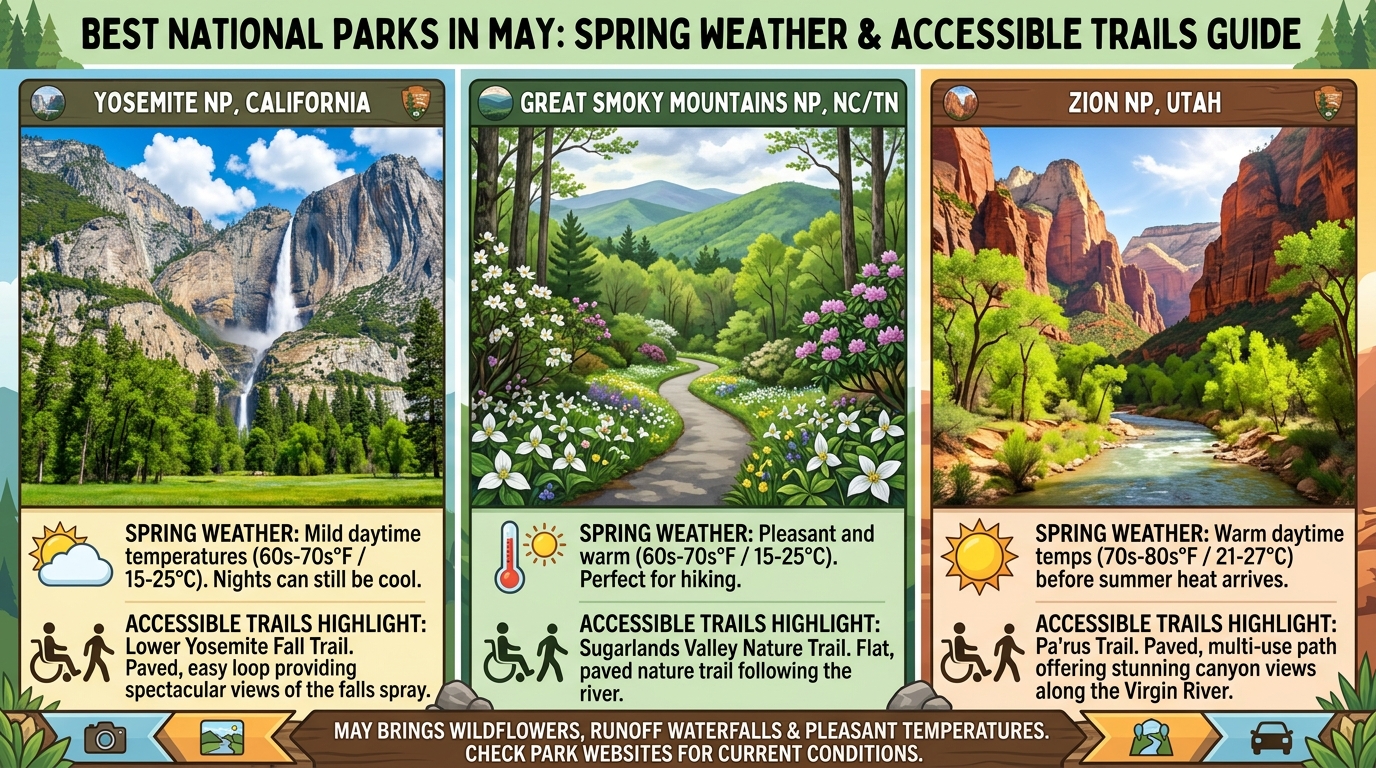
May is a wonderful shoulder season to explore national parks because the weather is mild in many regions and summer crowds have not yet arrived. Travelers seeking the best national parks in May will find a unique seasonal sweet spot across the United States. While summer months bring scorching temperatures and massive tourist numbers, May offers a comfortable window for outdoor adventures. Weather conditions vary wildly during this month, requiring careful destination selection based on regional geography.
Springtime across the national park system creates distinct contrasts. Desert floors begin to heat up, coastal areas showcase blooming wildflowers, and high-altitude mountain passes remain choked with deep winter snow. Understanding these regional weather patterns helps visitors maximize their time and avoid unexpected road closures or uncomfortable heat waves. For a broader look at regional planning, travelers can check out a western region national parks guide to understand how different landscapes shift during spring.
Navigating Arid Lowlands and Red Rock Canyons in May
Arid lowlands and red rock canyons offer warm spring temperatures before the extreme heat of summer takes over. Zion National Park and Joshua Tree National Park shine during this period with daytime temperatures that remain comfortable for hiking. Visitors can explore rugged canyon trails and unique desert flora without facing the blistering heat waves that arrive in June and July. Desert landscapes dry out quickly in May, providing stable footing and clear skies for photographers and outdoor enthusiasts alike.
Exploring desert environments in late spring requires careful water management and early morning starts. Although daytime temperatures are far more manageable than mid-summer extremes, afternoon sun can still catch unprepared hikers off guard. Popular trails see moderate foot traffic during this month, making it an ideal time to secure parking spots at busy trailheads before mid-morning rushes occur. Checking local ranger station forecasts daily ensures visitors stay informed about sudden wind advisories or temperature spikes.
Exploring Southern Wetlands and Coastal Shorelines in May
Southern wetlands and coastal shorelines provide pleasant outdoor conditions, blooming flora, and comfortable daytime temperatures in May. Parks located in southern regions experience warm sunshine and manageable humidity levels before the heavy summer air sets in. Coastal trails and wetlands display vibrant spring ecosystems, making wildlife viewing particularly rewarding. Bird migration peaks during this window, giving wildlife watchers exceptional opportunities to spot nesting species and active shorebirds.
Visiting southern ecosystems during late spring also allows travelers to enjoy outdoor water activities before seasonal insect populations surge in June. Coastal marshes, barrier islands, and southern wetlands remain comfortable for paddling, fishing, and ranger-led nature walks. Travelers looking for inspiration across different coastal regions can also explore resources detailing a comprehensive guide to eastern parks to compare spring experiences coast to coast.
Coping With High-Altitude Snowpacks and Closed Alpine Passes
High-altitude snowpacks and closed alpine passes define the mountainous national parks during May. Alpine destinations like Yellowstone National Park and Glacier National Park remain deep in a seasonal transition period. High-altitude mountain passes frequently stay blocked by snowpacks well into late spring. Visitors to mountain parks must prepare for sudden weather shifts, cold nighttime temperatures, and limited vehicle access to certain scenic overlooks.
Lower-elevation valleys within mountain parks often green up rapidly during May, offering gorgeous contrast against snow-capped peaks in the background. Wildlife viewing in these lower valleys is frequently excellent as bison, elk, and bear emerge from winter ranges to graze on fresh spring vegetation. Travelers hoping to drive famous alpine highways should always consult official park road status pages before planning their daily routes, as maintenance crews work continuously to clear heavy winter snow.
Essential Strategies for Spring Road Trips and Campsite Bookings
Spring road trips and campsite bookings require checking seasonal road closures and packing flexible gear for changing weather. Travelers should always verify current park conditions on official government websites before departing. Because weather patterns can change quickly between desert floors and mountain peaks, packing flexible clothing layers remains essential for safety and comfort. Advance campsite reservations are strongly encouraged as popular spring destinations fill up quickly.
Bringing adequate sun protection, sturdy footwear, and waterproof gear ensures a smooth experience across diverse park ecosystems. Rangers recommend starting outdoor excursions early in the morning to beat afternoon crowds and secure preferred parking spaces. Planning alternative itineraries provides a helpful backup plan if unexpected weather closes specific trails or scenic drives during your vacation.
Frequently Asked Questions About Visiting National Parks in May
Find answers to common questions about visiting national parks in May.
Are mountain national parks fully open in May?
Mountain national parks often have closed high-elevation roads and snowy trails in May due to lingering winter weather.
Is May too hot to visit desert national parks?
May brings warm and sunny weather to desert parks, but extreme summer heat waves usually have not arrived yet.
Do I need reservations for national parks in May?
Some popular national parks require advance reservations or timed entry permits for vehicles during peak spring visitation periods.
What should I pack for a national park trip in May?
Visitors should pack clothing layers, sturdy hiking boots, sunscreen, and rain gear to handle unpredictable spring weather.
Are crowds heavy at national parks in May?
May is generally less crowded than peak summer months, though weekends and holidays can still attract significant visitor numbers.
Can I see wildflowers in national parks during May?
Many desert and southern national parks feature vibrant wildflower blooms across valleys and trails during May.
Where can I check current road closures for national parks?
Travelers can check official park websites and visitor center updates for the latest road and trail status reports.

I’m Muhammad Ubaid, founder of YBR Magazine. I research and write detailed guides on America’s National Parks — covering entry fees, permits, best times to visit, and planning tips — using official NPS sources and up-to-date information.