

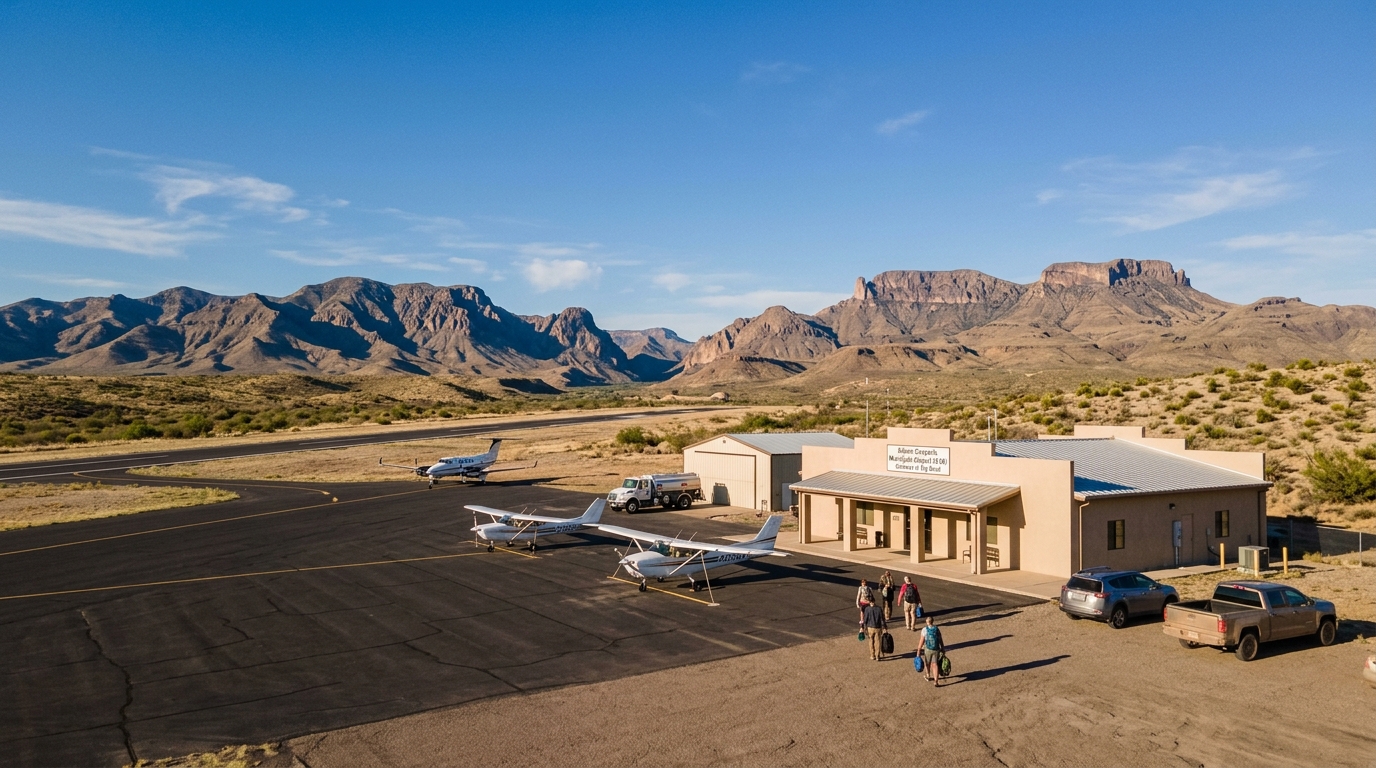
Big Bend National Park rests deep within the remote expanses of West Texas, far removed from major metropolitan centers. Travelers planning a desert vacation quickly realize that choosing an airport near Big Bend National Park requires balancing long driving hours against limited flight availability. Because commercial aviation does not serve the immediate park borders, visitors must land at regional or international airfields and embark on extended road journeys across sweeping desert landscapes. Understanding these transit dynamics helps ensure a smooth and well-prepared trip.
The Closest Regional Airstrips to Big Bend National Park
Choosing a local airstrip cuts down your driving time, but it comes with specific trade-offs regarding flight availability and car rentals.
Tiny local airstrips situated in Alpine and Marfa place travelers much closer to the physical boundaries of Big Bend National Park than any major commercial hub. However, these municipal fields cater primarily to private pilots and very limited commuter services rather than major national carriers. Travelers who manage to land at these local airstrips often face severe constraints when trying to secure a rental car, as major rental agencies rarely maintain counters on-site. For broader flight choices and dependable vehicle fleets, visitors usually look toward larger regional airfields despite the added road time. To coordinate your aerial entry alongside your overland route, reviewing details on West Texas flight routes can provide helpful planning context.
Flying Into Midland-Odessa Regional Airport
Midland-Odessa is often the most practical mid-range airport choice for balanced flight options and a manageable desert drive.
Midland International Air and Space Port acts as a popular choice for visitors wanting to minimize time behind the wheel without sacrificing airline connectivity. Major airlines including American, Southwest, and United operate regular flights into Midland from key Texas hubs like Dallas and Houston. Renting a vehicle here is straightforward, featuring multiple major rental brands with established airport counters. The drive south from Midland takes motorists through quiet West Texas ranching country before transitioning into rugged desert terrain as you approach the park.
Using El Paso International Airport for Your Trip
El Paso offers the widest selection of major airline flights and a straightforward drive across West Texas.
El Paso International Airport handles heavy commercial traffic, making it easier to find competitive airfares and frequent departure times. The drive east from El Paso follows historic West Texas highways across sweeping desert vistas and open plains. While this route demands a longer stretch on the road, travelers benefit from an abundance of rental car options and well-maintained interstate roads for the initial leg of the journey.
Major Texas Hubs Like San Antonio, Austin, and Houston
Starting from a major Texas city turns your journey into an epic road trip with plenty of unique stops along the way.
International travelers frequently land at massive hubs such as San Antonio International Airport or Austin-Bergstrom International Airport to kick off their vacation. Driving from San Antonio to Big Bend National Park takes roughly six to seven hours, while trips originating in Austin or Houston stretch past eight to ten hours behind the wheel. These massive metropolitan airports provide the largest global carrier networks and massive rental vehicle fleets. Many road-trippers embrace these starting points to explore historical towns and scenic country highways before reaching the remote desert wilderness.
Ground Transportation and Rental Cars From the Airport
Securing the right vehicle and understanding local gas stations and cell service are vital steps before heading into the park.
Driving through West Texas requires preparation that goes far beyond standard vacation planning. Visitors must confirm that their chosen rental car agency permits driving on unpaved park roads, as many backcountry trails require high-clearance vehicles. Cellular service drops significantly across large portions of West Texas, making offline digital maps an absolute necessity before departing. Furthermore, rural gas stations become sparse once you get deep into the desert, meaning drivers should refuel whenever their tank drops below the halfway mark.
Disclaimer: Flight schedules, airline routes, and rental vehicle guidelines change frequently. Always verify current operating details directly from official airline, car rental, and park management websites before finalizing your travel arrangements.
Frequently Asked Questions
What is the closest airport to Big Bend National Park?
The absolute closest municipal airstrips are located in Alpine and Marfa, but they offer very limited commercial airline service.
Which airport offers the best balance of flights and drive time?
Midland-Odessa Regional Airport provides a solid compromise with standard commercial flights and a manageable three-to-four-hour drive to the park.
How long is the drive from El Paso to Big Bend National Park?
The drive from El Paso International Airport to the park typically takes between five and six hours depending on traffic and your specific park entrance destination.
Can I rent a car at the smaller regional airstrips near the park?
Major rental car companies maintain very limited presences at small local airstrips, making Midland or El Paso much safer choices for vehicle rentals.
Do I need a special vehicle to drive inside Big Bend National Park?
Standard sedans handle paved park roads easily, but high-clearance vehicles are strongly recommended for exploring rugged dirt and backcountry roads safely.
Should I download offline maps before driving to the park?
Yes, cellular service is extremely unreliable throughout large portions of West Texas and inside the remote desert park boundaries.

I’m Muhammad Ubaid, founder of YBR Magazine. I research and write detailed guides on America’s National Parks — covering entry fees, permits, best times to visit, and planning tips — using official NPS sources and up-to-date information.