

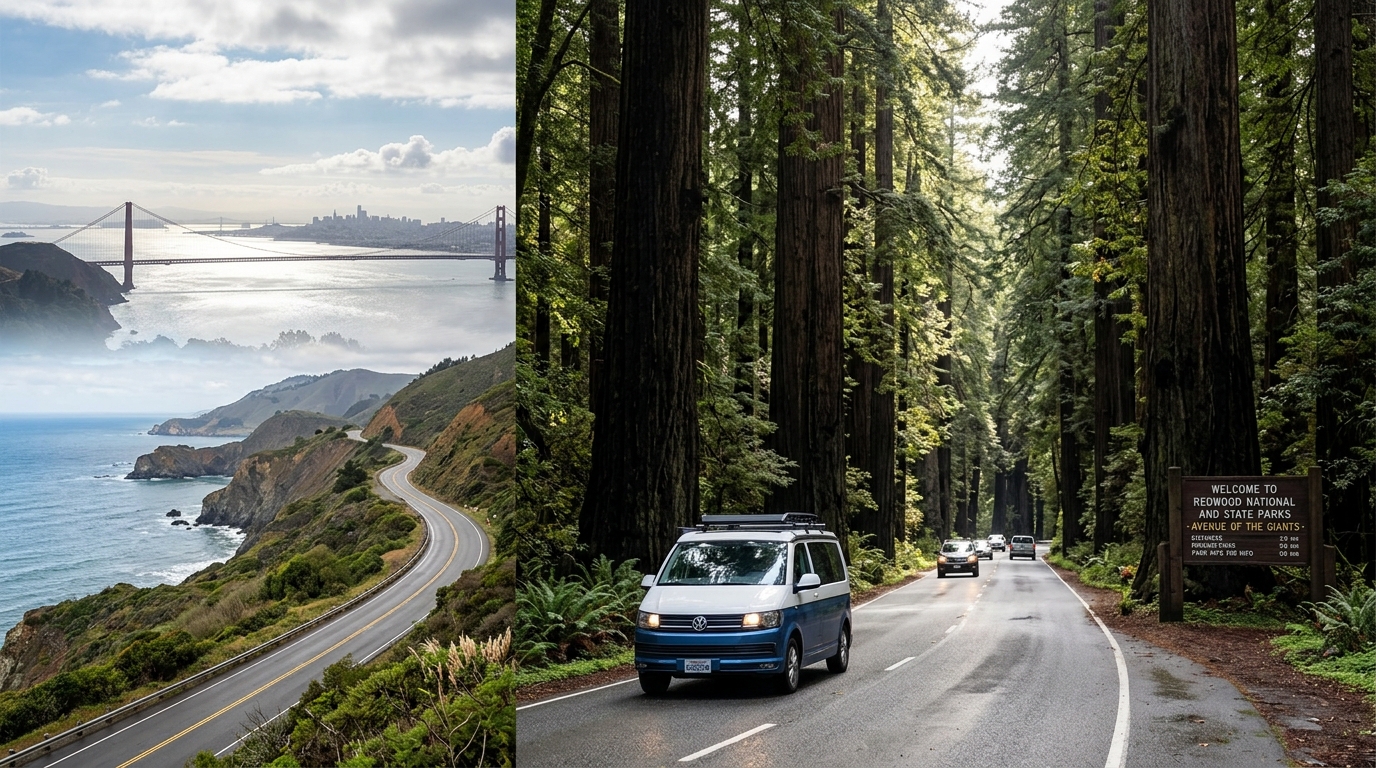
Planning a memorable northern California vacation starts with understanding the vast scale of traveling from San Francisco to Redwood National Park. Transitioning from bustling city streets to ancient, towering forests requires a solid grasp of driving distances, highway layouts, and clever pacing. Because these protected groves stretch across a long coastal strip rather than a single gated entrance, thoughtful preparation ensures a smooth journey north.
Understanding the Distance and Time Required for the Northern Journey
The driving distance from San Francisco to Redwood National Park spans roughly 300 to 350 miles, depending on the exact grove or visitor center you target.
A direct, nonstop drive typically consumes about 5 to 7 hours of active wheel time when traffic behaves. Motorists must remember that leaving the San Francisco Bay Area during morning or evening rush hours can easily add an extra hour of congestion before the highway opens up. Breaking up the miles into manageable chunks allows travelers to enjoy the changing scenery without feeling rushed or fatigued.
Navigating Your Departure From San Francisco International Airport
Travelers touching down at San Francisco International Airport can pick up a rental car and immediately point their vehicle northward toward the giant trees.
San Francisco International Airport sits south of the main downtown district, meaning drivers must navigate busy connectors like US-101 or Interstate 280 to bypass the urban core. Securing a comfortable vehicle with good fuel economy makes handling the long highway stretches much easier. Planning your initial driving route out of San Francisco International Airport before your flight lands prevents unnecessary wrong turns and keeps your itinerary on schedule.
Weighing the Benefits of Highway 101 Versus the Scenic Coast
Drivers making the trek from San Francisco to Redwood National Park can choose between a fast inland highway route and a wonderfully winding coastal path.
Taking US-101 straight through the interior provides the most direct and efficient drive, taking motorists past rolling agricultural valleys and charming wine country towns. Choosing the Pacific Coast Highway, or California State Route 1, offers dramatic ocean cliffs and rugged shorelines, but the narrow lanes add several hours of driving time. Most visitors prefer taking the faster interior route northward, saving coastal explorations for when they arrive at the northern parks.
Discovering Notable Towns and Rest Stops Along the Way
Breaking up a long day of driving with stops in welcoming regional hubs turns a tiring transit day into an exciting part of the vacation.
Communities like Santa Rosa, Eureka, and Crescent City provide excellent opportunities to stretch your legs, enjoy local food, or book comfortable overnight accommodations. Exploring these regional towns helps travelers rest before diving deeper into the old-growth forests. For more California adventure inspiration, travelers frequently compare these coastal routes with mountain getaways like planning a trip to Yosemite National Park or checking out guides on fresno to sequoia national park for rugged mountain road trip ideas.

Experiencing the Ancient Giants and Coastal Trails Upon Arrival
Once you finally reach the northern destination, dedicating enough time to explore the ancient trees and misty shorelines rewards every minute spent on the road.
Redwood National Park and its neighboring state parks protect some of the tallest living trees on earth, alongside peaceful fern canyons and quiet ocean beaches. Stopping by a local visitor center first gives hikers up-to-date trail maps and crucial weather safety briefings. Popular spots like the Lady Bird Johnson Grove and Prairie Creek Redwoods State Park let visitors walk quietly among massive trunks that tower hundreds of feet into the sky.
Frequently Asked Questions
How far is Redwood National Park from San Francisco?
The driving distance from San Francisco to Redwood National Park is roughly 300 to 350 miles, depending on which specific park visitor center or grove you visit. A direct drive usually takes about 5 to 7 hours without heavy traffic.
How far is San Francisco from Redwood National Park if I take the coast?
Taking the coastal route adds significant time to the trip because the roads are winding and narrow. Drivers should plan for a much longer journey if they choose to follow the Pacific Coast Highway the entire way.
Can I fly into an airport closer to Redwood National Park?
San Francisco International Airport is a major hub, but smaller regional airports like Charles M. Schulz-Sonoma County Airport are closer to the northern route. Travelers should check flight availability and rental car options to decide the best starting point.
What is the drive from San Francisco to Redwood National Park like?
The drive starts with heavy urban traffic leaving the San Francisco Bay Area before opening up into rolling wine country and eventually dramatic northern coastline. Drivers will transition from busy highways to quiet, two-lane rural roads as they head north.
How does a trip from San Francisco to Yosemite compare to the Redwoods?
Yosemite National Park is located east of the San Francisco Bay Area in the Sierra Nevada mountains, while Redwood National Park is straight north along the coast. Both trips require several hours of driving, but they offer completely different landscapes and weather conditions.
What are the best things to see in Redwood National Park?
Visitors can explore massive old-growth redwood trees, hike scenic coastal trails, and spot Roosevelt elk grazing in open meadows. Popular spots include Lady Bird Johnson Grove and Prairie Creek Redwoods State Park.
Disclaimer: Travel times, road conditions, and park rules can change due to weather, seasonal closures, or construction. Always verify current conditions with official sources like the National Park Service before starting your trip.

I’m Muhammad Ubaid, founder of YBR Magazine. I research and write detailed guides on America’s National Parks — covering entry fees, permits, best times to visit, and planning tips — using official NPS sources and up-to-date information.