

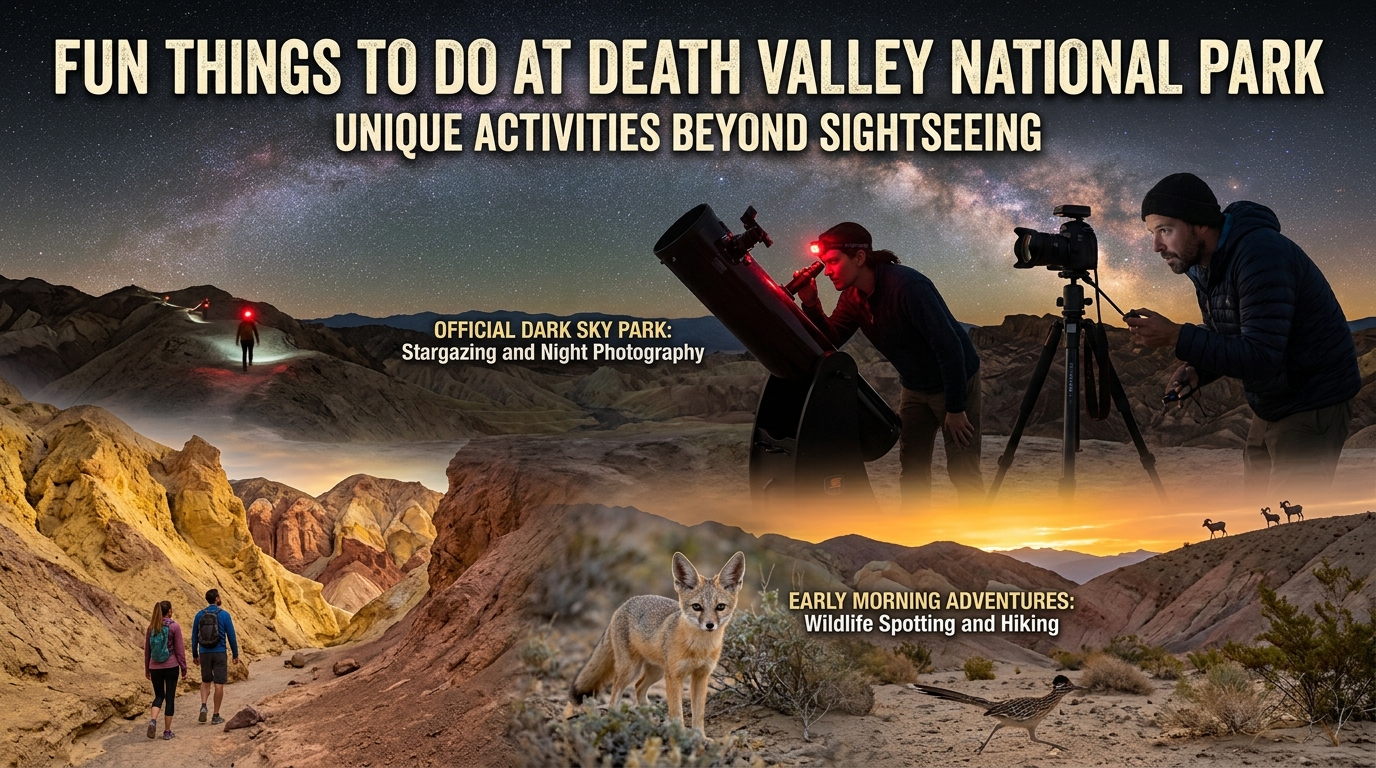
Death Valley National Park is a massive and striking desert landscape that offers visitors an entirely unique outdoor experience. Unlike lush mountain forests or coastal shores, Death Valley National Park features extreme terrain, vast salt flats, colorful badlands, and soaring sand dunes. Because the park covers a very large geographic area with extreme seasonal temperatures, travelers need to plan ahead to make the most of their visit. Understanding the layout and timing of your trip ensures that finding fun things to do at Death Valley National Park remains safe, exciting, and memorable.
Planning Your Trip to Death Valley National Park
Visitors must understand the remote desert geography and crucial safety rules before heading out into Death Valley National Park.
Death Valley National Park is located primarily in California, stretching across millions of acres of stark wilderness. Planning a trip here requires careful attention to the weather, because summer temperatures often reach dangerous, life-threatening levels. Most visitors prefer to explore Death Valley National Park during the cooler winter and spring months, typically running from November through March. Cell phone service is extremely limited or completely nonexistent across most of the park. Travelers should always carry extra drinking water, keep their gas tanks full, and check official park updates regarding road conditions before setting out on remote drives. For a deeper dive into scheduling your days, consider reading this guide on how many days to spend in Death Valley National Park to structure your travel window properly.
Best Places to See and Explore
This section highlights the iconic geological sights, such as salt flats and sand dunes, that visitors picture when they think of Death Valley National Park.
One of the most famous stops in Death Valley National Park is Badwater Basin, which sits at 282 feet below sea level and represents the lowest point in North America. Walking out onto the endless white hexagonal salt polygons provides an unforgettable visual experience. Nearby, visitors can explore the colorful, rolling clay hills of Zabriskie Point, which offers spectacular sunrise and sunset viewpoints. Another must-see location is the Mesquite Flat Sand Dunes, where rippling sand waves stretch toward surrounding mountain ranges. Driving through Artists Drive lets travelers witness volcanic hills painted in striking shades of green, purple, and pink due to natural mineral oxidation.
Unique Activities Beyond Sightseeing
This section gives travelers specific ideas for stargazing and photography that make Death Valley National Park distinct from other parks.
Beyond traditional daytime sightseeing, Death Valley National Park serves as an official Dark Sky Park, making it one of the finest places in the country for stargazing. Amateur astronomers and night sky photographers gather at remote spots like Harmony Borax Works or Zabriskie Point to view the Milky Way arching clearly overhead. Wildlife watchers can spot bighorn sheep, kit foxes, and roadrunners if they remain quiet and observant during early morning hours. Hiking up to Golden Canyon offers a closer look at towering yellow mudstone walls carved by flash floods over thousands of years.

Suggested Itineraries for Your Visit
The vast distances between attractions mean visitors need a clear plan to see the highlights efficiently in Death Valley National Park.
Because attractions are spread out across hours of driving, a single day in Death Valley National Park usually focuses on the central Furnace Creek corridor. Travelers can start their morning with sunrise at Zabriskie Point, descend to Badwater Basin by mid-morning, and tour Artists Drive before the afternoon heat peaks. Visitors with extra days can expand their itinerary to include remote wonders like the Racetrack Playa or the historical mining ruins at Rhyolite just outside the park boundary. Balancing driving time with outdoor exploration keeps every trip enjoyable and prevents exhaustion in the arid climate.
Frequently Asked Questions
What are the best months to visit Death Valley National Park?
The best months to visit Death Valley National Park are from November through March, when daytime temperatures are mild and comfortable for outdoor activities.
Is swimming possible in Death Valley National Park?
Swimming is not available in natural bodies of water, but some resort pools located within the park at Furnace Creek provide a refreshing oasis for guests.
How much water should I bring into Death Valley National Park?
Park rangers recommend carrying at least one gallon of water per person per day, especially if you plan to do any walking or hiking away from your vehicle.
Are pets allowed on trails in Death Valley National Park?
Pets are generally restricted to developed areas, roads, and campgrounds, and they are not allowed on dirt trails due to the extreme heat and sharp terrain.
Do I need a special vehicle to drive in Death Valley National Park?
Most main tourist sites are accessible by standard passenger cars, but remote backcountry roads require a high-clearance vehicle with sturdy tires.
Where is the main visitor center located in Death Valley National Park?
The Furnace Creek Visitor Center is the main hub for park information, exhibits, and ranger interaction, located centrally within Death Valley National Park.
Disclaimer: Park conditions, weather patterns, and facility hours can change unexpectedly. Always verify the latest safety alerts and park guidelines from official National Park Service sources before your journey.

I’m Muhammad Ubaid, founder of YBR Magazine. I research and write detailed guides on America’s National Parks — covering entry fees, permits, best times to visit, and planning tips — using official NPS sources and up-to-date information.