

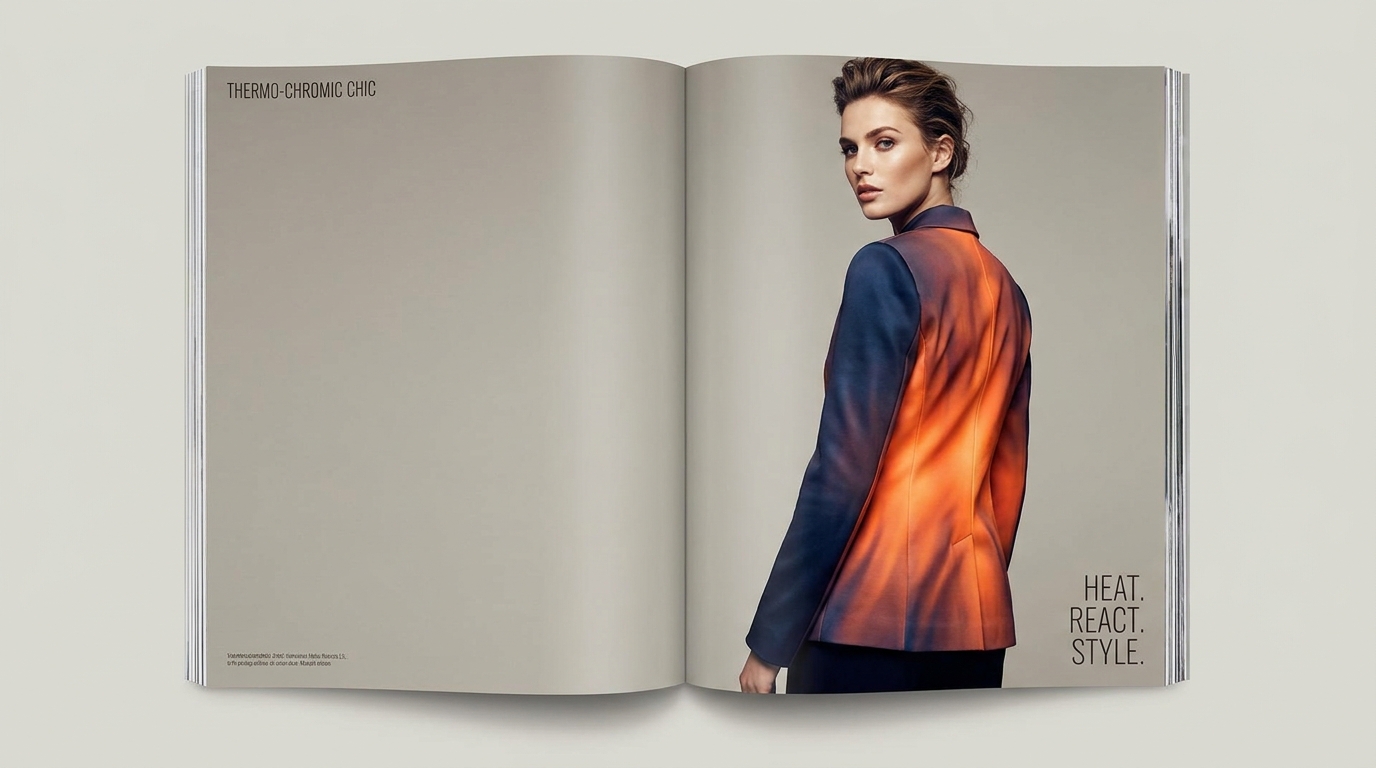
Color changing fabric technology has moved from a quirky novelty of the 1990s into a serious area of textile innovation that fashion brands, material scientists, and investors now watch closely. In this market analysis of color changing fabric technology in the fashion industry, we look at how the technology works, how large the market is, which companies and designers are shaping it, and which obstacles still slow its growth. Whether you are a designer, a sourcing manager, a student, or simply curious, the sections below give you a clear and balanced picture of where this market stands today and where it is likely to go next.
What Is Color Changing Fabric Technology?
Color changing fabric, often called chromic textile, is a material that shifts its color in response to an outside trigger and, in most cases, returns to its original shade when that trigger disappears. The trigger can be heat, ultraviolet light, water, an electrical signal, or even a change in acidity, and each trigger leads to a different family of technologies with its own strengths and limits. Because the change is reversible, the fabric can transform many times during its life, which is what separates this category from ordinary dyed cloth and makes it appealing for garments that are meant to feel interactive.
The idea reached mainstream attention in 1991, when the Hypercolor line of T-shirts and shorts changed color with body heat. Those garments worked by combining a fixed fabric dye with tiny capsules of thermochromic dye, so that at lower temperatures the capsules added their own color and at higher temperatures they turned colorless, leaving only the color of the fabric. The effect was famously fragile, because washing in hot water, ironing, bleaching, or tumble drying could permanently damage it. That early weakness shaped how consumers viewed the whole category for years, and modern research has focused heavily on fixing it.
The Main Types of Color Changing Textiles
Understanding the technology is the first step in understanding the market, because each type serves a different purpose in fashion. Thermochromic textiles react to temperature and are the most common choice for apparel, since a garment can respond to body heat, weather, or a splash of cold water. Many thermochromic systems rely on leuco dyes, which switch between a colorless and a colored form depending on heat, light, or acidity, while others use liquid crystals that display different colors across a narrow temperature range of roughly 24 to 29 degrees Celsius.
Photochromic textiles react to ultraviolet light, which means a white or pale garment can reveal bold colors in sunlight and then fade back indoors. Hydrochromic fabrics change when they get wet, a trick that brands have used for water-activated swimwear, including color-changing swim trunks that came back into fashion in the early 2020s. Electrochromic textiles are different because they change color when a small voltage is applied, which allows precise, on-demand control but requires conductive materials and a power source, making them more complex and costly than pigment-based options.
Market Size and Growth Forecast
Market research on this topic varies because firms draw the boundaries of the category in different ways, so it is wise to treat every figure as an estimate rather than a fixed fact. The broadest published view comes from a January 2026 report on reversible textile coloring, which values the global market at about USD 23.4 billion in 2024 and projects growth to roughly USD 50.1 billion by 2034, a compound annual growth rate of 7.9 percent between 2025 and 2034. This category covers thermochromic, photochromic, and electrochromic coloring across apparel, home textiles, sportswear, and automotive interiors, so it is wider than fashion alone.
Narrower studies give lower numbers because they count only the specialty materials themselves. One analysis of chromogenic materials estimates the market at about USD 2.49 billion in 2025 and expects it to reach about USD 5.86 billion by 2034, which equals a growth rate close to 10 percent a year. An earlier forecast for smart and interactive textiles projected the market would pass USD 16.4 billion by 2030 and expected the chromic segment, meaning materials that change color reversibly with environmental conditions, to exceed USD 4.1 billion within that total. Although the absolute values differ, all of these studies point in the same direction, which is steady growth driven by demand for expressive and functional clothing.
| Segment (2024 reference year) | Reported share |
|---|---|
| Thermochromic coloring (by technology) | 47.5% |
| Polyester (by fiber type) | 41.9% |
| Apparel and fashion (by application) | 39.7% |
| Asia Pacific (by region) | 41.6%, about USD 9.7 billion |
What Drives Demand in Fashion
The strongest driver is the desire for clothing that tells a story, because a garment that changes in front of an audience is far more likely to be photographed, shared, and remembered than one that stays the same. Reports on the market note that social media and fast fashion cycles reward visual surprise, and that brands use color change in jackets, dresses, athleisure, and accessories to create limited editions and statement pieces. Premium and experimental labels also value the technology as a way to separate a collection from the crowd on a crowded retail floor.
A second driver is sustainability, which may sound surprising for a category that relies on specialty pigments. The link comes from the fibers themselves, since polyester is the most widely used base for color-changing treatments and recycled polyester and recycled nylon can carry smart pigments without losing performance. As textile-to-textile recycling plants expand, brands gain access to cleaner recycled inputs, and some designers argue that a single garment that changes appearance can replace several pieces, which supports the idea of buying less and wearing more. This argument is still being tested in practice, but it is increasingly part of how brands describe their products.
Who Is Shaping the Market

On the materials side, the market is led by pigment and chemical specialists rather than by fashion houses. Companies frequently named in industry reports include Chromatic Technologies Inc., LCR Hallcrest, OliKrom, Matsui Shikiso Chemical, QCR Solutions, Smarol Industry, New Color Chemical, Devine Chemicals, BASF, and Flint Group. Their role is to supply stable pigments that textile manufacturers can print or coat onto fabric, and their value lies in repeatable color transitions that survive real production conditions.
On the design side, a handful of creative labels have shown what the technology can do at the highest level. Japanese brand Anrealage presented an autumn and winter 2023 collection at Paris Fashion Week in which all-white garments revealed colors and patterns as a moving ultraviolet light passed over them, using photochromic faux fur, velvet, lace, knit, jacquard, and satin. According to coverage of the show, the garments returned to their original appearance in about three minutes once the light was removed. Italian menswear maker Stone Island took a different route with thermochromic yarns in its Ice Knit sweaters, where heat-sensitive pigments become more transparent as the temperature rises so that the underlying color shows through. Smaller labels are experimenting too, such as Rensuke Tokyo, which hand-prints garments that begin to change at about 71 degrees Fahrenheit (around 22 degrees Celsius) and turn fully transparent near 88 degrees Fahrenheit (around 31 degrees Celsius), and designer Kim Mesches, who has built sculptural thermochromic pieces from pigment-filled resin instead of woven cloth.
Regional Analysis
Asia Pacific is the clear leader, accounting for about 41.6 percent of the reversible textile coloring market in 2024, which translates to roughly USD 9.7 billion. The region combines large apparel manufacturing bases, a big consumer population, and a fast pace of adoption for functional and novelty textiles, and China in particular is a major producer of heat-reactive fabrics for jackets, caps, bags, and shoes. North America follows with steady interest in smart apparel, performance wear, and lifestyle fashion, while Europe shows stable demand supported by design-led fashion houses and a strong tradition of advanced textile research.
The Middle East and Africa are described as an emerging landscape where growth is tied to expanding apparel markets and rising awareness of specialty textiles, and Latin America is progressing at a moderate pace as local fashion industries mature. For manufacturers and exporters in textile-producing countries, including South Asian hubs, this regional picture suggests that the technology offers an opportunity to move from basic production toward higher-value, innovation-led products, provided that they can meet the technical quality standards that global brands require.
Key Challenges Holding the Market Back
The most persistent challenge is durability. Pigments that change color need to survive washing, rubbing, sweat, sunlight, and the heat of everyday care, and the legacy of the Hypercolor era shows how quickly a promising effect can disappear when it cannot withstand ordinary laundry. Manufacturers have improved pigment stability and wash resistance, but color-changing garments still tend to need gentler care than ordinary clothing, and this can discourage buyers who want easy maintenance.
Cost and complexity are the next hurdles. Industry analysts note that smart fabrics are more expensive to produce than conventional ones because they require high-end materials and, in some cases, electronic components, and that the absence of widely accepted standards makes it harder for large companies to scale new products with confidence. Financial pressure across the wider fiber industry adds to the caution, since brands are reluctant to take on extra production complexity when margins are already thin. There is also a design challenge, because a color effect that looks stunning on a runway under controlled lighting must still look attractive in a normal office, a shopping mall, or a rainy street.
Opportunities and Emerging Trends
Several trends suggest the market is moving from novelty toward practical use. Improvements in recycled nylon and polyester mean that color-changing treatments can be applied to sustainable fibers, which makes them more acceptable for brands that publish environmental targets. Bio-based chemistry and advanced recycling pathways are creating new options for pigments and polymers, and this opens the door to products that combine visual innovation with a smaller environmental footprint.
Another opportunity lies in functional fashion. Color change can act as a visible signal, for example by showing when a sports garment has warmed up, when a worker is exposed to heat, or when ultraviolet exposure is high, which blends style with useful information. Digital textile printing, which allows color to be applied on demand with less waste, also complements this shift because it lets brands produce small, customized batches of color-changing designs rather than large and risky runs. Together these developments point toward a future in which color change appears not only in statement pieces but also in everyday sportswear, outerwear, and accessories.
How Brands and Buyers Can Benefit

For brands, the practical approach is to start with limited editions or capsule collections, where the novelty justifies a higher price and the risk of unsold stock is small. Testing pigments for wash fastness, light fastness, and temperature accuracy before a full production run protects both the budget and the brand reputation, and clear care labels help customers keep the effect alive. Working closely with pigment suppliers also pays off, since the temperature at which a color changes can be tuned to suit the wearer, the climate, and the style of the garment.
For consumers, the best habits are simple and inexpensive. Washing color-changing clothing in cool water, avoiding bleach, skipping the tumble dryer, and keeping garments away from direct ironing will extend the life of the effect considerably, and storing them away from strong sunlight helps photochromic pieces stay responsive. Reading the care label is especially important, because the technology differs from one product to another and so do the limits.
Frequently Asked Questions
How does color changing fabric work?
The fabric contains special pigments or fibers that react to a trigger such as heat, ultraviolet light, water, or electricity. When the trigger changes, the pigment shifts between two states, and the fabric appears to change color, then returns to normal when the trigger is removed.
Is color changing clothing durable?
Durability depends on the type of technology and the quality of the pigment. Modern products are more stable than the early Hypercolor garments, but hot washing, bleaching, ironing, and tumble drying can still reduce the effect, so careful washing is recommended.
Which technology is most common in fashion?
Thermochromic coloring is the leading type, holding about 47.5 percent of the reversible textile coloring market in 2024, because it reacts to temperature and is relatively simple to apply to everyday apparel.
Which region leads the market?
Asia Pacific leads with about 41.6 percent of the market, supported by its large garment manufacturing base and strong consumer demand.
Is color changing fabric sustainable?
It can be, particularly when applied to recycled polyester or recycled nylon, but its overall impact depends on the pigments used, the durability of the garment, and how long the wearer keeps it. Sustainability claims should be checked product by product.
Conclusion
The market for color changing fabric technology in fashion is growing on the back of consumer curiosity, social media visibility, and steady advances in pigments, recycled fibers, and printing methods. Estimates differ depending on how each research firm defines the category, but they agree that the direction is upward, with thermochromic coloring, polyester fabrics, apparel applications, and Asia Pacific production leading the way. Durability, cost, and the lack of common standards remain real obstacles, yet the most promising developments, such as recycled fiber compatibility and functional color signaling, are aimed squarely at those weaknesses. Brands that test carefully, communicate care instructions clearly, and treat color change as a meaningful design feature rather than a gimmick are likely to be the ones that turn this technology into lasting value.
Disclaimer: This article is provided for general informational purposes only. Market figures, forecasts, and growth rates come from third-party research reports published at different times and using different definitions, so they are estimates and may change as new data becomes available. Brand and product examples are mentioned to illustrate the technology and do not represent an endorsement or a recommendation to buy. Readers should verify current figures and product details independently and seek professional advice before making business, investment, or purchasing decisions.
Explore More
London Fashion Beauty Brands Content Studio Hire North West: Costs, Studios and Booking Tips

I’m Muhammad Ubaid, founder of YBR Magazine. I research and write detailed guides on America’s National Parks — covering entry fees, permits, best times to visit, and planning tips — using official NPS sources and up-to-date information.

