


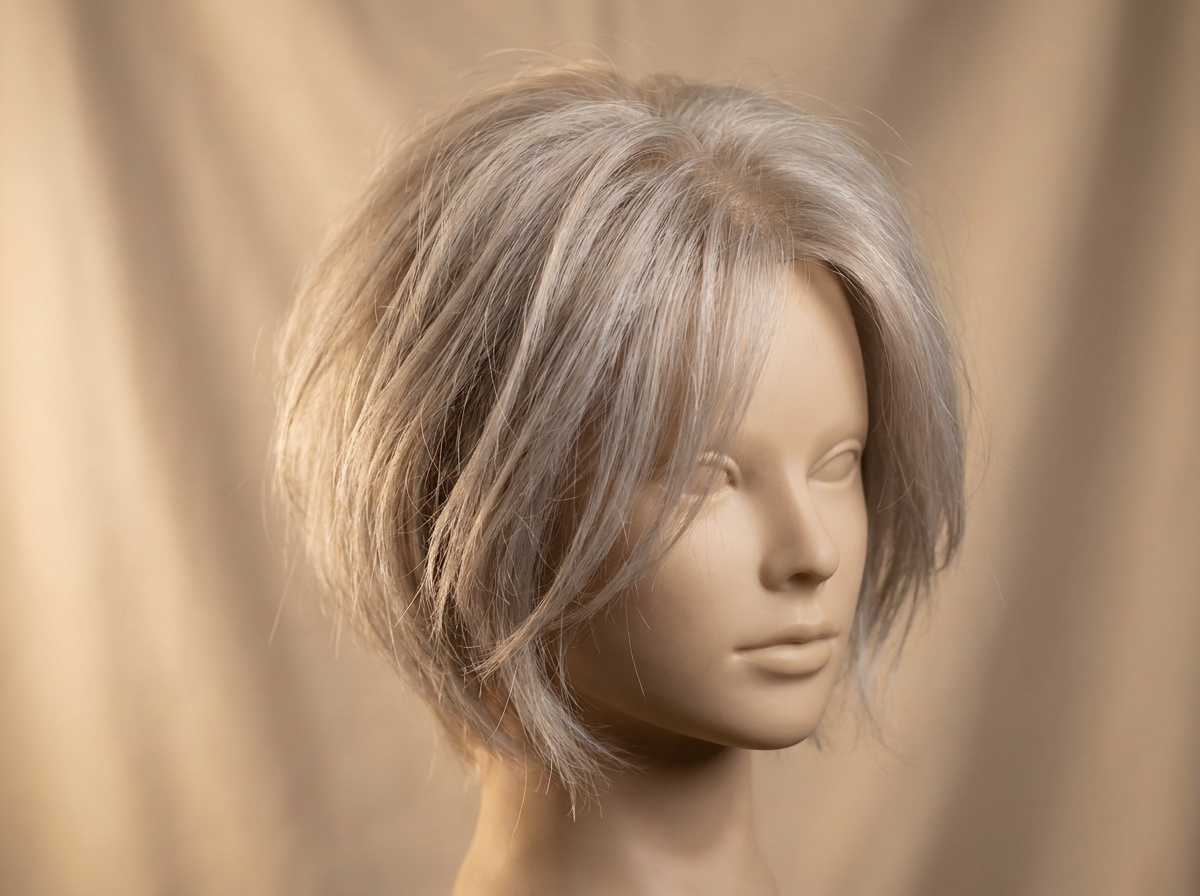
A fine hair bixie haircut can make limp strands look noticeably fuller, but it can just as easily leave them looking wispy, and the difference usually comes down to where your stylist leaves the weight. The bixie sits between a pixie and a bob, typically around chin length, with short layers through the crown and nape and longer pieces framing the face. A stylist quoted by Allure recommends it for fine to medium hair, and Grazia’s expert says its layers add fullness, while other stylists warn that heavy layering makes fine hair look thinner. Both groups have a point, and this guide shows how to end up on the right side of that line.
Why stylists give fine hair opposite advice about the bixie
Read enough coverage of this cut and you run into a contradiction. Stephanie Angelone, a hair extension specialist quoted by Grazia, says the layered shape gives fine hair instant fullness and reads lighter than a traditional bob, which can look heavy. A stylist speaking for Redken makes a related point, that going shorter often makes limp hair look fuller. On the other side, Mark Blake, a Nioxin trichologist and stylist, told Who What Wear UK that fine hair lacks the body to hold a shattered, choppy shape, and a stylist quoted by New Beauty cautions that extreme undercutting or thinning can strip out so much density that hair looks sparse.
These claims fit together once you separate the two things layers do. Short layers at the crown take weight off the roots, so they lift, and that is the volume everyone praises. The same layers, if they run everywhere or get thinned out with shears, also remove the bulk that makes the ends look thick. A bixie works on fine hair when the lift is built at the top and the outline stays dense, and that placement is the main thing to settle with your stylist before any scissors come out.
Fine, thin, or both? Check before you book
People use the two words interchangeably, but stylists and dermatologists treat them as different things. Fine describes the width of a single strand, while thin describes density, meaning how many strands grow in a given area of scalp. Stylist Sam McKnight, speaking to Elle, suggests rolling one hair between your thumb and finger: if you can barely feel it, it is fine. For density, trichologist Shab Caspara says that being able to see your scalp easily along the part points to low density, and Elle adds a ponytail guide in which a ponytail measuring under two inches suggests low density, two to four inches medium, and over four inches high.
The two traits combine in different ways, and each combination calls for a slightly different bixie.
| Your hair | What to lean on | What to watch |
|---|---|---|
| Fine strands, plenty of hair | Soft internal layers and crown texture, as the layering advice above describes | Pieces cut so short that the ends turn see-through at the nape |
| Fine strands, low density | A firmer outline, fewer layers, and no heavy use of thinning shears | A crown cut so short that the scalp shows through |
| Medium strands, low density | Soft, diffused edges so the shape does not look stiff | Caspara suggests blunter, unlayered short cuts for thin hair, so the layering needs careful tailoring |

What a well-cut bixie looks like on fine hair
Stylist Paul Percival describes a typical bixie as cut into the nape of the neck with graduation at the back, which is what gives it its short, tidy base. On fine hair that graduation works best when it is gentle, because the back is where too much removal shows up first. Stylist Picciano, quoted by New Beauty, says volume starts in the cut itself: leave some length and add texture at the crown, then let product do the rest. His colleague Robinson adds that the cut should follow your hair’s natural fall and keep a little weight in strategic spots so the whole shape reads as thicker.
The front matters just as much. Grazia’s advice is to ask for short, choppy layers through the crown and sides and a few longer face-framing pieces, which soften the shape and give you something to style. For the outline, Ulta Beauty’s Ammon Carver notes that a blunt perimeter keeps fine hair looking full even when you add waves or curls, and Picciano warns that a completely smooth, untextured finish can look flat. The sweet spot is a perimeter that stays reasonably solid with texture added on top, not a fully blunt cut and not a fully shattered one.

What to say in the chair
The wording you use can steer the result. In a widely syndicated fall guide, stylist Spino suggests describing the cut as heavily layered, textured and shattered, which is reasonable for thick hair but close to the exact shape Blake advises fine hair to avoid. A better phrase for fine or thinning hair comes from stylist Diaz, who recommends asking for a soft bixie with diffused edges and movement.
Photos help, but choose them carefully, because many bixie examples show thick or wavy hair that behaves very differently from fine straight strands. Look for a picture of someone whose hair resembles yours, and ask the stylist directly whether they have cut bixies on fine hair before. It also pays to mention any cowlicks or strong growth patterns up front, since a short cut shows them more than a long one does.
Length, fringe, and parting
The bixie has no official measurement. Grazia places it around the chin but says it can go shorter or longer, a stylist quoted by Harper’s Bazaar puts the closely related pixie-bob at roughly the cheekbones to just below the ears, and Marie Claire’s stylists stress that the difference from a pixie mostly comes down to length, with nobody checking it against a ruler. For fine hair, it is worth treating the range from cheekbone to chin as your starting zone and letting the stylist decide where inside it your density works best.
A fringe needs a similar rethink. Stylists quoted by AOL say a soft curtain bang can be cut from a very small section at the hairline, which adds shape without using up much density, whereas a blunt fringe thins out quickly and puts too much attention on the middle of the face. Your parting also does more work than you might expect. Goop’s stylist Jae-Manuel Cardenas argues it may matter more than the cut, and a side part is a common volume trick for layered styles. If a cowlick fights the shape, a stylist in PureWow’s short-hair guide suggests blow-drying it down against its natural direction while using a brush to build roundness.
Styling a fine hair bixie without flattening it
Short layers do much of the work, so the routine can stay light. Stylists quoted by AOL suggest working a volumizing mousse or root-lifting spray into damp hair, concentrating on the crown, then drying with your fingers or a small round brush to encourage lift. Davines recommends lightweight, residue-free options such as sea salt spray, mousse, or texture powder for fine hair, and a dry texture product is also handy for lifting the roots on the second day.
Heavier products usually backfire. Carver says a lightweight volumizer and a setting spray are often enough, and that heavy oils or creams can leave fine hair lifeless. Grazia’s guide adds that wax gives definition and hold, so a small amount worked through the ends is plenty. Heat deserves restraint too, since stylist Trygstad points out that finer hair is more prone to damage from hot tools.

How often a bixie needs a trim
The advice here is less consistent than it first appears. Cardenas says to trim a bixie every four to six weeks, while Angelone argues that the cut grows out gracefully and needs fewer visits than most short styles. Both can be true depending on the look you want. A crisp, sharply shaped version needs the shorter schedule, whereas a softer, lived-in version tolerates longer gaps. Fine hair adds a second consideration, because Healthline’s expert notes that very fine hair breaks more easily, which can mean a quick trim as early as every six weeks.
The back and sides usually get untidy faster than the top, and one stylist suggests asking for a quick tidy of those areas between full appointments, so you can stretch the interval without losing the neckline.
Bixie, pixie-bob, wixie: sorting out the names
Because the bixie is a hybrid, the labels overlap. Harper’s Bazaar calls the same family of cuts the pixie-bob, and other publications mention a “mixie,” while stylist Jennifer Korab describes the wixie as a pixie combined with a short shag. The names matter less than the shape, so bring photos and describe the length and texture you want instead of relying on a single word. The bixie also has a past: Grazia notes it was popular in the 1990s, naming Princess Diana, Winona Ryder, and Meg Ryan among its wearers, and that the current revival leans toward the lower-maintenance, grown-out version.
Who should think twice
If your crown is very sparse, a bixie can still work, but it needs the most careful cutting, and a blunter short style may flatter you more. Colour is another consideration. Trygstad advises finding a colorist who is conservative with bleach, because fine strands have less margin for damage. The cut itself has no age limit, with Diaz describing it as best on fine to medium textures with some natural wave or bend, and Angelone calling it an excellent option for older clients who want something shorter that still feels modern.
A short note on health: thin hair, meaning low density, is different from thinning hair, which means you are losing hair. Dermatologist Helena Kuhn, quoted by The Shampoo Lounge, advises seeing a dermatologist or trichologist if thinning persists. A haircut can change how hair looks, but it cannot address the cause of shedding.
The bottom line
A fine hair bixie haircut earns its popularity when the stylist builds lift at the crown, keeps the outline dense, and uses shears sparingly. Test your strand width and density first, bring photos that match your hair, choose soft wording over “shattered,” and plan for trims that suit the sharpness you want. Done that way, the cut gives fine hair what it usually lacks: shape, movement, and the look of more hair than you actually have.
EXPLORE MORE: Joe Jonas and Camilla Belle: What Really Happened, and What Other Pages Get Wrong

I’m Muhammad Ubaid, founder of YBR Magazine. I research and write detailed guides on America’s National Parks — covering entry fees, permits, best times to visit, and planning tips — using official NPS sources and up-to-date information.

