


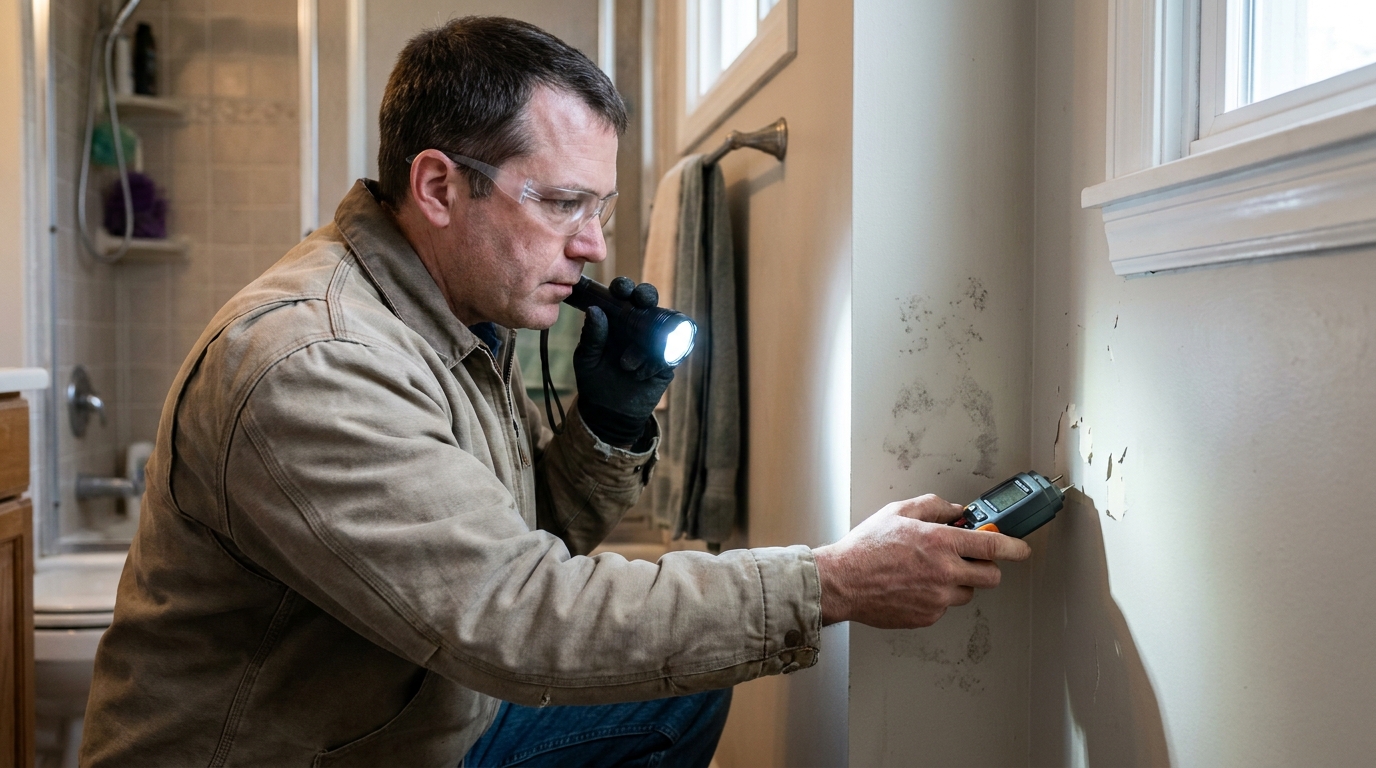
If you are trying to work out how to get a free mold inspection, the honest answer is that it is possible in several situations, but the word “free” covers a very wide range of services. Some offers are genuine public-health programs or landlord obligations, while others are a sales visit from a cleanup company. This guide explains the legitimate routes for renters, homeowners, and home buyers, what each one usually includes, and when paying for an independent inspector is the smarter move.
Many of the pages that rank for this search are near-identical copies of the same generic article, and they contradict one another: some claim that free inspections are just as thorough as paid ones, while others warn that the scope is deliberately limited. Because those pages rarely cite anyone, this guide relies instead on public statements from health departments, housing agencies, and university extension services. Most of those sources are from the United States, so rules in other countries may differ.
Quick Facts
| Topic | What to know |
|---|---|
| Is there a national free program? | None was identified in official sources. Availability depends on where you live, whether you rent or own, and sometimes on a health condition such as asthma. |
| What a free visit typically covers | A visual check of accessible areas. Ask in advance whether lab sampling and a written report are included. |
| Typical paid cost, for comparison | One analysis of 343,231 inspector quotes found an average of $687 and a range of $165 to $2,967. Other guides publish different ranges. |
| Fastest no-cost first step | Photograph the problem, and if you rent, send your landlord a dated written request. |
What a Free Mold Inspection Usually Includes
In most situations a free inspection is a visual walk-through rather than a laboratory investigation. The inspector looks for visible growth, water stains, peeling paint, warped materials, and musty odors, and some inspectors also take moisture readings in areas that stay damp. A landlord-focused guide from TenantCloud lists a visual check for visible growth as the baseline of a free visit and advises asking whether laboratory testing is part of it, which is a sensible question for any offer you receive.
Free visits also differ in who performs them and why. A city or county inspector is usually checking whether a rental meets minimum health and safety rules, a healthy homes program is looking at asthma triggers, and a company is usually assessing whether you need its services. The purpose of each visit shapes what you will actually receive, which is why the rest of this guide sorts the options by who is doing the inspecting.
Do You Need Mold Testing at All?
Anyone researching how to get a free mold inspection should first know that major health agencies are cautious about routine mold testing. The U.S. Environmental Protection Agency says in its mold remediation guidance that, in most cases, sampling is unnecessary when mold growth is visible, and it notes that no federal limits exist for mold or mold spores, so test results cannot show whether a building meets a federal standard. The Centers for Disease Control and Prevention takes a similar line, advising that if you can see or smell mold you should remove it whatever type it is, and that it does not recommend routine sampling.
Part of the reason is that mold spores are present in indoor and outdoor air all the time, so a positive result is expected almost anywhere. The Los Angeles County risk management office goes further, stating that air testing for mold has not been standardized or validated by scientific agencies, that the same report is often read in different ways, and that remediation should not rest on test results alone. In its view, indoor samples only mean something when they are compared with outdoor samples.
When an inspection or test does make sense
None of this means inspections are pointless. The Massachusetts Department of Public Health notes that testing can occasionally help identify which materials remain an ongoing source of mold during cleanup, and that it can be appropriate when a treating doctor requests it for a diagnosed respiratory fungal infection. Nebraska’s health department adds that testing may be needed for legal or insurance purposes, and Virginia Cooperative Extension says litigation can require it, especially to document that contamination has been reduced.
The most common valid reason is hidden moisture. When you smell mold or have had a leak but cannot see any growth, a skilled inspection that traces the water source is far more useful than a lab sample, because extension specialists point out that a test cannot tell you where mold is growing.
How to Get a Free Mold Inspection as a Renter

Renters usually have the strongest claim to a no-cost inspection, because in many places the landlord is legally responsible for keeping a home fit to live in. The Minnesota Department of Health, for example, points to state law placing that duty on landlords and encourages tenants to report moisture or mold promptly, check their lease, and ask for repairs within 14 days. Time limits and tenant remedies differ from state to state, so treat that example as a model rather than a universal rule.
Put the request in writing
Send a dated email or letter that names the room, describes what you see, attaches photos, and asks the landlord to have the area inspected and repaired, then keep a copy for yourself. This record matters beyond the landlord relationship, because city complaint forms often ask whether you already contacted the owner. A tenant-requested inspection form from a city in Kansas, for instance, asks tenants to show that they notified the landlord in writing and allowed reasonable time before the city steps in.
Ask the health department or code enforcement office
If the landlord does not respond, contact your local health department, housing code office, or housing authority and ask whether they inspect rentals for mold, whether the visit costs anything, and what it covers. Local practice varies a great deal. Minnesota’s state health department says it does not provide mold inspections or testing itself, although some local health departments there can declare a public health nuisance and order a landlord to correct the problem. The Kansas city mentioned above explains that its rental inspectors cannot test or measure for mold and can act only on visible mold, and it tells tenants who want a deeper evaluation to hire an attorney or a mold inspector.
In practice, then, the free inspection a tenant gets from an agency is usually visual and focused on health and safety rules, which is often enough to require repairs even though it will not produce lab results. Many places also protect tenants from retaliation for contacting a health department, and an attorney with a legal clinic quoted by an Indianapolis news station said a landlord cannot evict someone for making that call, though protections differ by location. The Marion County health department said in the same coverage that stopping rent payments can limit what the agency can do, so it is wise to speak with a tenant union or legal aid office before withholding rent.
Subsidized and public housing
Tenants in subsidized housing start the same way, with a written repair request to property management, and the Minnesota Department of Health notes that people receiving rent assistance may have a social worker who can mediate and that the local HUD office is a next step if the owner does not act. The U.S. Department of Housing and Urban Development also publishes a mold standard within its physical inspection standards, and that guidance lists simple tools such as a flashlight, an inspection mirror, and a distance-measuring device, which gives a realistic picture of what these inspections involve. According to one housing compliance consultancy, HUD inspectors can cite leaks and other moisture conditions even before mold appears, so reporting a leak early can be as useful as reporting visible growth.
Free Home Assessments for Households With Asthma

Some of the most thorough no-cost assessments come from healthy homes programs, which are usually tied to asthma and run through local or state health departments. New York City’s Healthy Neighborhoods Program provides free home assessments to children and adults diagnosed with persistent asthma, but only through a referral from a health care provider, and renters whose homes have pests or mold can qualify. Ramsey County, Minnesota, has described a program that sends an environmental health specialist and a public health nurse to check for moisture, mold, lead, and pests in homes with a child who has asthma, and qualifying families may also receive supplies such as a HEPA air cleaner at no cost.
Wisconsin’s Asthma-Safe Homes Program describes a free healthy home assessment and, for eligible households, free repairs of up to $5,000 completed by insured contractors. That makes a doctor’s referral one of the more reliable answers to how to get a free mold inspection if someone in the household has asthma. These programs are local, eligibility rules differ, and some may have changed or ended since their materials were published, so call your county or state health department, ask your child’s doctor or asthma clinic, or search for a healthy homes program in your area. Some children’s hospitals also run home-visit teams of their own.
How to Get a Free Mold Inspection as a Homeowner or Home Buyer
Homeowners have no landlord to turn to and fewer public programs, so the options are narrower: offers from companies, a careful do-it-yourself check, and, for buyers, the inspection that already happens during a purchase.
Free offers from mold and restoration companies
The most common answer people find to how to get a free mold inspection is to call a local remediation company, and several landlord and homeowner guides recommend exactly that. These offers are real, but the business logic matters, because a company that inspects for free is hoping to be hired for the cleanup. A syndicated consumer column from 2013 reported that few states prohibit the same company from both testing and remediating, and a certified indoor environmental consultant quoted there said contractors earn more the more problems they find. A remediator quoted in the same piece said Florida licenses the two roles separately, and a cost analysis from the real estate company Clever likewise advises generally avoiding a remediation company for the inspection itself. Rules may have changed since the column was published, so check your own state.
Treat a free visit from a cleanup company as a quote rather than an independent opinion, and ask a few questions before agreeing to anything:
- Is the visit visual only, or does it include laboratory sampling?
- Will you receive a written report you can keep even if you do not hire the company?
- Who would perform any cleanup, and is a separate firm available to verify it?
- Is the company licensed and insured where licensing exists?
Licensing is patchy across the country. Published tallies differ, with one license-guide site saying only about 10 to 15 states regulate mold assessment and remediation and another saying about 11 plus the District of Columbia, so confirm your state’s requirements with the relevant agency. For a large estimate, a second opinion from someone who does not sell cleanup is usually worth its cost.
A careful do-it-yourself check costs nothing
A walk-through needs very little equipment: a flashlight, a phone camera, and, as HUD’s inspection guidance suggests, an inspection mirror for tight spaces. Start where moisture collects, including under sinks, around windows and exterior doors, in basements and crawl spaces, in attics beneath roof leaks, on bathroom ceilings, and behind furniture pushed against cold outside walls.
Look for discoloration, bubbling or peeling paint, soft or warped materials, condensation, and a persistent musty smell, and photograph everything with dates. Since mold needs moisture to grow, the real goal is to find the water source, and a dated photo log also gives a contractor, insurer, or agency something concrete to work from.
Buying a home
Home buyers can ask the general home inspector to note visible signs of mold and moisture during the standard inspection. Clever’s analysis explains that a general inspector who finds evidence of mold will usually recommend a more in-depth mold inspection as a follow-up. Ask the seller about past leaks or water damage, and check with your agent or attorney whether your offer can include time to follow up on any concern, since disclosure rules and contract terms vary by location.
When Paying for an Independent Inspection Is Worth It
Paid inspections vary widely in price depending on region, property size, and the number of samples sent to a lab, and the guides that publish typical ranges disagree with one another, so collect at least two written quotes that state exactly what is included. If you are dealing with water damage, ask your insurer whether the claim covers any mold assessment, since mold coverage differs from policy to policy.
Paying makes the most sense when you need evidence rather than a recommendation, such as a dispute with a landlord or seller, a doctor’s request, a persistent musty smell with no visible source, or confirmation after remediation that the work was done properly. In those cases independence matters most. The Los Angeles County risk management office advises that the contractor doing remediation be independent of the vendor doing air sampling, and it cautions that some inspector certifications can be earned with little training and no test of competence, so ask about experience and request a sample report instead of relying on a badge.
What to Do After Any Inspection
Whatever the inspection finds, the first job is to fix the moisture. A Salt Lake County health department brochure advises drying wet areas within 24 to 48 hours, scrubbing hard surfaces rather than painting over mold, and calling a professional when mold covers more than about 10 square feet, is suspected in the HVAC system, or has an unknown moisture source. Virginia Cooperative Extension, drawing on EPA categories, describes areas under about 10 square feet as small, 10 to 100 square feet as medium, and over 100 square feet as large, with more containment and professional involvement as the area grows.
Color should not drive the decision. The same county brochure says the cleanup approach is identical regardless of what kind of mold it is, so an alarming label such as black mold is not a reason to pay more for testing. Because reactions to mold vary from person to person, according to Massachusetts health officials, anyone with asthma, allergies, or unexplained respiratory symptoms should mention the mold to a doctor.
Frequently Asked Questions
How long does a mold inspection take?
A general home inspection usually takes a few hours, and Clever’s cost analysis says a mold inspection can run longer because it is more involved. Ask for a time estimate when you book, since the length depends on the scope of the visit.
Does a mold inspection include mold removal?
No. An inspection identifies and documents the problem, while cleanup is generally handled by a separate remediation company, according to Clever.
Are home mold test kits worth buying?
Usually not as a way to decide whether you have a problem. University environmental health offices that follow CDC and EPA guidance explain that settle-plate dishes and swab kits will grow or detect mold because mold is everywhere and can live on ordinary dust, and the kits cannot show whether the mold is a health concern or which types are present. One cost analysis lists DIY kits at about $150 to $200, although retail prices vary.
Can a test tell me whether mold is making me sick?
No. The CDC says people react differently depending on the amount and type of mold, so sampling and culturing cannot be relied on to determine your health risk. A doctor is the right person to evaluate your symptoms.
What is the difference between a mold inspection and a mold assessment?
According to TenantCloud, an inspection focuses on overall risks and signs of possible growth, while an assessment is usually done after mold is found in order to set out a plan. Some companies use the two terms loosely, so ask what the report will actually contain.
Does a clean air sample prove a home is mold-free?
No. EPA guidance describes air sampling as a snapshot of conditions at the moment it was taken, so a clean result does not rule out hidden growth or a problem on another day.
Conclusion
Learning how to get a free mold inspection mostly comes down to matching your situation to the right provider: your landlord or local housing office if you rent, a healthy homes program if asthma is involved, and a carefully vetted company or your own documented walk-through if you own. Free routes work best for finding moisture and starting repairs, while an independent paid inspector is worth the fee when you need unbiased evidence.
Disclaimer: This article is for general information only and is not medical, legal, insurance, or professional inspection advice. Mold rules, tenant protections, licensing requirements, and assistance programs differ by country, state, and city, and program details can change, so confirm them with your local agencies before acting. If you or someone in your home has health symptoms, speak with a doctor, and do not rely on this article alone to decide whether a building is safe.
Explore More
Marshalltown Toothed Bush Hammer TBH4: Specs, Uses, Safety, and Buying Guide

I’m Muhammad Ubaid, founder of YBR Magazine. I research and write detailed guides on America’s National Parks — covering entry fees, permits, best times to visit, and planning tips — using official NPS sources and up-to-date information.

