
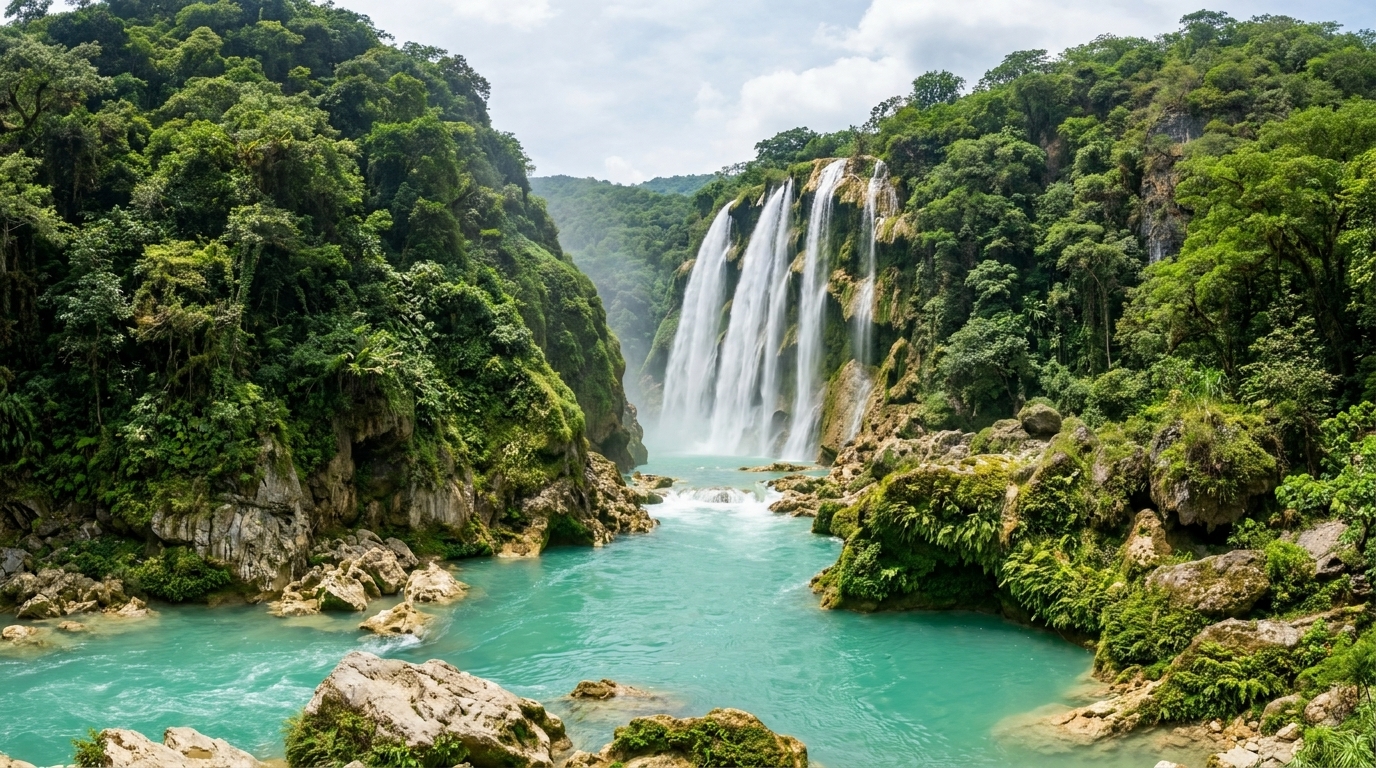
Huasteca Potosina is the green, tropical eastern part of the state of San Luis Potosí in Mexico, and it is one of the most surprising travel regions in the country. Most people picture deserts and dry mountains when they think of central Mexico, but here the landscape changes into jungle, turquoise rivers, tall waterfalls, deep caves, and small towns where Indigenous traditions are still part of daily life. This guide explains what the region is, where to go, when to travel, what to eat, and how to plan a trip that feels relaxed instead of rushed.
What Is Huasteca Potosina?
The word “Huasteca” refers to a wider cultural and natural region of eastern Mexico that stretches across parts of several states, including San Luis Potosí, Veracruz, Hidalgo, Tamaulipas, Querétaro, and Puebla. The name comes from the Huastec people, who call themselves Teenek and have lived in this area for many centuries. The part that belongs to San Luis Potosí is called Huasteca Potosina, and it is the section most travelers have in mind when they search for waterfalls, cave systems, and the famous surrealist gardens of Xilitla.
The region sits where the Sierra Madre Oriental slopes down toward the Gulf of Mexico plain. Because of this position, it receives plenty of moisture, and the limestone rock beneath the soil allows water to create caves, sinkholes, natural pools, and waterfalls. The climate is warm and humid for most of the year, which is why the vegetation is so thick and the rivers carry such a strong blue-green color when the water is clear.
Today, the Teenek and Nahua communities are an important part of the region’s identity. You will notice this in local markets, in traditional clothing, in festivals, and in the food. Respecting local customs and supporting community-run services is one of the best ways to enjoy the area responsibly.
Where Is Huasteca Potosina and How Do You Get There?
The main gateway to the region is Ciudad Valles, a busy city that works as a base for tours, hotels, and transport to the surrounding attractions. From here, many of the best-known places are within a day trip by road, although some are farther and make more sense if you stay nearby. Xilitla and Aquismón are popular overnight bases because they place you closer to the gardens, the caves, and the boat departure points.
Travelers usually arrive in one of three ways. Some fly into San Luis Potosí city and continue by road, which is a long drive of several hours. Others arrive through Tampico on the Gulf coast, which is a common starting point for people coming from the east. A third group drives from Mexico City or Querétaro, which takes a full travel day. Because mountain roads can be slow and winding, it is wise to plan your driving times generously and to avoid driving the curvy sections at night.
Renting a car gives you freedom, but many visitors prefer joining a guided tour or hiring a local driver for the more remote sites. This is especially useful for the Tamul boat trip, where access is organized through local operators.
The Best Places to Visit in Huasteca Potosina
Tamul Waterfall (Cascada de Tamul)
Tamul is the most famous natural attraction in the region and is widely described as the tallest waterfall in San Luis Potosí, with a drop of about 105 meters. It forms where the Gallinas River meets the Santa María and Tampaón river system, and the water spreads across a wide curtain of limestone before dropping into a deep turquoise pool. The waterfall is not reached by a short walk from a parking lot. Visitors usually travel by boat or canoe along the river from the Tanchachín area in the municipality of Aquismón, and the trip itself is a highlight because the river winds between green canyon walls.
Water color and volume change with the seasons. When the river is clear, the blue is intense and photographs look almost unreal. After heavy rains, the water can become brown and strong, and operators may limit or change activities for safety.
Puente de Dios (Tamasopo)
Puente de Dios, meaning “God’s Bridge,” is a natural grotto near the town of Tamasopo where a turquoise river flows through a cavern formed by limestone. Sunlight enters through openings in the rock and lights the water in a way that makes the colors look almost glowing. Visitors can swim here, usually with a life jacket, and the surrounding trails are shaded by jungle trees. This is one of the most photographed places in the region, so arriving early in the day helps you enjoy it with fewer people.
Tamasopo is also known for its own waterfalls and swimming areas, which make it an easy and enjoyable stop for families and first-time visitors.
Xilitla and Las Pozas
Xilitla is a small mountain town in the Sierra Madre foothills and carries the “Pueblo Mágico” designation, a Mexican program that recognizes towns with special cultural and historical value. The town is best known for Las Pozas, a surreal sculpture garden created by the English poet and art patron Edward James, who settled in the area in the mid-twentieth century. Construction took place over several decades, and James continued to work on the project until his death in 1984.
Las Pozas is not a typical garden. It is a collection of concrete structures with unusual shapes, including spiral staircases that lead nowhere, tall columns, arches, and platforms, all scattered across a jungle hillside with natural streams and pools. The mix of man-made forms and wild vegetation gives it a dreamlike character, and many visitors say it feels like a lost city from a fantasy story. Wear shoes with good grip, because the stone steps and paths can be slippery, especially after rain.
Sótano de las Golondrinas (Cave of Swallows)
Located in the municipality of Aquismón, this enormous open-air sinkhole is one of the most impressive natural formations in Mexico. Its vertical drop is commonly given as about 376 meters from the rim to the floor, while some tourism sources quote a larger total depth of around 512 meters when the deeper cave passages are included, so you may see both numbers. Either way, the scale is hard to imagine until you stand at the edge and look down into the dark opening.
The name refers to the birds that nest inside, which are mostly swifts and parakeets. The best-known spectacle happens around sunrise, when thousands of birds spiral upward out of the pit in a slow, circling cloud. The site is also known worldwide among cave explorers and BASE jumpers, although you do not need any special skills to enjoy it as a visitor. Because the best bird activity is early in the morning, many travelers stay overnight nearby.
Sótano de las Huahuas
Another deep sinkhole near Aquismón, Sótano de las Huahuas is known for its dramatic opening and its home to colorful parrots. It is usually visited together with Las Golondrinas or with Xilitla, and it is often a quieter alternative for people who want a similar experience with a different atmosphere.
Micos, Minas Viejas, El Salto, and El Meco
The northern part of the region is home to a famous waterfall circuit. The Micos area has a series of smaller cascades and swimming pools that suit families and relaxed visitors. Minas Viejas, near the town of El Naranjo, drops about 50 meters into a blue-green basin. El Meco is a waterfall of roughly 35 meters that is often viewed from a lookout. El Salto, around 70 meters high, is most impressive during the rainy season because part of the river flow is used for hydroelectric power during drier months, which can reduce the waterfall at those times.
Tamtoc Archaeological Site
Near the town of Tamuín, Tamtoc is an archaeological site connected to Huastec culture. It reminds visitors that this region is not only about nature but also about a long human history. The site is a good option for travelers who want a quieter cultural stop between waterfall days.
Best Time to Visit Huasteca Potosina
The region is hot and humid for much of the year, so timing affects both comfort and scenery. Many travelers consider the drier months, roughly from late autumn through spring, to be the best period because rivers are usually clearer and roads are easier to travel. The water color at places like Puente de Dios and Tamul is often at its prettiest when there has been little recent rain.
The rainy season, usually from around June to October, makes the jungle lush and fills the waterfalls, but it can also turn the rivers cloudy and sometimes closes swimming areas or boat trips. Holiday weeks such as Easter and the Christmas season bring large crowds, so booking hotels and tours ahead is a good idea. Local conditions change from year to year, so always ask your hotel or tour operator about river levels before you travel.
Local Culture, Festivals, and Food
Food in Huasteca Potosina is one of the reasons people return. The best-known dish is zacahuil, a giant tamal made with coarse corn dough and pork or chicken, wrapped in banana leaves and slow-baked for hours, often in a wood-fired oven. It is traditionally made for celebrations and shared among many people. Other regional foods include enchiladas huastecas, bocoles (thick corn cakes), and cecina, a thin cut of dried or salted beef often served with beans and tortillas.
The most important cultural event is Xantolo, the Huasteca version of the Day of the Dead celebration held around the start of November. Families honor their ancestors with altars, flowers, food, and dances in which people wear masks and costumes. If you travel during this time, be respectful when taking photos and ask permission before photographing individuals or private altars.
Practical Travel Tips
Bring light clothing, a swimsuit, quick-dry towels, sunscreen, insect repellent, and water shoes, because many of the best places involve rocks and wet paths. Cash is useful, since small entrance fees, boat services, and meals in rural areas are often paid in Mexican pesos. Phone signal can be weak in remote spots, so download maps before you leave town.
Choose a reliable local guide for river and cave activities, and always follow safety instructions, especially when swimming in places with currents or deep water. Avoid leaving rubbish behind and avoid using sunscreen right before entering the water when possible, as chemicals can harm the delicate river ecosystem. Respect fences and trail rules at Las Pozas and the sinkholes, because the edges and steps can be dangerous.
A Simple Three-Day Itinerary
A relaxed first trip can be organized around three bases. On the first day, travel to Ciudad Valles or Tamasopo, visit Puente de Dios and the Tamasopo waterfalls, and enjoy dinner in town. On the second day, take the early boat trip to Tamul Waterfall, then continue toward Aquismón or Xilitla for the evening. On the third day, visit Las Pozas in the morning when it is cooler, explore Xilitla’s town center, and, if time allows, add a sinkhole stop before heading home. Travelers with more time can add the Micos and Minas Viejas waterfall circuit or the Tamtoc site.
Frequently Asked Questions
How many days do you need in Huasteca Potosina?
Three to five days is a comfortable range for seeing the main highlights without rushing, because travel between sites can take time.
Is Huasteca Potosina good for families?
Yes, many places such as Tamasopo and the Micos area have gentle swimming spots, although some sites involve stairs, boats, or slippery rocks, so check each location’s suitability for young children.
Can you swim in the waterfalls?
Many locations allow swimming, but rules vary and can change with water conditions. Always follow the guidance of local staff and use a life jacket where it is offered.
Do you need a tour?
It is not required for every place, but a guide or driver makes sense for Tamul, remote roads, and busy holiday periods.
Final Thoughts
Huasteca Potosina rewards travelers who like nature, culture, and a slower pace. Its waterfalls, caves, and surreal gardens are impressive on their own, and the local food and traditions make the experience richer. With careful timing, respectful behavior, and a flexible plan, this region can easily become one of the most memorable parts of a trip to Mexico.
Disclaimer
This article is for general informational purposes only. Heights, depths, opening conditions, fees, travel times, and seasonal conditions can change, and different sources sometimes report different measurements for the same place. Please confirm current details, safety rules, and weather or river conditions with official local sources, your hotel, or licensed tour operators before you travel. Outdoor activities such as swimming, boating, hiking, and cave visits carry risks, and readers are responsible for their own safety and decisions.
Explore More
Sequoia and Kings Canyon National Parks Tours: What You Need to Know
I’m Muhammad Ubaid, founder of YBR Magazine. I research and write detailed guides on America’s National Parks — covering entry fees, permits, best times to visit, and planning tips — using official NPS sources and up-to-date information.