


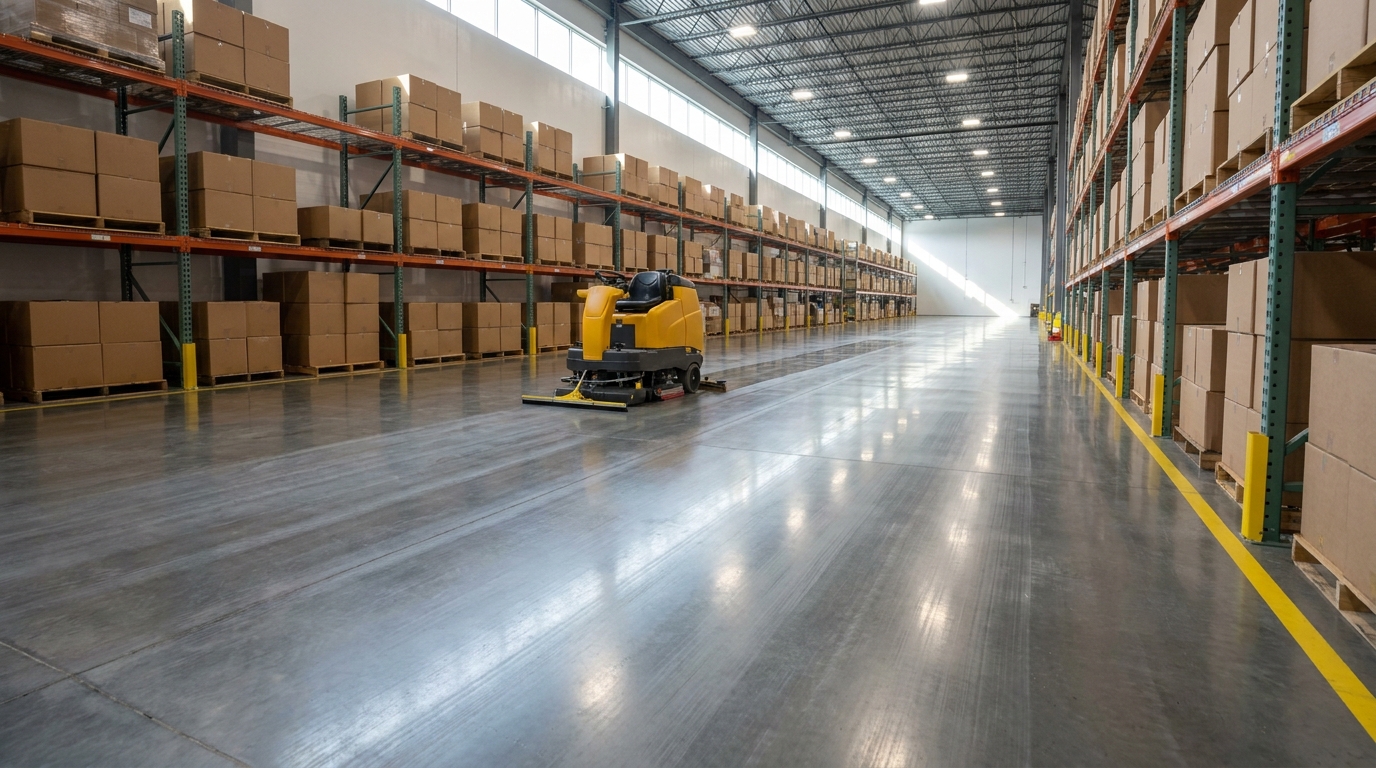
Finding the right industrial floor cleaner New Berlin facilities can trust is harder than it first appears, because the search brings up a mix of cleaning companies, chemical catalogs, and equipment rental pages that each answer a slightly different question. This guide sorts out those differences for shop managers, warehouse supervisors, and facility owners in New Berlin, Wisconsin. It explains the main cleaner types, how to match a product to your floor and soil, where local buying and rental options exist, and which safety and wastewater points deserve attention before the first bucket is mixed.
Quick Facts
| Topic | Summary |
|---|---|
| Most likely location | New Berlin, Wisconsin, a city in Waukesha County in the Milwaukee area (other places share the name) |
| Typical soils | Oil, grease, petroleum residue, tire marks, mineral dirt, dust, and light solvent spills |
| Main product families | Neutral cleaners, low-foam alkaline degreasers, high-alkaline deep cleaners, solvent-fortified degreasers, certified green cleaners |
| Common application tools | Mop and bucket, spray bottle, automatic floor scrubber |
| Local equipment rental | A Sunbelt Rentals flooring branch on West Lincoln Avenue lists automatic floor scrubbers among its rentals |
| Key workplace rule | OSHA 29 CFR 1910.22 on clean and safe walking-working surfaces |
| Before first use | Read the label dilution directions and the safety data sheet (SDS) |
What People Searching This Topic Usually Need
Most pages that appear for industrial floor cleaner New Berlin searches fall into three groups: national chemical suppliers with product listings, commercial cleaning companies that list New Berlin as a service area, and equipment rental branches. A reader who types this phrase may therefore want to buy a degreaser by the pail, hire a crew to scrub a warehouse floor, or rent a machine for a weekend, and the best answer depends on which of those jobs sits on the to-do list.
The results also contain noise that is easy to misread. Some listings belong to house-cleaning directories, vacuum suppliers, or a parts washer manufacturer rather than floor care, and one floor-cleaning directory result refers to Berlin, Wisconsin, which is a different city. A few product pages are European retail listings with prices in euros, which do not help a buyer in Wisconsin. The pages that do cover New Berlin tend to stay general, with promises of customized plans and advanced equipment but little guidance on how to pick a chemical for a specific floor, which is the gap this article tries to fill.
Main Types of Industrial Floor Cleaners

Industrial cleaners are usually grouped by chemistry, because chemistry decides which soils they lift and which floors they can safely touch. The table below gives a simple comparison, and the paragraphs after it show how real products fit these groups.
| Type | Best for | Watch out for |
|---|---|---|
| Neutral floor cleaner | Routine cleaning of sealed or coated floors with light soil | Limited strength on baked-on grease |
| Low-foam alkaline cleaner | Regular machine scrubbing in shops and warehouses | Correct dilution and thorough rinsing |
| High-alkaline deep cleaner | Heavy grease and encrusted soils, periodic deep cleaning | Skin and eye protection; some versions remove coatings |
| Solvent-fortified degreaser | Heavy oil and petroleum spots | Odor, ventilation, flammability, and coating compatibility |
| Water-soluble degreaser without butyl solvents | Petroleum and animal-fat soils | Whether the label supports use in your type of facility |
| Bio-based or certified green cleaner | Sites with sustainability goals or sensitive staff | Strength on heavy petroleum soils can vary |
Manufacturer and retailer listings show how these families look in practice. Kärcher describes its FloorPro RM 69 as a low-foam cleaner that removes grease, oil, soot, and mineral dirt from industrial floors, and one European retailer lists its pH at 10.7. Another product in the same range, the RM 752, is described by the retailer Tooled-Up as highly alkaline and intended for deep cleaning and coating removal, which is a very different job. On the distributor side, HD Supply describes Spartan’s Pathmaker degreaser as low-foam, silicone-free, VOC compliant, biodegradable, and suitable for automatic floor machines, while Spartan’s Tough Duty is described as a ready-to-use, butyl-based degreaser with a solvent-fortified formula.
Matching a Cleaner to Your Floor and Soil
Bare and Sealed Concrete
Concrete is the most common industrial surface, and several heavy-duty degreasers name it as an intended surface. A Renown degreaser brochure sold through HD Supply says the product removes oil and grease from concrete, machinery, and tools, and Cintas lists concrete floors among the surfaces for its industrial floor cleaner. Concrete is sometimes sealed, densified, or painted, however, so the sealer or coating manufacturer’s guidance should outrank a general product claim.
Epoxy and Other Coated Floors

Epoxy floors call for extra care because the same strong chemistry that cleans heavy soil can also dull or lift a coating. The RM 752 listing names epoxy resin among the alkali-resistant surfaces it suits, yet the product is also marketed for coating removal, which shows why “suitable for epoxy” does not automatically mean “good for weekly cleaning.” DST-Chemicals markets a water-based floor cleaner positioned first and foremost for epoxy. Asking the installer or coating maker for an approved cleaner list, then testing a small hidden area, is a sensible step before buying in bulk.
Oil, Solvents, and Food-Area Soils
Soil type matters as much as the floor. Cintas says its heavy-duty cleaner and degreaser targets petroleum and solvent-based soils, while Spartan’s Tough On Grease is described by HD Supply as a water-soluble, non-butyl degreaser for petroleum and animal-fat soils in industrial, food-processing, and manufacturing settings. Plants that handle food have sanitation rules beyond ordinary floor care, so a degreaser that cuts grease is only one part of the picture and the cleaning plan should be checked against the facility’s own food-safety requirements.
Label Details Worth Checking Before You Buy
When comparing any industrial floor cleaner New Berlin suppliers offer, the label and technical sheet reveal more than the front-of-bottle marketing. Foam level matters most for machine scrubbing, because heavy foam can overflow into a scrubber’s recovery system, so products intended for automatic machines are usually labeled low-foam. A silicone-free formula is important in paint, coating, and adhesive environments, and Kärcher notes this benefit for metalworking and paint processing companies.
Dilution directions, pH, VOC content, and flash point deserve a look as well. The Renown brochure, for example, lists a flash point of 185°F, a detail that matters where solvent products are stored near heat or ignition sources. Third-party certifications such as EPA Safer Choice, which Simple Green cites for its industrial cleaner and degreaser, or Green Seal, which appears on a listing for a GLDE-322 industrial floor cleaner on a New York State green products list, are more reliable than loose terms such as eco-friendly. Even specification tables can disagree with themselves: one distributor’s table for a concentrated degreaser showed both a biodegradable and a non-biodegradable entry side by side, so the SDS and manufacturer documents should settle any doubt.
Buying Options for Industrial Floor Cleaner New Berlin Facilities Can Use
Local buyers generally choose among three routes, and each suits a different level of need. The first is a managed chemical program. Cintas describes such a service as requiring no upfront inventory, with weekly monitoring and refilling of dispensers and flexible programs that change with the customer’s needs, and its floor cleaner can be applied by spray bottle, mop bucket, or auto scrubber. Enviro-Master, which serves the Milwaukee market, similarly lists concentrated cleaners and degreasers along with restocking programs. Both are larger regional or national providers, so it is worth confirming that they serve your address and what minimums apply.
The second route is buying directly from a janitorial or industrial distributor, either through a local sales representative or an online catalog. This option gives the most control over product choice and quantity, and distributor listings usually include the SDS and a product data sheet. The third route is to hire out the work. ServiceMaster’s New Berlin industrial cleaning page describes warehouse and distribution center floor scrubbing with auto-scrubbers, pressure washers, and HEPA vacuums, and offers a free on-site consultation, which can suit one-time deep cleans or facilities without in-house staff.
Equipment is a separate question from chemicals. Sunbelt Rentals lists a flooring branch at 16341 W Lincoln Ave in New Berlin with weekday daytime hours and weekend closures, and its rental range includes automatic floor scrubbers, carpet extractors, and concrete grinders. Stock and hours change, so a phone call before visiting is wise. Big-box stores in the area carry consumer-grade cleaning products, which can work for small jobs but are not designed for heavy petroleum soils or machine scrubbing.
Safety and Compliance Basics
OSHA’s walking-working surfaces rule, 29 CFR 1910.22, requires employers to keep workplaces and walking surfaces clean, orderly, and sanitary, and to keep workroom floors dry to the extent feasible. Where wet processes are used, drainage must be maintained and dry standing places such as mats or platforms provided where practicable. The rule also calls for regular inspection and for fixing hazards such as spills and leaks, so a floor cleaning routine is part of compliance, not just appearance.
Cleaning itself can create a slip risk. The Renown brochure reminds users that all floors are slippery when wet and advises blocking traffic with caution signs until the floor is completely dry, which is good practice for any cleaner. With any industrial floor cleaner New Berlin workers handle, staff should have access to the SDS for each product, wear the gloves and eye protection the SDS recommends, and never mix chemicals, since combining products can release hazardous fumes. Alkaline and solvent-based products in particular call for good ventilation, and flammable solvents belong away from ignition sources.
Handling Wash Water the Right Way
Dirty floor water is not harmless just because it started as soap and water, and that holds true for every industrial floor cleaner New Berlin shops load into a scrubber. Guidance from stormwater programs elsewhere, including the Northeast Wisconsin Stormwater Consortium, says that cleaning wastewater should go to a drain connected to the sanitary sewer, such as a mop sink or toilet, and never to a street, gutter, parking lot, or storm drain. A Fort Worth environmental fact sheet adds a useful warning that many outdoor floor drains lead to the storm sewer, so plumbing should be confirmed before anything is poured down them.
Rules specific to New Berlin, including any limits on oily or solvent-heavy wastewater or requirements for interceptors, were not confirmed in the sources reviewed for this article. Facilities that generate heavy grease or chemical residue should contact the City of New Berlin or their local sewer utility before choosing a disposal method, and should treat spent cleaning solution from degreasing work with extra caution.
How to Clean an Industrial Floor Step by Step
Prepare the Area
Start by sweeping or vacuuming loose debris, because grit left on the floor turns into an abrasive under a scrubber pad and reduces the cleaner’s contact with the actual soil. Mark the work zone with wet-floor signs, move equipment and pallets out of the way, and confirm that drains lead where you expect. Pre-treat heavy oil spots with an absorbent or a suitable degreaser so the main pass does not simply spread them around.
Apply and Scrub
Measure the cleaner according to the label rather than guessing, since too little leaves soil behind and too much leaves residue that attracts new dirt. Let the solution sit for the dwell time the manufacturer recommends, then scrub with an automatic machine for large areas or a stiff-bristle brush and mop for corners and edges. Heavily soiled zones may need a second pass with the machine moving slowly.
Rinse, Dry, and Record
Recover the dirty solution with the machine’s squeegee and vacuum or with a wet mop, then rinse if the label calls for it, because leftover cleaner can leave a hazy or sticky film. Allow the floor to dry fully before reopening it to traffic, and keep a simple log of the product, dilution, and date so problems can be traced later.
Cost and Value Considerations
Price per container tells only part of the story, because concentrates are diluted and the real cost is the cost per gallon of ready-to-use solution. Distributor listings reviewed for this article showed 5-gallon pails of different concentrated products ranging from about $79 to $122, but these were individual website prices at one point in time and the products are not equivalent. When comparing any industrial floor cleaner New Berlin sellers quote, ask for the recommended dilution ratio so the figures can be compared on equal terms.
Hidden costs matter too, such as extra rinsing time, protective equipment, and floor damage from the wrong chemistry. A slightly pricier low-foam product that works in the auto scrubber on a single pass can be cheaper in practice than a cheap concentrate that needs two passes and a rinse.
Frequently Asked Questions
Is a stronger, more alkaline cleaner always better?
No. Very alkaline products can dull coatings, irritate skin, and require more rinsing, so the mildest product that removes your soil is usually the better choice.
Can I use the same cleaner in a mop bucket and an auto scrubber?
Only if the label says it is suitable for machines. Products that foam heavily can overflow into the recovery tank, so look for a low-foam formula.
How do I know a cleaner is safe for my epoxy floor?
Ask the floor installer or coating manufacturer for an approved cleaner list, and test the product on a small hidden area before using it on the whole floor.
Where can I get a safety data sheet?
The manufacturer or supplier provides it, and most distributors post one on the product page or send it on request. Keep copies where workers can reach them easily.
Does “eco-friendly” on a label mean the product is certified?
Not necessarily. The term is a marketing claim, whereas programs such as EPA Safer Choice and Green Seal involve third-party review, so look for those marks on the label or the product listing.
What should I do if the floor looks hazy or feels sticky after cleaning?
A film is commonly caused by too much cleaner or too little rinsing. Recheck the dilution, rinse with clean water, and let the floor dry fully before judging the result.
Conclusion
Choosing an industrial floor cleaner New Berlin businesses can rely on comes down to knowing your floor, your soil, and your equipment, then reading the label and SDS before buying. Local options exist for chemicals, contracted cleaning, and machine rental, and the best fit depends on whether the job is routine maintenance or an occasional deep clean. Taking a few minutes to confirm coating compatibility, safe wash water disposal, and slip precautions usually saves far more time and money than the cleaner itself costs.
Disclaimer: This article is for general information only and is not professional, legal, safety, or environmental advice. Product details, prices, business hours, and regulations change, and several details here come from public listings that were not independently verified. Always follow the manufacturer’s label and safety data sheet, confirm requirements with OSHA, the City of New Berlin, and your local sewer utility, and consult a qualified professional before cleaning specialty or coated floors.
Explore More
Best Way to Clean Tile Floors: A Safe Step-by-Step Guide for Every Tile Type

I’m Muhammad Ubaid, founder of YBR Magazine. I research and write detailed guides on America’s National Parks — covering entry fees, permits, best times to visit, and planning tips — using official NPS sources and up-to-date information.

