


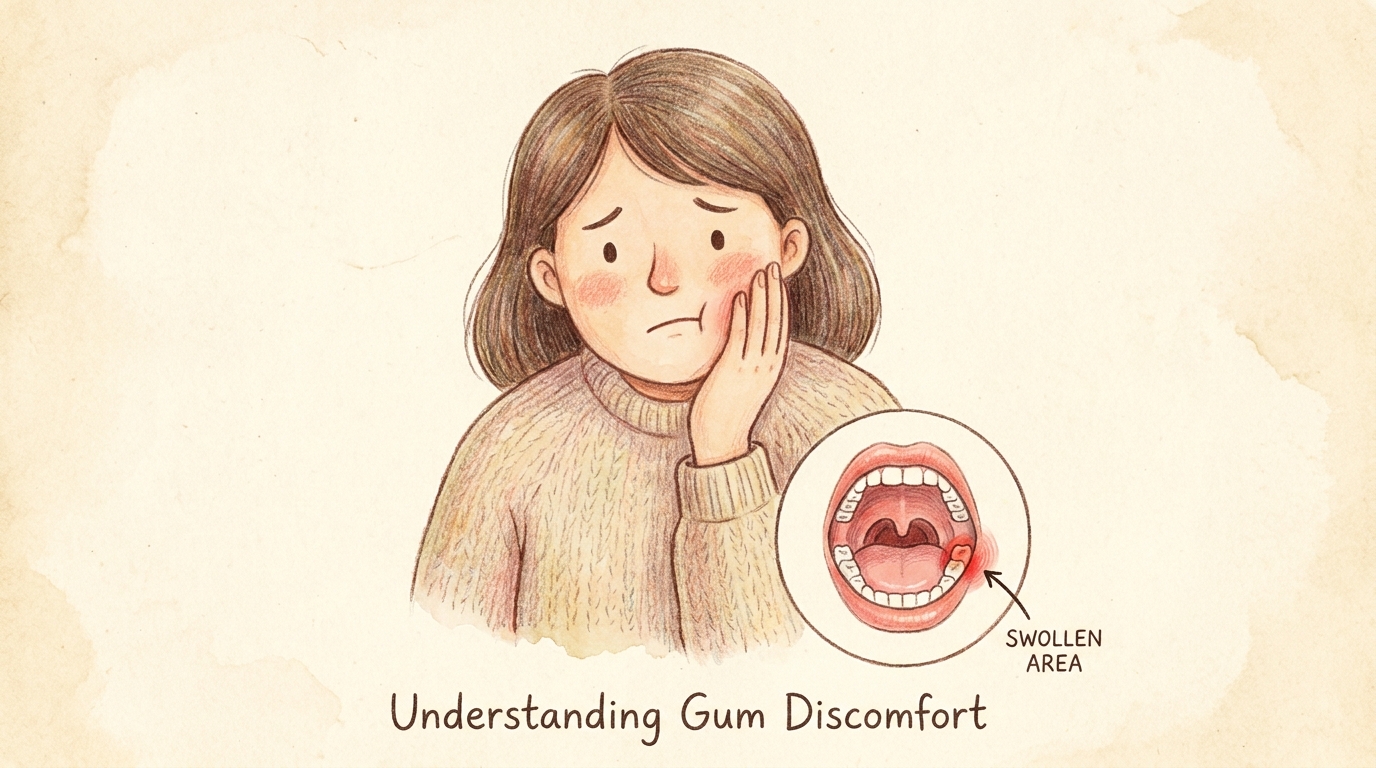
A swollen gum around a single tooth at the back of your mouth can be worrying, especially when it feels tender, looks red, or makes chewing uncomfortable. The good news is that this problem usually has a clear cause, and most causes can be treated successfully when they are caught early. The important thing is to understand what may be happening, what you can safely do at home, and which signs mean you should not wait to see a dentist.
Why Swelling Often Affects Just One Back Tooth

Back teeth, which include the molars and premolars, do most of the heavy chewing. They have deep grooves, tight spaces between them, and roots that sit close to the gum line, so food and bacteria collect there easily. They are also harder to reach with a toothbrush, which means plaque can build up unnoticed. When swelling appears around only one tooth, the cause is usually local, meaning something is happening at or near that specific tooth rather than throughout the whole mouth.
Common Causes of a Swollen Gum Around One Back Tooth
Pericoronitis (Infection Around a Wisdom Tooth)

If the swollen area is at the very back of your mouth, a partly erupted wisdom tooth is one of the most common culprits. When a wisdom tooth only partly breaks through the gum, a small flap of tissue can cover part of the tooth. Food and bacteria get trapped under that flap and cause inflammation or infection, a condition called pericoronitis. It often causes a sore, red, puffy gum, a bad taste, an unpleasant smell, pain when biting, and sometimes difficulty opening your mouth fully. It is most common in young adults, roughly in the late teens through the twenties, when wisdom teeth are coming in.
Trapped Food or a Foreign Object
A small piece of food, such as a popcorn hull, a seed, a bit of meat, or a fragment of a chip, can slip below the gum line and irritate the tissue. Your body reacts to the trapped material with inflammation, and the gum may swell within a day or two. Sometimes the irritation is easy to fix by cleaning the area, but if the object stays lodged it can lead to an infection or an abscess.
Gum Disease (Gingivitis or Periodontitis)
Gum disease starts when plaque builds up along the gum line. In its early stage, called gingivitis, the gums become red, puffy, and likely to bleed when you brush or floss. If it is not treated, it can progress to periodontitis, in which the gums pull away from the teeth and form pockets that trap more bacteria. Although gum disease often affects several teeth, it can be concentrated around one tooth, especially if that tooth is hard to clean or has heavy tartar buildup.
Gum Abscess (Periodontal Abscess)
A periodontal abscess is a pocket of pus that forms in the gum beside a tooth, usually because bacteria have become trapped in a deep gum pocket. It often appears as a shiny, tender, swollen bump on the gum and may cause throbbing pain, a bad taste if it drains, and sensitivity when you bite down. This is an infection that needs professional care and does not go away on its own.
Tooth Abscess (Periapical Abscess)
A tooth abscess starts inside the tooth rather than in the gum. When decay or a crack lets bacteria reach the pulp, which is the soft center of the tooth, the infection can spread out through the root tip and create a pocket of pus in the surrounding bone and gum. The swelling may appear as a bump on the gum near the root, and the tooth may hurt with hot or cold foods, pressure, or spontaneously at night. Sometimes the pain suddenly eases if the abscess drains or the nerve dies, but that does not mean the infection has gone away.
Damaged or Poorly Fitting Dental Work
A crown, filling, or bridge with a rough or overhanging edge can trap plaque and irritate the gum next to it. In the same way, a cracked or decayed tooth can allow bacteria to collect near the gum line. Braces, retainers, or partial dentures that rub against the gum may also cause localized swelling.
Injury or Irritation
Biting down on something hard, brushing too aggressively, burning the gum with hot food, or accidentally scratching the area with sharp food can bruise or inflame the tissue. This type of swelling is usually mild and improves within a few days as the gum heals.
Less Common Causes
Some other possibilities include a canker sore near the gum, a reaction to a dental product, hormonal changes that make gums more sensitive, and certain medications that can cause gum overgrowth, although medication-related overgrowth usually affects more than one tooth. Rarely, a persistent lump or swelling can be caused by a cyst, a benign growth, or another tissue change that needs to be evaluated. This is one reason a swelling that does not go away should always be checked.
Symptoms That Help You Narrow Down the Cause
Paying attention to how the swelling looks and feels can give useful clues, although only a dentist can confirm a diagnosis. Swelling at the very back, with a flap of gum over a tooth that is only partly visible, points toward pericoronitis. A small, shiny, painful bump suggests an abscess. Bleeding and puffiness that appear when brushing suggest gum inflammation. Swelling that appeared soon after eating and is mildly tender may mean something is stuck under the gum. Pain that is deep, throbbing, and worse at night suggests a problem inside the tooth itself.
What You Can Safely Do at Home
Home care can ease discomfort and keep the area clean while you arrange to see a dentist, but it does not replace professional treatment when infection is involved.
Rinsing with warm salt water is a simple and widely recommended step. Dissolve about half a teaspoon of salt in a cup of warm water, swish gently for about thirty seconds, and spit it out, repeating this a few times a day, particularly after meals. Continue brushing twice a day with a soft-bristled toothbrush and fluoride toothpaste, taking care around the sore area rather than avoiding it completely, since plaque left in place will keep the gum irritated. Gently floss or use an interdental brush around the tooth to remove any trapped food, without forcing anything into the gum.
For pain and swelling, a cold compress held against the outside of your cheek for ten to fifteen minutes at a time can help. Over-the-counter pain relievers such as ibuprofen or acetaminophen can be used as directed on the label, provided they are safe for you, so check with a pharmacist or doctor if you have a medical condition, are pregnant, or take other medicines. Do not place aspirin directly on the gum, because it can burn the tissue. Try to avoid very hot, spicy, hard, or crunchy foods until the area calms down, and avoid smoking or vaping, which slows healing and worsens gum problems.
Never try to pop, cut, or squeeze a bump on your gum. Doing so can push bacteria deeper into the tissue and make the infection worse.
When to See a Dentist
You should book a dental appointment if the swelling lasts more than a few days, keeps returning, is painful, or is accompanied by a bump, pus, a bad taste, a loose tooth, or bleeding that does not stop. Even swelling that seems mild deserves attention if it does not improve with good cleaning within a week or so, because early treatment is usually simpler and less costly than treating an advanced infection.
Warning Signs That Need Urgent Care
Seek emergency dental or medical care right away if the swelling spreads to your face, jaw, or neck, or if you have a fever, chills, difficulty swallowing, difficulty breathing, trouble opening your mouth, or swelling near your eye. These can be signs that an infection is spreading beyond the tooth and gum, which can become serious if it is not treated quickly.
How a Dentist Treats a Swollen Gum
Treatment depends on the cause. The dentist will usually examine the area, ask about your symptoms, and may take an X-ray to look at the tooth, the root, and the bone around it.
For pericoronitis, the dentist may clean under the gum flap, flush out debris, and prescribe a medicated rinse. If the problem keeps returning, removing the gum flap or the wisdom tooth itself may be recommended. For trapped food, the object is simply removed and the area cleaned. Gum disease is treated with a professional cleaning and, in more advanced cases, a deeper cleaning known as scaling and root planing, which removes plaque and tartar from below the gum line.
An abscess is treated by draining the pus and clearing the source of infection. A tooth abscess may need a root canal to save the tooth or, if the tooth is too damaged, an extraction. Antibiotics are not always needed, but a dentist may prescribe them when the infection is spreading or you have signs such as fever. Rough or faulty dental work can be smoothed or replaced so it no longer irritates the gum.
How to Prevent Swollen Gums Around a Back Tooth
Good daily habits go a long way. Brush for two minutes twice a day, clean between your teeth once a day, and pay extra attention to the back molars, where plaque hides. Regular checkups and cleanings, commonly every six months although your dentist may suggest a different schedule, help catch problems before they cause symptoms. Treating cavities early, replacing worn dental work, avoiding tobacco, and staying hydrated also support healthy gums. If you have wisdom teeth that are only partly erupted, ask your dentist to monitor them, since they are a frequent source of repeat infections.
Frequently Asked Questions
Can a swollen gum around one tooth go away on its own?
Mild swelling caused by irritation or a minor injury often improves within a few days with gentle cleaning and salt water rinses. However, swelling caused by an abscess or infection will not fully resolve without professional treatment, even if the pain comes and goes.
Is a swollen gum around a back tooth always an infection?
No. It may be caused by trapped food, brushing too hard, or mild gum inflammation. But because infection is a common cause, it is safest to have it checked if it lasts more than a few days or becomes painful.
Can a wisdom tooth cause swelling even if I cannot see it?
Yes. A wisdom tooth that is partly under the gum can trap bacteria and cause swelling, pain, and a bad taste at the back of the mouth, even if only a small part of the tooth is visible.
Should I take antibiotics for a swollen gum?
Antibiotics should only be taken when prescribed by a dentist or doctor. They are not always necessary, and treating the source of the problem, such as draining an abscess or cleaning under a gum flap, is usually the most important step.
How long does a swollen gum take to heal?
Simple irritation may settle in a few days, while an infection usually starts improving soon after professional treatment. Healing times vary depending on the cause and your overall health.
Final Thoughts
A swollen gum around one back tooth is your mouth’s way of signaling that something needs attention. Sometimes the cause is minor and easy to fix at home, but in other cases it points to an infection that needs prompt treatment. Keeping the area clean, using gentle home care, and seeing a dentist if the swelling lasts or worsens is the most reliable way to protect your tooth, your gums, and your overall health.
Disclaimer: This article is for general educational purposes only and is not a substitute for professional dental or medical advice, diagnosis, or treatment. Always consult a qualified dentist or healthcare provider about your specific condition, and seek emergency care if you have severe swelling, fever, or trouble breathing or swallowing.

I’m Muhammad Ubaid, founder of YBR Magazine. I research and write detailed guides on America’s National Parks — covering entry fees, permits, best times to visit, and planning tips — using official NPS sources and up-to-date information.

