

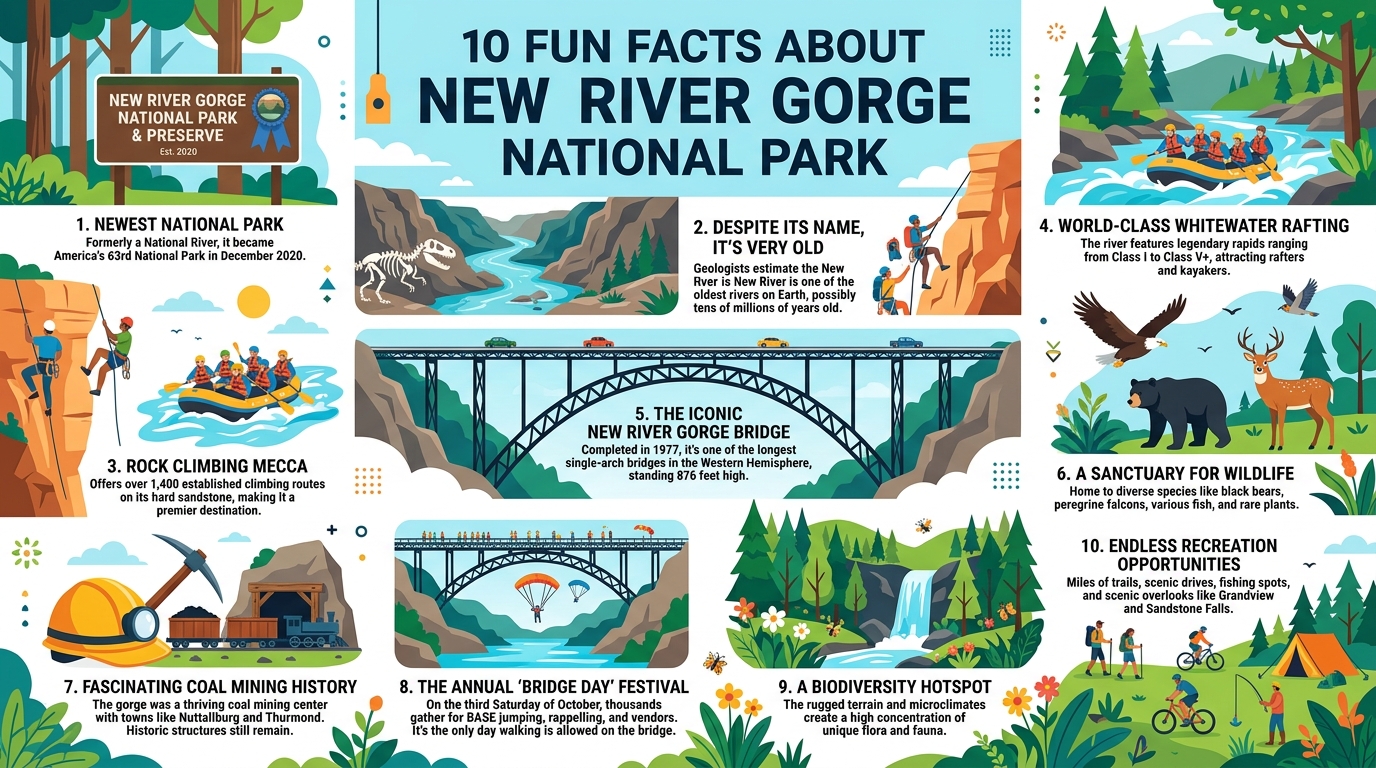
When travelers think of America’s protected public lands, they often picture quiet forests, alpine meadows, and high mountain peaks out West. New River Gorge National Park in West Virginia breaks that mold entirely by mixing raw natural wonders with deep industrial coal history and world-class extreme adventure sports. If you want to understand what makes this Appalachian sanctuary truly distinct, looking closely at its unique geography and local lore reveals a place unlike any other protected area. These 10 fun facts about New River Gorge National Park highlight the rare blend of ancient geology, human stories, and outdoor thrills that draw visitors from all over the world.
Geological Surprises of the Ancient Waters Beneath the Canyons
Despite its official title, the New River is actually recognized by geologists as one of the oldest rivers on planet Earth.
Scientists estimate that the New River is tens of millions of years old, which means it likely predates the very Appalachian Mountains it cuts through. The name comes from early European explorers who mapped the region long after local Native American tribes had already fished these waters for generations. Because the waterway flowed westward away from the coast instead of eastward like most known rivers, settlers simply referred to it as the New River. Today, the water flows northward through deep sandstone canyons, carving out the dramatic landscape that defines New River Gorge National Park.
Recent Evolution into a Fresh National Park Title
New River Gorge earned its official national park designation in December 2020 after decades of operating under a different federal status.
Before that recent shift, the area spent many years functioning as a National River managed by the National Park Service. Lawmakers and local tourism advocates pushed to update the status to boost regional economies and bring global attention to West Virginia’s natural beauty. The legislative change also included the creation of a surrounding National Preserve area that continues to allow traditional hunting and fishing for local residents. This dual management structure protects the most scenic canyon stretches while keeping regional outdoor traditions alive according to rules set by the National Park Service.
The Massive Steel Bridge That Hosts a Once-a-Year Leap
The New River Gorge Bridge is a colossal engineering marvel that lets daredevils parachute off its high deck during one special autumn festival.
Completed in 1977, the bridge spans nearly three thousand feet across the deep canyon and stands over eight hundred feet above the rushing water below. For three hundred and sixty-four days a year, base jumping from the bridge structure is strictly illegal due to obvious safety hazards. On the third Saturday of every October, known widely as Bridge Day, officials close the vehicle traffic lanes so licensed jumpers can leap off the span into the gorge. Thousands of spectators gather tightly on the pedestrian catwalks and riverbanks to watch the annual celebration unfold.
A Global Playground for Extreme Rock Climbers and Whitewater Rafters
New River Gorge National Park serves as a premier international destination for serious whitewater rafting expeditions and vertical cliff climbing.
The park features thousands of established rock climbing routes carved into durable Pottsville sandstone cliffs that stretch for miles along the canyon rim. Down below on the canyon floor, the river churns with powerful rapids that range from mild beginner ripples to wild class four and five whitewater drops. Visitors must remember that these extreme activities carry real physical risks, and sudden water level changes require careful planning with certified guides. Anyone planning a trip can explore more outdoor adventure ideas in our guide on things to do in New River Gorge National Park for a well-rounded itinerary.
Ghost Towns and Hidden Coal Mining Ruins Reclaimed by Forests
The dense forests of New River Gorge National Park hide the crumbling ruins of dozens of old coal mining towns and industrial coke camps.
Before conservationists protected the land, the gorge served as a bustling industrial corridor fueled by rich coal seams buried deep within the canyon walls. Railroad lines ran directly through the bottom of the narrow valley to haul fuel out to growing American cities during the late nineteenth and early twentieth centuries. Today, curious hikers can walk past old coke ovens, abandoned building foundations, and rusty machinery slowly being reclaimed by thick Appalachian trees. These historic remnants tell the powerful story of the hardworking immigrants and local miners who built the region’s industrial backbone.
Thriving Wildlife Habitats Beneath Exceptionally Dark Night Skies
The rugged canyon environment provides a thriving habitat for diverse Appalachian animals and offers fantastic night sky viewing conditions.
Black bears, wild turkeys, bobcats, and bald eagles all make their homes within the dense forests and rocky ledges protected across the park. Migrating birds also use the river corridor as a major seasonal flight path during the spring and autumn months. Because the steep canyon walls block out much of the surrounding light pollution, stargazers find exceptionally dark night skies here compared to nearby cities. Visitors should always maintain a safe distance from all wildlife according to safety guidelines enforced by the National Park Service.
Inverted Mountain Topography Requiring Steep Descents
The park layout flips traditional mountain geography on its head by forcing visitors to descend into the earth rather than climb upward.
Many traditional national parks reward travelers with high summit views only after a grueling uphill climb from the valley floor. At New River Gorge National Park, the main scenic overlooks sit right at the parking areas on the flat plateau edges of the rim. To reach the river level, hikers must tackle steep, winding trails that drop hundreds of vertical feet down rocky stone staircases. This unusual layout means that the hardest physical part of a hike often happens on the return journey back up to the rim.
Unique Botanical Microclimates Supporting Northern Plant Communities
The sheltered microclimates inside the deep gorge support plant species that are normally found much further north in colder climates.
Cool, damp conditions at the bottom of the deep canyon create pocket environments where northern flora survived from the last ice age. Meanwhile, warm, sunlit southern slopes support entirely different plant communities growing just a short distance away from the damp riverbanks. Botanists frequently visit the park to study this unusual concentration of ferns, mosses, and flowering trees living side by side in the canyon. Visitors must stay on designated paths at all times to protect these fragile plant ecosystems from trampling and erosion.
Appalachian Gateway Communities Serving as Essential Basecamps
Charming local towns surround New River Gorge National Park and provide essential lodging, food, and gear for traveling explorers.
Communities like Fayetteville and Beckley serve as the cultural heartbeats for visitors exploring the rugged canyon lands and nearby public lands. These small towns offer historic downtown areas, local restaurants, and expert outfitters who lead guided rafting and climbing excursions. Choosing the right basecamp helps visitors manage driving times across the sprawling and fragmented park geography. For more details on where to stay, read our guide on towns near New River Gorge National Park to find your ideal lodging spot.
Free Public Access Across Open Conservation Lands
New River Gorge National Park charges zero entrance fees for visitors exploring its public trails, overlooks, and picnic areas.
Unlike many major national parks that require expensive vehicle passes or reservation fees, entering the main park grounds costs nothing at all. This open access makes the park a welcoming destination for families and budget-conscious travelers looking to experience Appalachia without high costs. Visitors should still check official rules and parking guidelines provided by the National Park Service before heading out to the trailheads. Weather in the gorge can shift rapidly, so packing layers and carrying water remains essential for a safe trip.
Frequently Asked Questions About New River Gorge National Park
When did New River Gorge become a national park?
New River Gorge officially became a national park in December 2020 after previously serving as a national river for decades.
Is it expensive to visit New River Gorge National Park?
There is no entrance fee to access the park, though guided activities like whitewater rafting and climbing instruction require paid bookings with local outfitters.
Why is the New River called new if it is old?
Early European settlers named the river the New River because it flowed westward away from the coast, unaware that its geological origins predate the mountains.
Can you jump off the New River Gorge Bridge anytime?
Base jumping from the bridge is illegal year-round except for one single day in October during the annual Bridge Day festival.
What are the main downsides to visiting the park?
The terrain is very steep, hiking out of the canyon requires serious physical effort, and sudden weather shifts can create slick trails.
Where can I find official park safety rules?
Visitors should always review current alerts, trail conditions, and regulations directly through the National Park Service website.
Disclaimer: Park rules, operating hours, and local guidelines can change over time. Always verify current details from official sources before planning your trip.

I’m Muhammad Ubaid, founder of YBR Magazine. I research and write detailed guides on America’s National Parks — covering entry fees, permits, best times to visit, and planning tips — using official NPS sources and up-to-date information.