

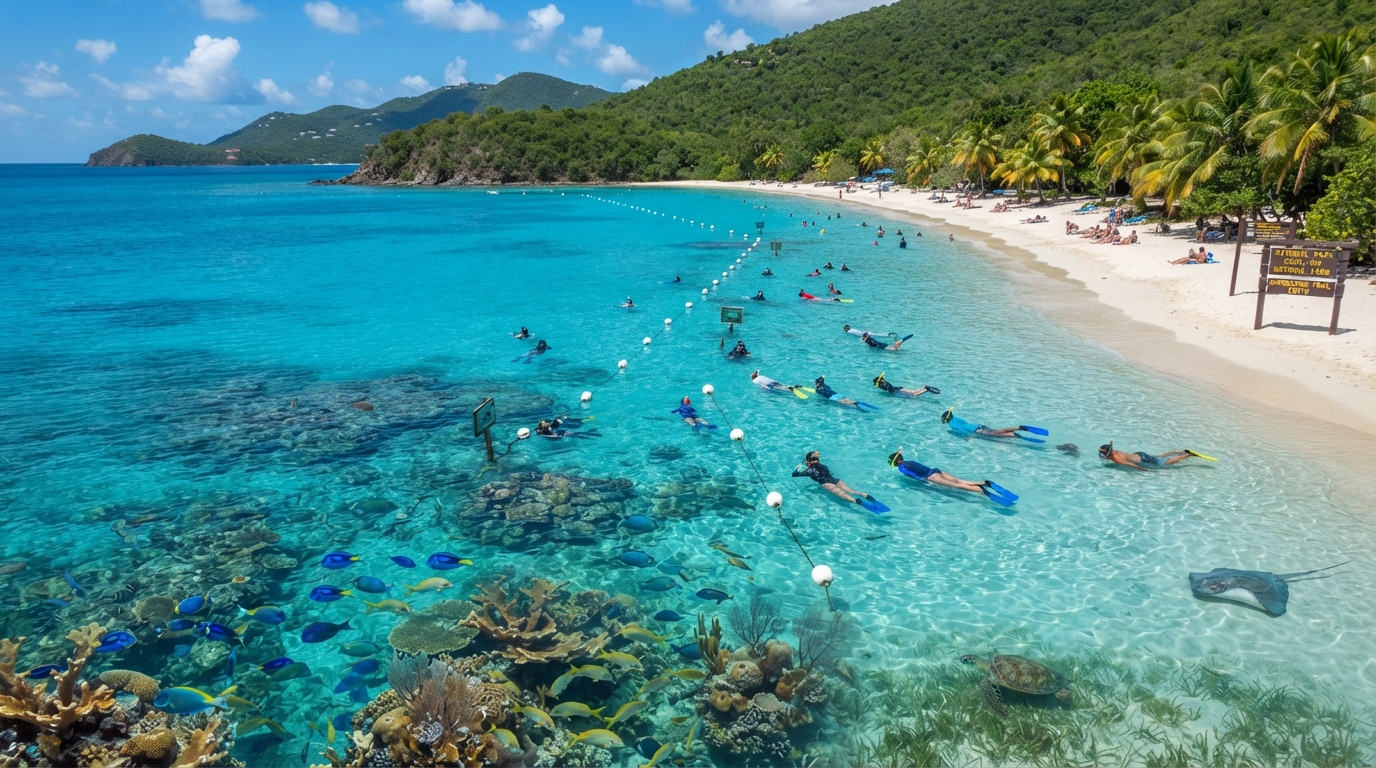
Virgin Islands National Park snorkeling offers an unforgettable underwater experience because it allows visitors to swim among tropical marine life right off the sandy shore on the island of St. John. The protected U.S. tropical marine environment houses vibrant coral reefs and peaceful seagrass beds sitting just a short swim away from land. Planning a trip here means understanding where to find the clearest waters, how to navigate limited beach parking, and what local safety rules to follow. While boat tours remain popular in other tropical destinations, Virgin Islands National Park snorkeling stands out for its easy beach access, allowing travelers to set their own pace without needing a vessel.
Visitors should keep in mind that local parking areas fill up very quickly in the morning, and shifting weather can sometimes reduce water visibility. Preparing for these logistical challenges helps ensure a smooth and enjoyable visit to the island. Whether you want to spot gliding sea turtles or inspect colorful coral gardens, knowing the layout of the park will make your aquatic adventure much more successful.
The Best Beach Access Spots for Virgin Islands National Park Snorkeling
Trunk Bay and Cinnamon Bay offer the most popular underwater trails and clear waters right off the sand for visitors planning their trip.
Trunk Bay is famous for its underwater snorkeling trail, where submerged signs guide swimmers through marine life facts in shallow water. The water here is generally clear and calm, making Trunk Bay a favorite spot for beginners and families. However, Trunk Bay can get very crowded during peak cruise ship hours, and there is an entrance fee managed by the National Park Service. Visitors looking for a slightly quieter experience often head to Cinnamon Bay, where a wide beach leads straight into shallow reefs filled with small fish and rays.
Another great location is Maho Bay, which is widely known as one of the best places to see marine animals close to the shore. Maho Bay features a shallow, sandy bottom covered in seagrass, which attracts hungry sea turtles throughout the day. Parking right by the beach at Maho Bay is very limited, so arriving early in the morning is essential for securing a spot before the main crowds arrive.
What You Will See in the Shallow Coral Gardens
Green sea turtles, stingrays, and colorful reef fish live among the shallow coral gardens found across Virgin Islands National Park.
Green sea turtles are common residents in the shallow seagrass beds of the park, often grazing peacefully just yards from the shoreline. Visitors frequently spot southern stingrays gliding along the sandy ocean floor in search of small crabs and worms. Schools of blue tang, parrotfish, and yellowtail snapper swim actively around the coral heads, creating a lively underwater scene. The shallow reefs are home to brain coral, elkhorn coral, and sea fans that sway gently with the ocean currents.
Coral health varies across different bays due to past storms and rising water temperatures, so some areas show signs of bleaching or wear. Despite these environmental pressures, the fish populations remain vibrant and active. Observing these marine creatures requires patience and a quiet swimming style so you do not startle them.
Essential Gear Logistics and Ocean Safety Precautions

Renting equipment on St. John and watching out for ocean currents and stinging marine life will keep your snorkeling adventure safe.
Snorkel gear rentals are readily available in Cruz Bay and at select beach shacks, but renting your equipment before heading out to remote beaches is always a smart idea. Before entering the water, always check local weather updates and ocean conditions. According to the National Park Service, unexpected rip currents can occasionally form near outer reefs and points of land. Swimmers should also watch out for stinging marine organisms like fire coral and jellyfish, which can cause skin irritation if touched.
Hydration is another major factor to consider while spending hours under the tropical sun on St. John. Bringing plenty of drinking water and wearing a rash guard can prevent severe sunburn and dehydration. Never swim alone, and always stay aware of boat traffic when exploring open areas outside designated swim zones.
Protecting Fragile Coral Reefs Under National Park Rules
Touching coral or using regular sunscreen damages the ecosystem, so visitors must follow National Park Service guidelines to protect the marine habitat.
Coral reefs are extremely fragile living organisms that can die easily if someone steps on them or touches them with a flipper. Visitors must never stand on coral or collect shells and rocks as souvenirs from the beach. Additionally, standard sunscreens contain chemicals like oxybenzone and octinoxate that poison coral reefs and disrupt marine reproduction. According to the National Park Service, everyone swimming in the park should use reef-safe sunscreen that relies on mineral ingredients like zinc oxide.
Respecting wildlife is equally important for the long-term health of the park. Swimming too close to sea turtles or chasing rays stresses the animals and alters their natural feeding habits. Keeping a respectful distance ensures that these creatures remain safe and wild for future generations of visitors to enjoy.
For outdoor enthusiasts who also enjoy dramatic coastal geography and marine exploration in other protected American sanctuaries, reading a guide on sea cave excursions offers great inspiration for future trips.
Frequently Asked Questions
Do I need to pay an entrance fee to snorkel at Trunk Bay?
Yes, Trunk Bay charges a per-person entrance fee managed by the National Park Service, which includes access to restrooms and freshwater showers.
Where can I rent snorkeling gear on St. John?
You can rent masks, snorkels, and fins at various dive shops in Cruz Bay or directly at select beach concessions like Cinnamon Bay.
Are there lifeguards on duty at the snorkeling beaches?
Lifeguards are only present at Trunk Bay during specific daytime hours, so you must swim at your own risk at all other beaches.
What is the best time of year for Virgin Islands National Park Snorkeling?
The winter and spring months generally bring calmer weather and clearer water visibility, though snorkeling is good year-round.
Can I see sharks while snorkeling in the park?
Nurse sharks and small reef sharks are occasionally spotted in deeper waters, but they are generally shy and pose no threat to calm swimmers.
Do I need to take a boat to reach the best snorkeling spots?
Most of the finest snorkeling spots in the park are accessible directly from the beach, meaning you do not need to book a boat tour.
Disclaimer: Park rules, fees, and environmental conditions can change over time. Always verify current guidelines and weather alerts through official sources like the National Park Service before planning your trip.

I’m Muhammad Ubaid, founder of YBR Magazine. I research and write detailed guides on America’s National Parks — covering entry fees, permits, best times to visit, and planning tips — using official NPS sources and up-to-date information.