

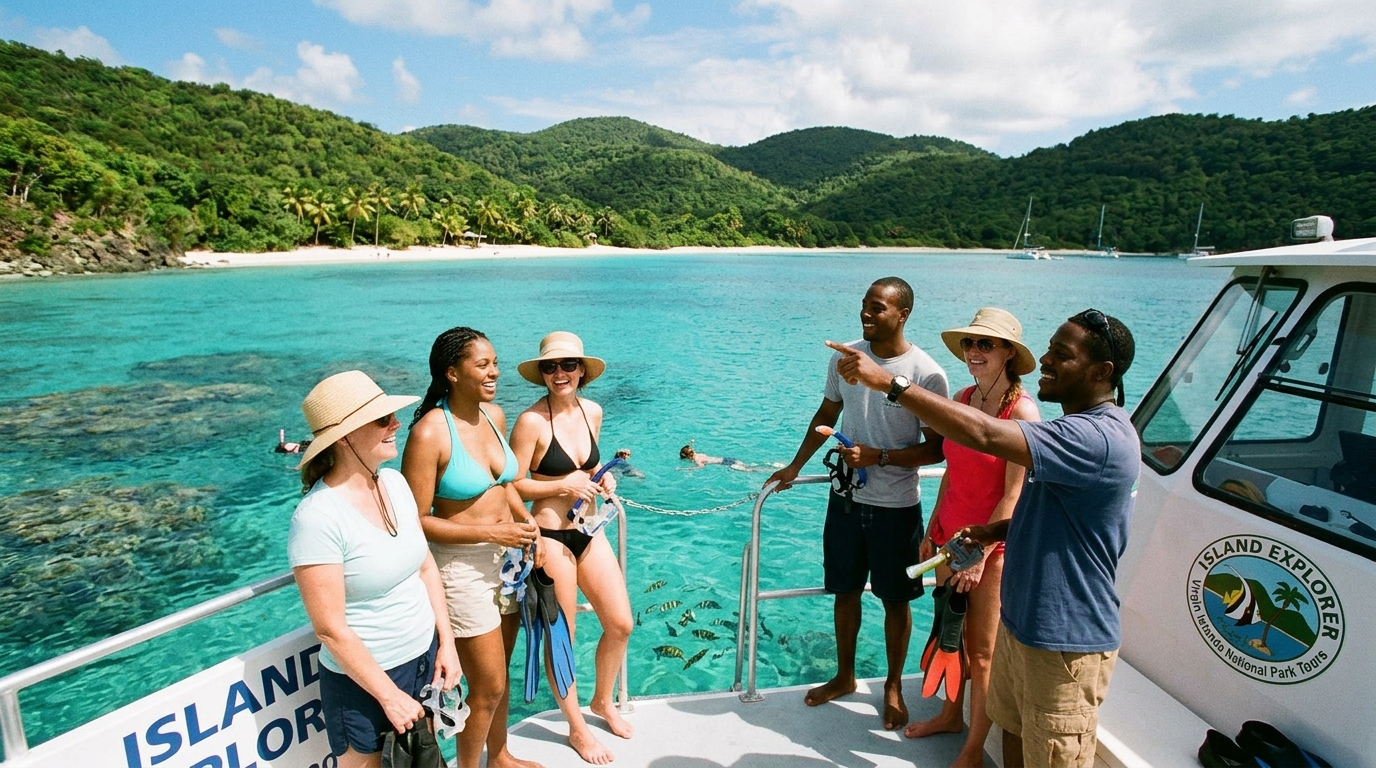
Planning a tropical escape often leads travelers to the protected coastlines and green hills of the United States Virgin Islands. Virgin Islands National Park tours offer a distinct way to experience both the dense forests of St. John and the clear blue waters of the Caribbean Sea. Because the protected space covers a large expanse of ocean alongside terrestrial acreage, exploring requires a thoughtful mix of boat travel and land exploration. Understanding how these excursions operate helps visitors bypass common logistical hurdles and enjoy their time on the water and ashore.
Ferry Crossings and Independent Charter Logistics
Virgin Islands National Park tours demand careful logistical planning because the protected area is scattered across land and sea, mostly centered on St. John. Travelers arriving from the U.S. mainland must fly into St. Thomas and then catch a passenger or car ferry to reach St. John. Once ashore, visitors quickly notice that the National Park Service does not run commercial tour boats or safari buses directly. Instead, independent local companies operate the vast majority of guided boat charters, catamaran sails, and open-air safari truck tours. Travelers must research and book these private or commercial outings ahead of time to secure availability during busy travel months.
Catamaran Sails Versus Open-Air Safari Truck Tours
Selecting the right style of excursion depends on whether travelers prefer spending their day swimming over coral reefs or exploring historic sites on land. Guided snorkeling boat trips take visitors to vibrant coral gardens and secluded coves that remain difficult to reach from the shore. Catamaran sailing charters offer a relaxed day on the water, frequently including lunch, drinks, and multiple snorkel stops around the northern and eastern bays of St. John. Meanwhile, open-air safari truck tours provide land-based sightseeing across steep mountain roads, stopping at panoramic viewpoints and historic sugar factory ruins like those found at Annaberg. For travelers interested in specialized marine activities, reviewing resources such as a comprehensive guide to Virgin Islands National Park snorkeling can help clarify what gear and underwater sights to expect on these ocean outings.
Trunk Bay Underwater Trail and Beach Access Realities
Trunk Bay serves as a major highlight of the protected park, featuring a famous underwater snorkeling trail and soft white sand beaches. Visiting Trunk Bay requires paying an entrance fee, which is managed directly according to the National Park Service guidelines and helps fund facility maintenance and beach upkeep. The underwater snorkel trail guides swimmers along marked underwater plaques that explain marine life and coral formations in shallow water. Other popular spots like Cinnamon Bay and Maho Bay offer distinct experiences, ranging from sea turtle sightings in shallow seagrass beds to old plantation ruins hidden just behind the tree line. Visitors should note that parking spaces at these high-profile beaches fill up very early in the morning, requiring early arrivals or reliance on local safari taxis.
Tropical Weather Hazards and Tight Ferry Schedules
Visitors must prepare for several practical challenges and physical limitations when taking part in island excursions. Boat tours can encounter choppy water and strong winds, which frequently cause motion sickness or lead to last-minute trip cancellations due to weather. The tropical heat and strong Caribbean sun can quickly lead to dehydration or sunburn during long hikes and extended snorkeling sessions. Furthermore, navigating local ferry schedules between St. Thomas and St. John requires strict time management, as missing the last evening ferry leaves travelers stranded without a place to stay on St. John. Managing these physical and logistical realities ensures a safer and more enjoyable journey.

National Park Service Regulations and Reef Protection
Checking official resources ensures that travelers stay informed about current entry fees, marine protection rules, and safety alerts. According to the National Park Service, touching or standing on coral reefs is strictly prohibited to protect the delicate marine ecosystem from permanent damage. Visitors must also use reef-safe sunscreen that lacks oxybenzone and octinoxate, as traditional chemical sunscreens harm coral larvae and local fish populations. Checking the official National Park Service website before departure helps travelers review any sudden trail closures, parking updates, or changes to user fees.
Frequently Asked Questions
Do I need a passport for Virgin Islands National Park tours?
U.S. citizens do not need a passport to travel between the U.S. mainland and the U.S. Virgin Islands, though bringing a government-issued photo ID is required for boarding flights and ferries.
Can I drive a rental car on a ferry to St. John?
Yes, car barges run between St. Thomas and St. John, but rental car companies often restrict their vehicles from being taken on barges, so you must check your rental agreement first.
Are snorkeling gear rentals included in boat tours?
Most commercial boat charters include fins, masks, and snorkels in their package price, but self-guided beach explorers usually need to rent gear from independent island shops.
Is Virgin Islands National Park open every day?
The park grounds and beaches remain accessible year-round, though visitor center hours and specific facility operations may vary according to the National Park Service schedule.
What is the best way to get around St. John without a car?
Open-air safari taxis operate frequently along the main paved roads, transporting visitors between Cruz Bay, popular beaches, and trailheads.
Are reservations required for hiking trails?
Most hiking trails on land do not require advance reservations or permits, though organized group tours and commercial boat excursions require advance booking.
Disclaimer: Travel rules, ferry schedules, and park fees can change over time. Always verify current conditions and safety guidelines directly from official sources like the National Park Service before planning your trip.

I’m Muhammad Ubaid, founder of YBR Magazine. I research and write detailed guides on America’s National Parks — covering entry fees, permits, best times to visit, and planning tips — using official NPS sources and up-to-date information.