

Climate Zones and Vertical Drop-Offs Along the Colorado River
Understanding the animals that live in the Grand Canyon National Park requires looking at how extreme the landscape truly is. The park features massive drop-offs and extreme climate shifts over very short horizontal distances. A visitor standing at the freezing forest rim can look down toward a baking river bottom that feels like a desert floor. These dramatic temperature changes mean that the wildlife living here must adapt to entirely different worlds within the same protected boundary. Visitors often expect to see large mammals walking around every corner, but the canyon’s wildlife is mostly hidden, nocturnal, or specialized for harsh conditions. Realistic expectations and a healthy respect for wild creatures are essential for anyone visiting the area.
Desert Reptiles and Specialized Species of the Inner Gorge
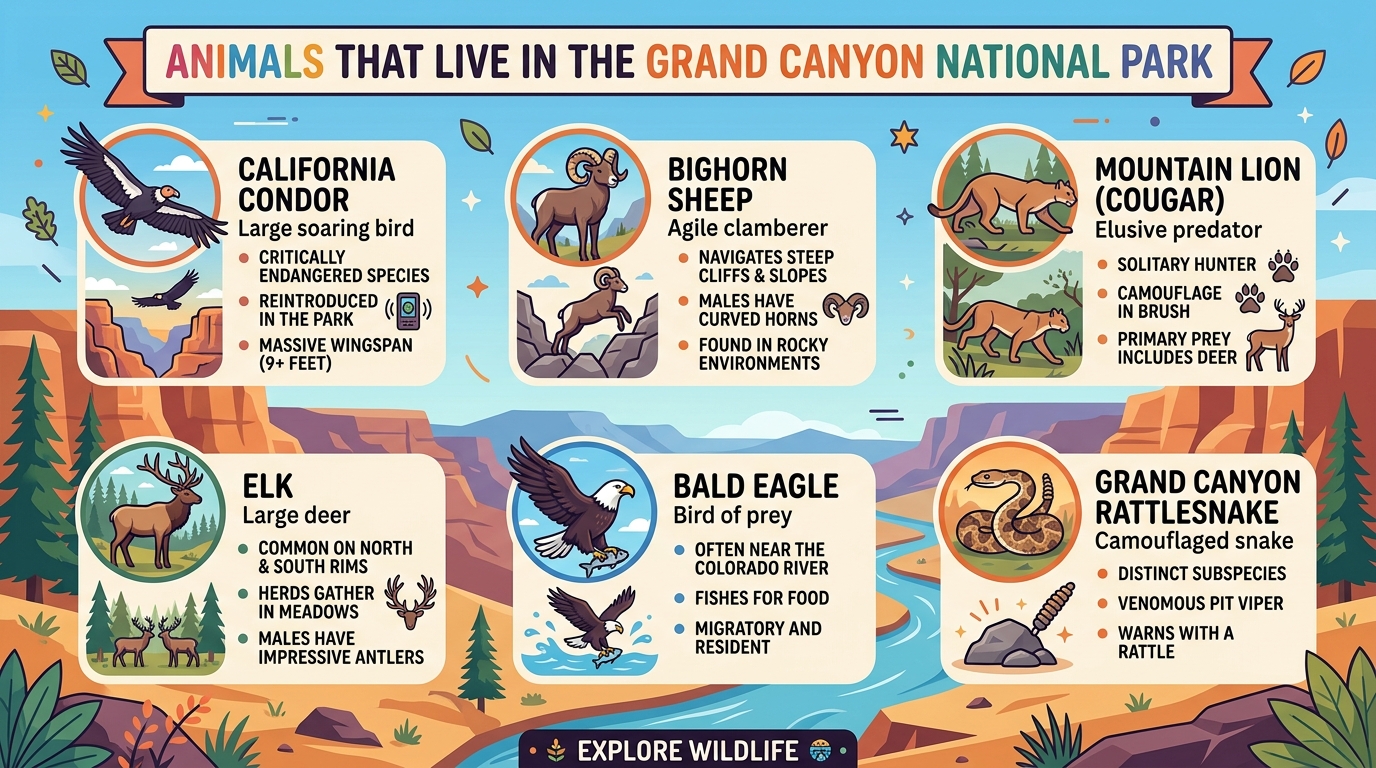
Desert bighorn sheep and collared lizards dominate the rocky inner gorge where summer temperatures regularly soar past one hundred degrees Fahrenheit. The inner canyon floor experiences blistering heat that forces many creatures to adopt strict nocturnal habits. Ringtails, which look like small cats with long ringed tails, hunt mice and insects under the cover of darkness to avoid the daytime sun. Desert bighorn sheep navigate steep cliffs with ease using specialized hooves that grip bare rock. Surviving the inner canyon requires specialized behaviors, and many species stay underground or shaded during the hottest daylight hours.
Forested Wildlife Across the North and South Rim Plateaus
Wildlife changes completely in the cooler, heavily forested areas at the top of the canyon where winter brings heavy snow and cold temperatures. Mule deer, wild turkeys, mountain lions, and tassel-eared squirrels thrive in these damp pine and fir forests. Tassel-eared squirrels depend heavily on the ponderosa pine trees for both food and shelter. Mountain lions roam these quiet timberlands in search of deer, though visitors rarely spot these shy predators. The forest environment provides much more moisture and shade than the dry river bottom far below.
Plateau Meadow Grazers and Large Mammals
Mule deer and elk frequently graze near forest edges, meadows, and developed areas around the South Rim and North Rim. Elk were reintroduced to the region and have adapted well to the high plateau grasslands and forest edges. While seeing a large elk or a mule deer up close can feel exciting, these animals are still wild and unpredictable. Bighorn sheep occasionally wander near popular viewpoints along the canyon edge, especially around early morning or late afternoon. Approaching these large animals too closely creates significant stress for them and poses a direct physical danger to humans.

National Park Service Regulations and Wildlife Viewing Limits
Protecting both human visitors and local wildlife requires strict adherence to safety rules established by park authorities. According to the National Park Service, visitors must stay at least fifty feet away from large mammals like elk and bighorn sheep, and at least one hundred feet away from predators like bears and mountain lions. Feeding any animal in the park is strictly prohibited because human food makes wild animals sick and teaches them to approach people aggressively. Park rangers enforce these rules to prevent dangerous interactions and to keep the natural ecosystem healthy. One important limitation to keep in mind is that wildlife sightings are never guaranteed, and searching too hard for animals can lead tired hikers off safe paths.
Frequently Addressed Questions About Canyon Wildlife
What animals live at the bottom of the Grand Canyon?
Animals living near the river bottom include desert bighorn sheep, collared lizards, rattlesnakes, and nocturnal creatures like ringtails that tolerate extreme heat.
Are there bears in the Grand Canyon?
Black bears do live in the forested areas at higher elevations, particularly on the North Rim, but they are very shy and rarely seen by visitors.
Can you feed the wildlife in the park?
Feeding any park animal is illegal and dangerous because human food harms their health and encourages aggressive behavior toward people.
Where are you most likely to see elk or deer?
Mule deer and elk are commonly spotted grazing near forest edges, meadows, and developed areas around the South Rim and North Rim.
Are the animals dangerous to hikers?
Most animals avoid humans, but large mammals can charge if startled, and venomous snakes or stinging insects require cautious attention on trails.
How close can visitors safely get to wildlife?
Official guidelines from the National Park Service require staying at least fifty feet away from large mammals and one hundred feet away from large predators.
Wildlife details and park regulations can change over time based on conservation efforts. For more information on planning regional outdoor trips, read our guide on exploring southwestern national parks on a scenic route. Always verify current park rules and safety alerts directly from the official National Park Service website before starting your trip.

I’m Muhammad Ubaid, founder of YBR Magazine. I research and write detailed guides on America’s National Parks — covering entry fees, permits, best times to visit, and planning tips — using official NPS sources and up-to-date information.