

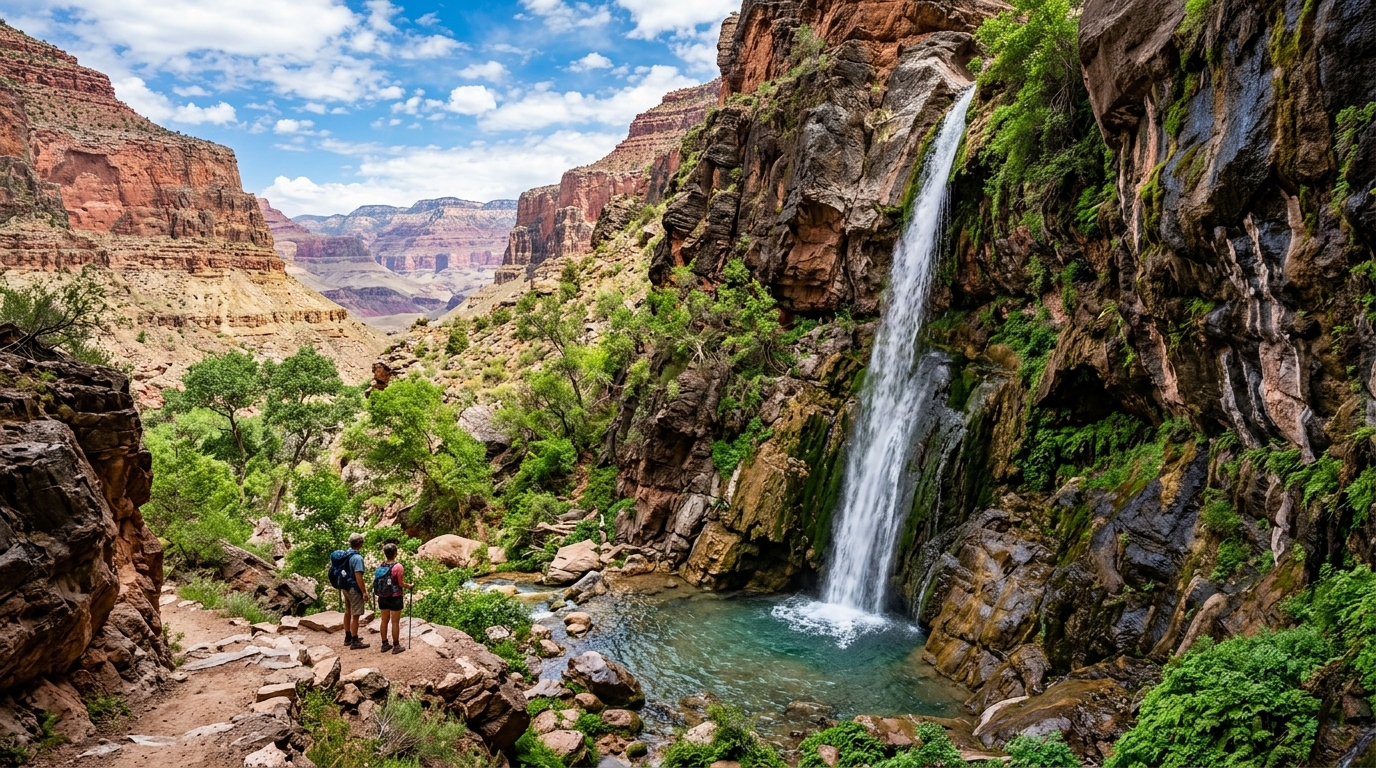
Ribbon Falls Grand Canyon National Park provides a striking contrast to the dry red rocks that dominate the surrounding landscape. Visitors looking down into the canyon usually see baked canyon walls and sparse desert vegetation. Deep below the rim along Bright Angel Creek, however, hidden moisture feeds a lush green environment. Ribbon Falls stands out as a delicate waterfall draped in thick moss and travertine rock formations. Reaching this remote destination requires serious physical effort, careful planning, and respect for harsh inner canyon conditions. This guide covers the essential facts about hiking paths, trail logistics, and safety requirements before you set out.
The Mossy Green Oasis Hidden Inside Bright Angel Creek
Ribbon Falls Grand Canyon National Park creates a surprising microclimate of cool moisture and vibrant green plant life that feels worlds away from the desert above. Water cascades smoothly over a tall mineral formation before feeding straight into Bright Angel Creek. Visitors often find that the quiet sounds of flowing water offer a welcome reward after miles of strenuous walking. Because this delicate ecosystem sits in a narrow canyon corridor, visitors must protect the fragile moss and vegetation by staying on established paths.
Walking the North Kaibab Trail From Phantom Ranch
Ribbon Falls sits along the North Kaibab Trail corridor, roughly six miles north of Phantom Ranch in the inner canyon. Hikers typically reach Ribbon Falls by descending from either rim, crossing the canyon floor, and turning north along Bright Angel Creek. The detour from Phantom Ranch adds about one and a half miles round-trip to an already exhausting trek. Visitors must account for heavy vertical climbs and steep drops when measuring their daily hiking capacity.
Monitoring North Kaibab Trail Closures and Bridge Repairs
Ribbon Falls and its connecting trails face frequent environmental hurdles, including rockfalls, flash floods, and historic bridge or pipeline repairs. According to the National Park Service, inner canyon routes can experience sudden closures due to storm damage or maintenance work. Hikers must check the official National Park Service website for live trail advisories and bridge statuses before beginning any descent. Trusting outdated online guides can leave travelers stranded behind closed gates or damaged crossings.
Backcountry Permit Requirements for Overnight Inner Canyon Stays
Day hiking to Ribbon Falls from either rim and back is an extreme test of endurance that park rangers strongly discourage due to extreme heat. Overnight trips require securing an inner canyon backcountry permit ahead of time through Recreation.gov. According to the National Park Service, campers must stay only within designated areas like Bright Angel Campground and follow strict rules regarding waste disposal, fire safety, and food storage.

Surviving Inner Canyon Heat and Carrying Essential Gear
Hikers must prepare for intense sunlight, high temperatures, and severe physical exhaustion before descending into the canyon. Packing plenty of water, electrolyte mixes, sturdy footwear, sun protection, and a physical trail map is mandatory. According to the National Park Service, inner canyon temperatures often climb past one hundred degrees Fahrenheit during summer afternoons, creating life-threatening risks. Turning back early is always the wisest choice if signs of heat exhaustion appear.
For travelers planning a broader vacation across the region, transitioning from the canyon rim to nearby red rock country makes for an unforgettable journey. You can learn more about coordinating your regional travel itinerary by checking out our guide on scenic southwest highway journey.
Frequently Asked Questions
How long is the side hike to Ribbon Falls?
The side trail to Ribbon Falls branches directly off the North Kaibab Trail and adds about one and a half miles round-trip to your walk from Phantom Ranch.
Can I visit Ribbon Falls as a day hike from the rim?
Attempting to hike from the rim down to Ribbon Falls and back in a single day is a grueling journey of over fourteen miles with severe elevation changes, which park rangers advise against.
Do I need a backcountry permit to stay overnight near the falls?
Yes, any overnight stay in the inner canyon requires an advance backcountry permit issued through Recreation.gov.
Is Ribbon Falls accessible year-round?
While water flows continuously, actual access depends entirely on trail conditions, bridge repairs, and weather alerts managed by the National Park Service.
What drinking water sources are available along Bright Angel Creek?
Treated water is usually available at Phantom Ranch and major corridor rest stations, but hikers should always carry filtration gear and ample extra water.
Are pets permitted on the trail to Ribbon Falls?
Pets are strictly prohibited below the canyon rim on all inner canyon trails to protect native wildlife and ensure visitor safety.
Disclaimer: Trail conditions, permit rules, and park regulations change frequently. Always verify current guidelines and weather warnings directly from official sources like the National Park Service before your trip.

I’m Muhammad Ubaid, founder of YBR Magazine. I research and write detailed guides on America’s National Parks — covering entry fees, permits, best times to visit, and planning tips — using official NPS sources and up-to-date information.